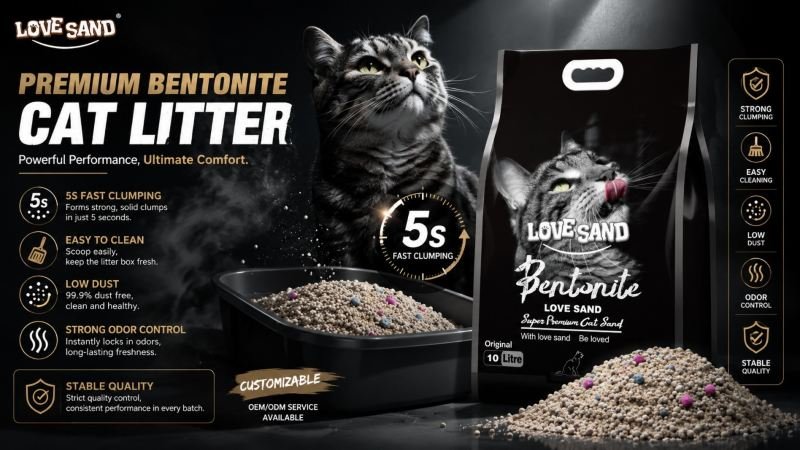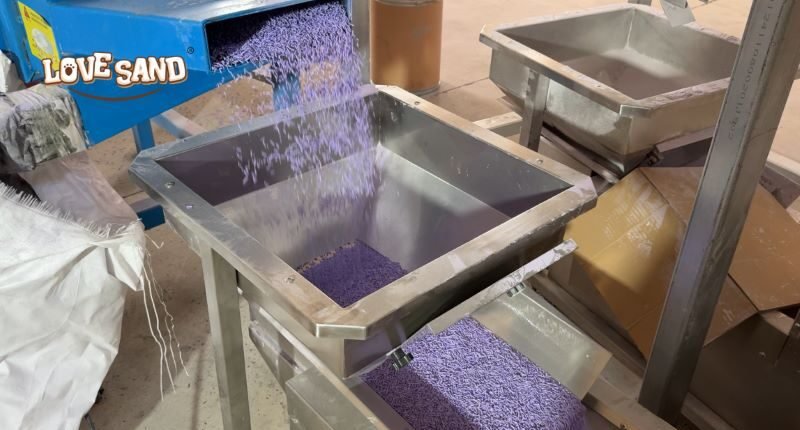
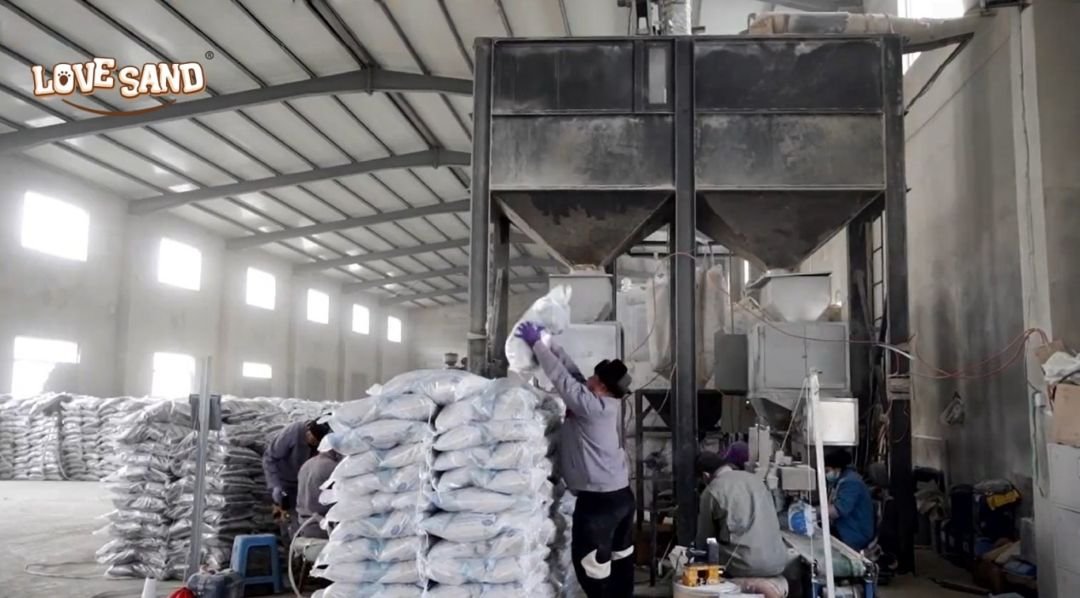
Two bags of bentonite cat litter look identical on a shelf. One pours clean, clumps into a solid lump that scoops whole, and stays that way for weeks. The other throws dust across the room on day one and crumbles by week two. Same name. Same “1–4mm” on the bag. The difference was never written on the packaging — it was decided in the bentonite cat litter factory, long before the bag was sealed.
Bentonite cat litter looks like a mature, almost standardized product: pick a granule size, a bag size, a price, place an order. But spend time on a production floor and you learn that the same product name hides very different decisions — raw material, particle design, processing, dust and moisture control, screening, scent and packaging. For a distributor planning to sell this product for years, knowing which steps shape the final bag is not factory trivia. It is how you define your SKU, compare suppliers, and protect your brand on repeat orders.
Who This Bentonite Factory Guide Is For
For you if: you import or distribute bentonite cat litter, plan a private-label program, or want to understand why identical-looking products perform differently before you commit to a long-term supplier. Not for you if: you need a single spot purchase and will not reorder — the product steps still apply, but you can skim the consistency and packaging sections.
Key Takeaways
- Raw material sets the ceiling: ore quality and screening decide what the finished granule can achieve.
- Granule size is a product decision, not a label number — it shapes paw feel, pour behavior, dust and market fit.
- Fast clumping and strong clumping are different promises: speed earns attention, stability earns repurchase.
- Dust is engineered out during the process, not printed on the bag.
- Moisture control protects the product through storage and ocean freight, not just at the factory gate.
- Batch-to-batch consistency is what protects your brand when consumers reorder.
- Packaging carries cost and positioning decisions — capacity, material and design belong in product planning, not afterthoughts.
From Ore to Finished Bag: What Happens at Each Stage
| Stage | What Happens in Our Factory | What It Means for Your SKU |
| Raw material screening | Natural sodium bentonite is selected and matched to the product target | Sets the performance ceiling for clumping and absorption |
| Particle design | Granule size, shape (spherical or crushed) and density are defined | Determines paw feel, pour behavior and shelf identity |
| Processing | Milling, granulation and density control | Drives absorption speed and clump strength |
| Dust & moisture control | Multi-stage dedusting and moisture reduction | Protects indoor air quality, storage life and transit |
| Screening & finishing | Granule uniformity and fines are controlled before packing | Your consumers see a clean, consistent bag |
| Scent & packaging | Scent options, capacity and bag design are finalized | Defines your SKU range, shelf presence and price point |
| Quality confirmation | Batch records and a batch-to-batch consistency system | Protects your brand across repeat orders |
Step One — Raw Material Screening Decides the Product’s Foundation
Most buyers first look at finished parameters: granule size, dust level, absorption rate, packaging. All important — but from a manufacturing view, a product’s performance begins at the raw material stage. Bentonite is a natural mineral, and “natural” does not mean every ore arrives in the same state. Ore structure and quality directly influence granule behavior, absorption and clumping later in the line. That is why production is not simply crushing ore into granules; it is selecting and conditioning raw material against a product target.
At love sand, our bentonite line is built on Natural Sodium Bentonite, and we treat raw material screening as part of the product definition. A mass-market product may prioritize a different balance of cost and performance than a low-dust premium SKU. So the practical question for a buyer is not only “what raw material do you use?” but “what market performance is this product designed to hit?” The answer to the second question determines the first.

Step Two — Particle Design Is More Than “a Few Millimeters”
Granule size looks like a simple number — 1–2mm, 1–3mm, 1–4mm. But that number shapes real experience: how the litter feels under a cat’s paw, how it pours, how it looks in the box, and how it matches local market habits. A spherical granule and a crushed granule can carry the same size range and still behave differently in use and on the shelf.
love sand’s current bentonite products support different granule sizes and forms; our 10L Black Series, for example, is presented at 1–4mm with both Spherical and Crushed options. For a distributor, this is a product-design question, not a spec sheet detail: are you building a familiar standard product for traditional pet-store and mass retail channels, or using granule form, appearance and packaging to create a different brand position? Granule size is neither “smaller is better” nor “bigger is better.” It is designed together with the product.
Step Three — How Processing Shapes Clumping Performance
Clumping is usually the first thing consumers judge — and distributors sell. Consumers may not know which sodium bentonite grade a product uses or what the granules went through, but they will tell you quickly: does it clump fast? Is the clump hard? Does it fall apart when scooped?
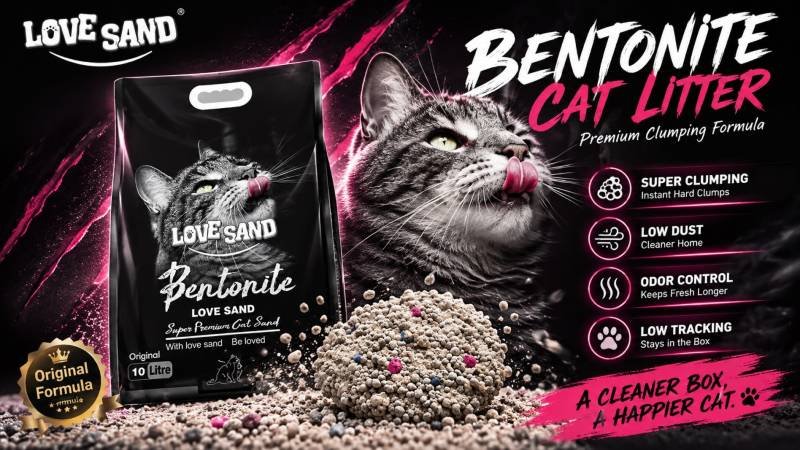
One distinction matters here: fast clumping and strong clumping are related but not the same. Fast clumping means the litter forms a cleanable area quickly after contact with liquid. Strong clumping means that clump stays stable during scooping. A product that only delivers speed can crumble in the scoop; a product that clumps hard but slowly can frustrate daily use. Mature product development balances both. At love sand, the goal for our bentonite products is not simply “litter that clumps,” but a balance of absorption, clumping and daily cleanup built through raw material selection, particle and density control, and the production process.
Step Four — Dust Control Is a Factory Process, Not a Marketing Claim
“Low dust” is one of the most common claims on the market, and also one of the easiest to print. Dust in the bag comes from the process: particle processing, handling, screening and packing all contribute fines. That is why dust control cannot be added as a single step at the end — it has to run through the whole handling process.
love sand lists Moisture & Dust Reduction Process as part of our bentonite production system and applies multi-stage dedusting. The 10L Black Series carries a dust level of ≤1%, and our upgraded dedusting technology can go further. For a distributor, dust matters beyond consumer comfort: visible dust when pouring, dusty litter-box areas and airborne particles all become part of how your brand is judged. If low dust is going to be a headline feature of your SKU, confirm the actual dust standard of the product you buy — do not rely on the product name alone.
Step Five — Why Moisture Control Affects Storage and Shipping
Production does not end when the granules are made. For export products, storage, packaging and long-distance shipping all affect the final state of the bag. Granular mineral products need controlled moisture to stay stable through warehousing and transit. That is why moisture reduction is part of our technical system, and why buyers should treat production and logistics as one continuous process: a product that tests well in the factory but cannot survive warehousing and an ocean crossing adds risk for the distributor.
love sand has served international markets for over 20 years, with products now in 87 countries and regions. Structured production planning and export coordination are part of what we offer overseas clients — the same reasons reliable lead time matters as much as unit price in this category.
Step Six — Screening Turns “Produced” Into “Sellable”
After processing, product does not go straight into bags. Granule uniformity and fines control still need attention — because a distributor sells a finished SKU, not a factory batch. Consumers expect relatively uniform granules, clean packaging and a stable experience. Screening is what brings the product close to its pre-defined specification.
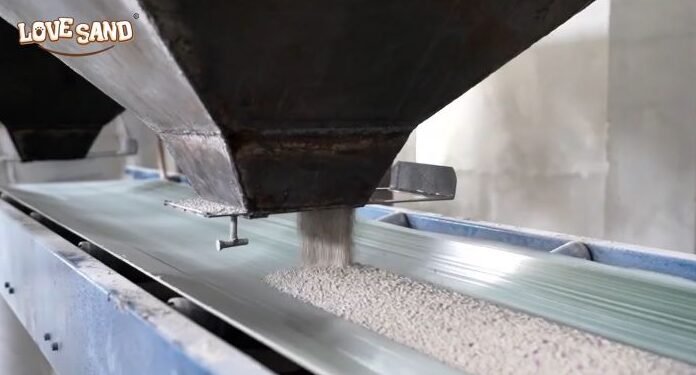
For a buyer, this translates into a few things to confirm before production rather than after: the granule range, whether a specific granule form is required, the dust standard, the final bag capacity, and whether scent or functional materials are needed. The clearer the specification, the easier it is to keep production and acceptance consistent on B2B orders.
Step Seven — Scent and Positioning Enter the Product Here
Scent is one of the most common ways bentonite brands extend their SKU range. A basic unscented product serves consumers who want a plain, familiar litter; different scents help a brand build a wider shelf presence. love sand’s bentonite range currently offers Original, Apple, Lemon, Lavender, Coffee, Rose and Baby Powder directions, and we accept mixed scents and sizes in one order.
From a distributor’s view, scent is not just adding a SKU name. If your market already has a stable base product, scent variants can build sales combinations: keep Original as the long-term core SKU, then add fruit, floral or other scents according to local preference. But more scents are not automatically better — for a brand entering a market, too many variants create inventory pressure. A stable core product first, then new scents based on actual sales feedback, is usually the safer path.
Step Eight — Packaging Is Part of the Product, Not the Last Step
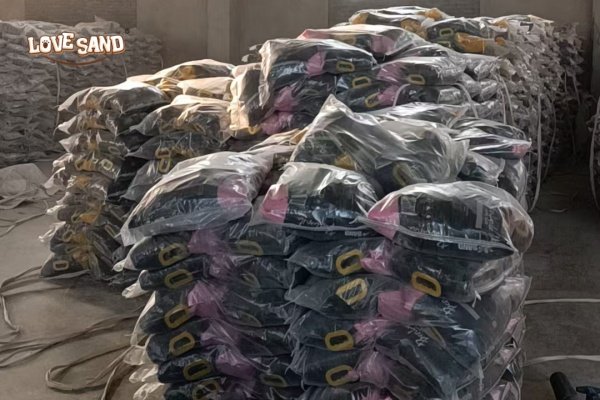
By the packaging stage, the product is close to its final selling state — and for an overseas distributor, packaging means much more than “putting litter in a bag.” Capacity affects retail price; bag material affects handling and transport; outer design affects how the brand looks on a shelf or an e-commerce page; and capacity preferences differ by market.
love sand’s bentonite line covers 5L, 10L, 20KG and 25KG directions, with the 10L Black Series presented at 10L/8KG in a transparent PP bag. These work as reference points, not obligations. We support customized services and OEM/private-label programs, so packaging can be discussed around your brand needs. Mature product development treats packaging and product as one decision.
Step Nine — Quality Confirmation Matters Most on Repeat Orders
For a first order, the sample is the natural basis of judgment. For a distributor already selling, the next orders matter more. Consumers do not lower their expectations because your product came from a different production batch — if batch one performs well and batch two visibly changes, your brand takes the hit. That is why batch-to-batch consistency is part of love sand’s production system, and why “a good bentonite litter” is not a specification.
The more precisely you define the product — granule, packaging, scent, dust requirement and other core parameters — the easier it is for the factory to reproduce it. What we want to offer distributors is not a one-time supply, but a product program that supports continuous sales: stable production, automated lines and long-term project support.
Why Our Bentonite Range Suits Distributors Building Their Own Line
A product is worth sourcing not only for how the first sample performs, but for how much room it gives you to develop. love sand’s bentonite system offers different granules, forms, scents and packaging directions, with public product coverage from 5L to 25KG and support for mixed scents/sizes and customized services.
In practice, that means a client can start with one base SKU — a standard spec and a core scent — stabilize sales, then add new capacities or scents. Private-label clients can develop packaging around their own brand. For distributors entering a new market, this staged approach fits better than launching a large SKU range at once; for distributors with mature networks, the wider range simply leaves more room to build combinations. The advantage of love sand is not producing one fixed bentonite product — it is helping clients find the product direction that fits their market within an existing system. Our فضلات قطط البنتونيت range is a good starting point for that conversation.
Buyer Tips|What to Confirm Before You Order
- Granule spec — confirm the size range and form (spherical or crushed) for your market’s preference.
- Dust standard — decide what dust level your market requires, then confirm the actual product spec.
- Moisture expectation — match the product to your storage period and transit route.
- Packaging — confirm capacity, bag material and outer carton for shelf presence and freight cost.
- Scent strategy — start with a core scent, add variants by sales feedback.
- Batch control — ask how samples, bulk and repeat orders stay aligned, and whether records are kept.
FAQ|Questions Distributors Ask When Sourcing Bentonite Cat Litter
Q1. What raw material does love sand use for bentonite cat litter?
Q2. What packaging options does Love Sand offer for bentonite cat litter?
Q3. Can distributors choose different granule sizes and scents?
Q4. How does love sand reduce dust in bentonite cat litter?
Q5. What can we customize if we want to build our own bentonite brand?
Q6. Is love sand suitable for one-off purchases or long-term distribution?
Conclusion|A Good Bag of Bentonite Litter Is Designed at the Factory
For an end consumer, a bag of bentonite litter earns its value in a few direct experiences: does it clump fast, does the clump hold, is the dust tolerable, does the scent work, is cleanup easy. For an overseas distributor, the value has to be seen further back — these experiences do not appear after packing. They are formed from raw material selection through particle design, processing, screening, dust control, specification and packaging, into a finished SKU ready for an overseas market.
That is why sourcing bentonite cat litter should not stop at comparing quotations. Understanding how a factory produces the product helps you judge real differences between suppliers, and gives you sharper requirements when building your own brand. love sand offers product programs based on natural sodium bentonite — multiple packaging, granule and scent directions, with OEM and private-label cooperation. For distributors planning to sell this category long-term, we want to be more than a ready-made product: a manufacturing partner whose product specifications, packaging and process can all be discussed and refined together. Our bentonite manufacturing experience shows why factory-level consistency is the real basis of a lasting product.
Reviewed by: love sand pet-litter product team (Puyuan Dalian Pet Products Co., Ltd.). Last updated: 2026-09-17.
More about the manufacturer: About love sand