When you walk into the cat litter shelf of a pet store, you will be dazzled by the dazzling array of cat litter. There are dozens of brands, colors and textures. Bentonite cat litter, crystal cat litter, pine cat litter, corn cat litter, wheat cat litter, tofu cat litter, paper cat litter … advertising is overwhelming. “Super absorbent!” “Lock the smell!” “Veterinary recommendation!” But how to choose?
In fact, there is no so-called “best” cat litter. Only the cat litter that is most suitable for your cat and your home. A cat litter may be perfect for a cat in a big house, but for three kittens, it may be a disaster in a single apartment. Choosing the right cat litter needs to consider your cat-loving needs, your lifestyle and your budget. Let’s learn the cat litter types pros and cons and explore the science of cat litter selection.
Understand the instinct of cats.
Before discussing materials, we must first understand the biological characteristics of cats. Cats are born with the instinct to bury excrement. In the wild, this can hide their smell and avoid being found by predators and prey. The cat litter basin is essentially a special excavation area. If the texture of cat litter is uncomfortable, it smells bad, or it grinds its claws, they will look for a better choice. Usually, they will choose your dirty clothes pile.
Texture preference
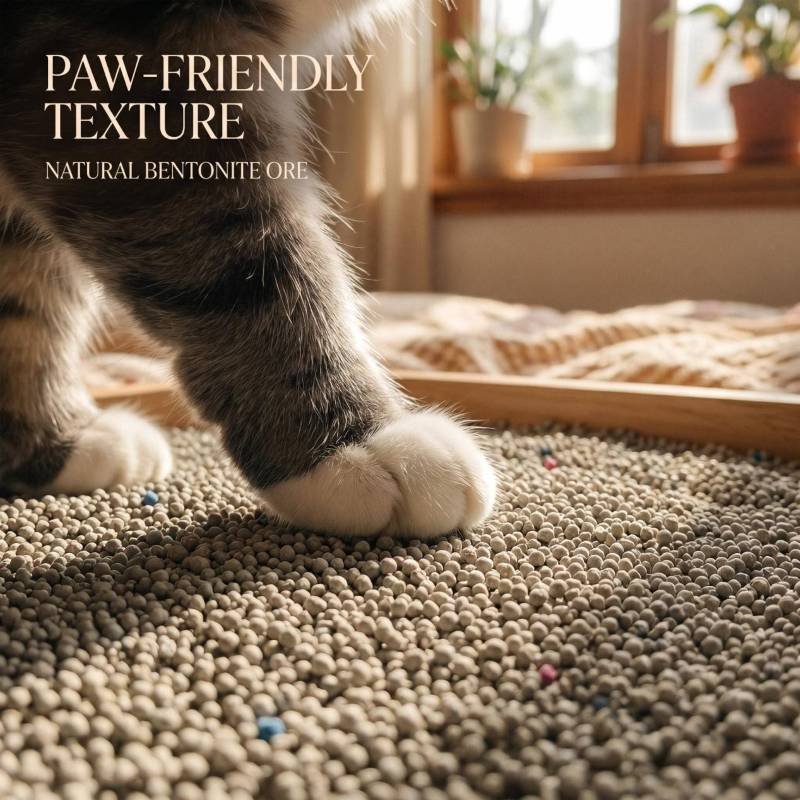
Most cats like soft, sandy cat litter. This texture simulates natural soil or sand. This is why the traditional ทรายแมวเบนโทไนต์ has been the industry benchmark for decades.
It is delicate in texture and convenient for cats to dig. However, some cats form preferences based on early experiences. If a kitten has used pine particle cat litter since childhood, it may refuse bentonite cat litter when it grows up.
Odor factor
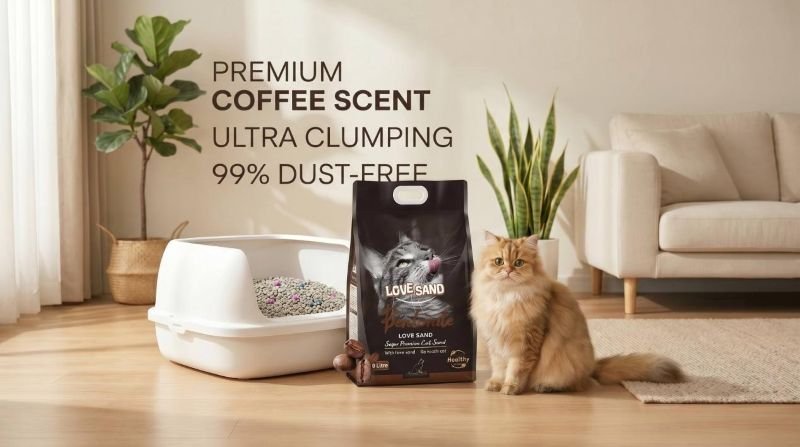
Cats have as many as 200 million olfactory receptors, while humans have only about 5 million. The smell you smell “fresh and clean” may be like a chemical smell to your cat.
Fragrant cat litter is almost always a safer choice. If you must use scented cat litter, please try to choose plant essential oil. Avoid using artificial spices, because they are one of the main reasons that lead cats to avoid using the litter box.
Depth is very important.
How deep should the cat litter be laid? Most cats like a depth of 2 to 3 inches (5 to 7.6 cm). This depth is enough for them to dig and bury without touching the bottom of the litter box.
If it is too shallow, they can’t be buried; If it is too deep, the litter box may make them feel unstable or waste.
Material analysis: advantages and disadvantages
Traditional clay (bentonite)
This is the most common cat litter. It comes from underground.
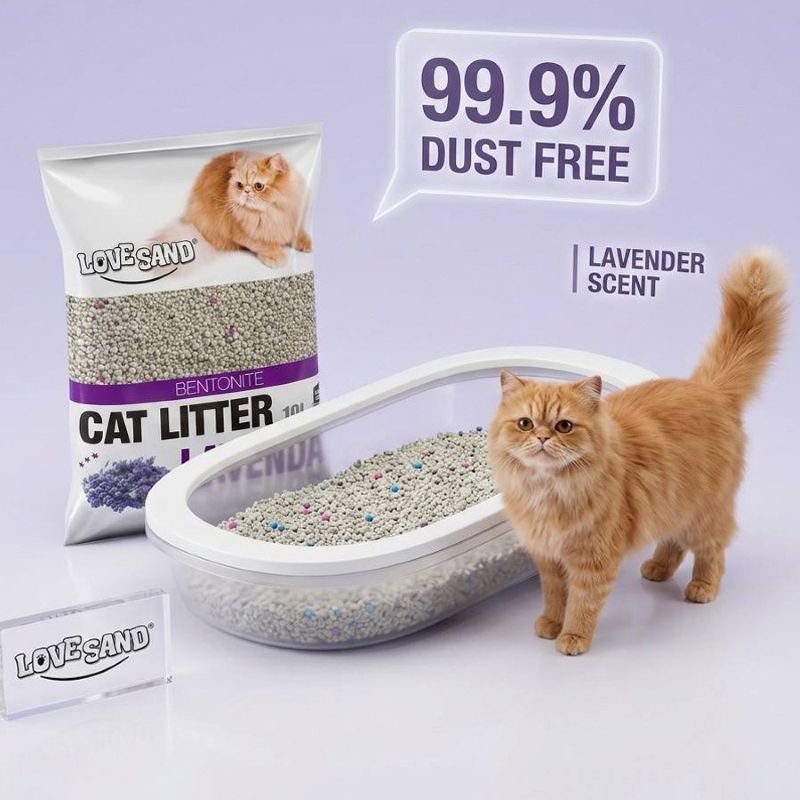
ข้อดี: The agglomeration effect is excellent. Familiar texture. Strong water absorption. The price is cheap, 0 formaldehyde.
Disadvantages: It is not environmentally friendly. It is heavier. It is easy to produce dust. Easy to be taken out of the litter box. Do not flush into the toilet.
Best applicable crowd: Families with many cats, cat owners who want cat litter to agglomerate tightly, and cats who like the feeling of bentonite cat litter feet.
Silica gel (crystal)
These are beads that can absorb urine and smell.
ข้อดี: Extremely light. Durable. Low dust. The deodorizing effect is excellent.
Disadvantages: It will not agglomerate. You need to stir the litter box instead of removing the lumps. The price is higher. Some cats don’t like its rough texture. Not environmentally friendly.
Best applicable crowd: Single cat families, busy owners, people who have high requirements for deodorization (very light).
Plant cat litter (corn, cassava, tofu)
Made of renewable crops.
ข้อดี: Biodegradable. It can be flushed into the toilet (see local regulations). Low dust. Natural deodorization. Even if it is eaten by mistake, it is safe.
Disadvantages: If stored improperly, it may attract pests. Cake cat litter may be softer than clay cat litter. Prices vary.
Best for: Environmentally friendly cat owners, kittens and cats with respiratory problems.
Wood and paper cat litter
Made of recycled wood or recycled paper.
ข้อดี: Very little dust. Soft touch, care for cat paws. Biodegradable. Natural enzymatic deodorization.
Disadvantages: Usually does not agglomerate. Granular cat litter may make some cats feel uncomfortable. Paper cat litter softens easily.
Best for: Postoperative cats, kittens who are learning to use the litter box, and cats with severe dust allergy.
Choose the right cat litter according to your lifestyle.
Cat’s preference is important, but your actual situation is equally important.
Apartment tenants
Space is limited. Deodorization is very important. It is a big problem that the cat litter is taken out of the cat litter basin.
Suggestion: Cat litter with low carrying capacity and high water absorption. Silica gel cat litter or fine tofu cat litter works well. Avoid using large pine cat litter that is easy to be kicked out. Use a high-sided litter box or a litter box with an open top.
ครอบครัวที่มีแมวหลายตัว
Cat litter is the enemy. Odor will accumulate quickly. You need to clean the litter box several times a day.
Suggestion: High quality agglomerated clay cat litter or clay-tofu mixed cat litter. You need compact, hard-to-disperse cat litter. Fragrance-free type is a must. You may need two litter pots.
People with allergies.
Dust is the enemy. If you or your cat sneezes near the litter box, it means you have a problem.
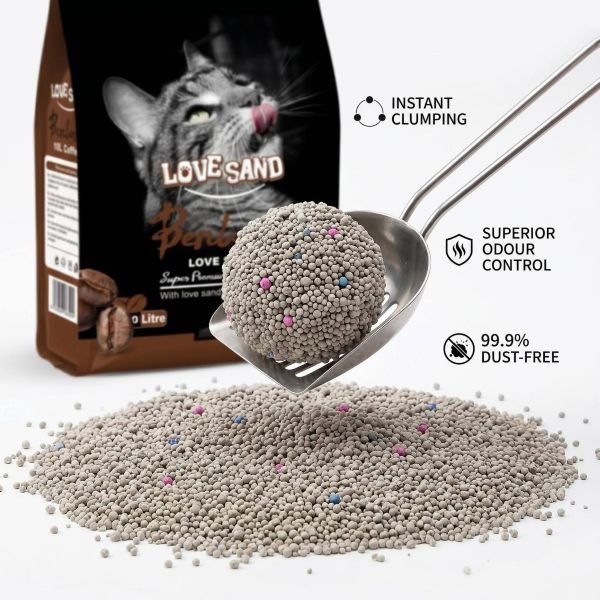
Suggestions: ทรายแมวถั่วเหลือง, tapioca cat litter or high-quality dust-free ore. Look for products marked “99% dust-free”. Avoid using dusty bentonite cat litter, because it will produce dust itself. Clean the litter box every week.
A careful choice.
You want good quality but don’t want to spend too much.
Recommended: Traditional clay is still the king of cost performance. It is recommended to buy in bulk. In addition, dust-free ore usually achieves a good balance between price and performance.
Warning signal: When to reevaluate, even the best cat litter may not be suitable. Pay attention to the following signs:
Wandering: Your cat is standing on the edge of the litter box but doesn’t go in. Cat litter may chafe their paws or smell bad.
Paw flick: They tried to shake off the cat litter immediately. The texture of cat litter is wrong.
Defecating outside the litter box: It may be a health problem first, and then a litter box problem.
Refuse to bury cat litter: They may not like the depth or touch of cat litter.
Final conclusion: Testing is the key.
Don’t buy a big bag of 40 pounds of new cat litter just because of a blog post. Try buying a small bag first. Watch your cat. Smell the litter box after 24 hours. Check whether cat litter has been taken out.
Choosing cat litter is a relationship. It needs communication and observation. Be patient. There should be room for change. Your cat will tell you what they think, and usually they will express it in the most honest way. Listen to them. When you find the right cat litter, you will naturally know. The litter box will be clean and tidy, the air will be fresh, and your cat will feel comfortable and happy. This is the ultimate goal.