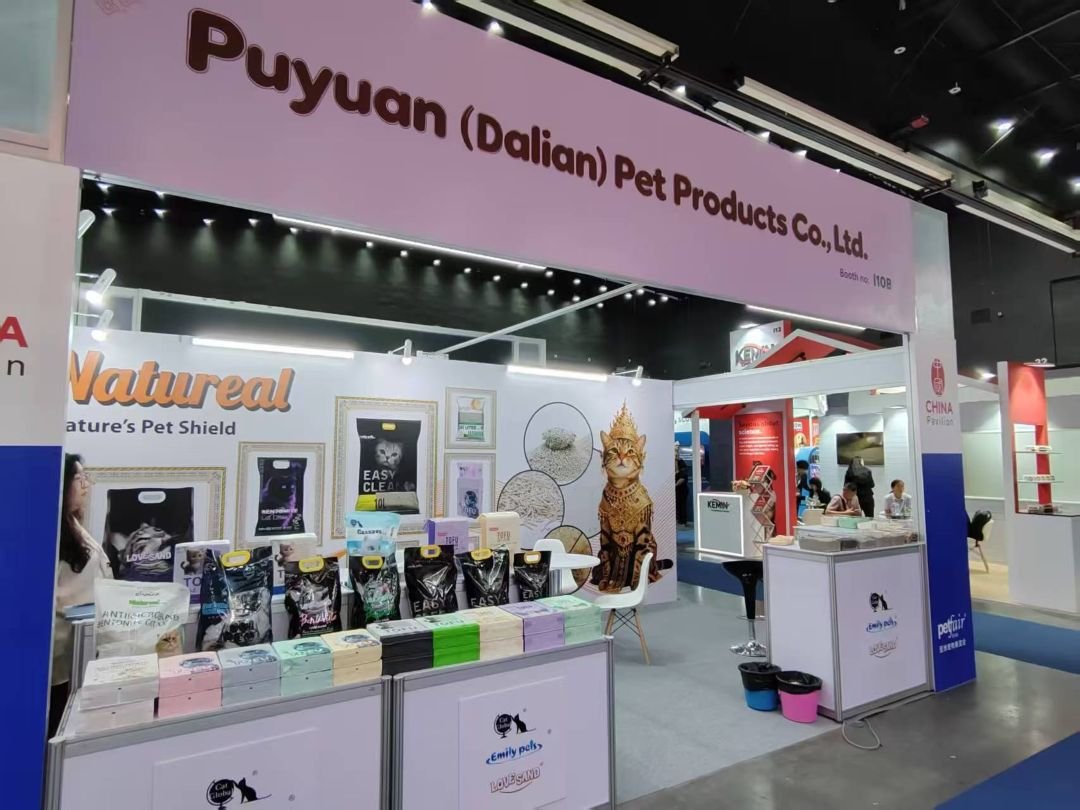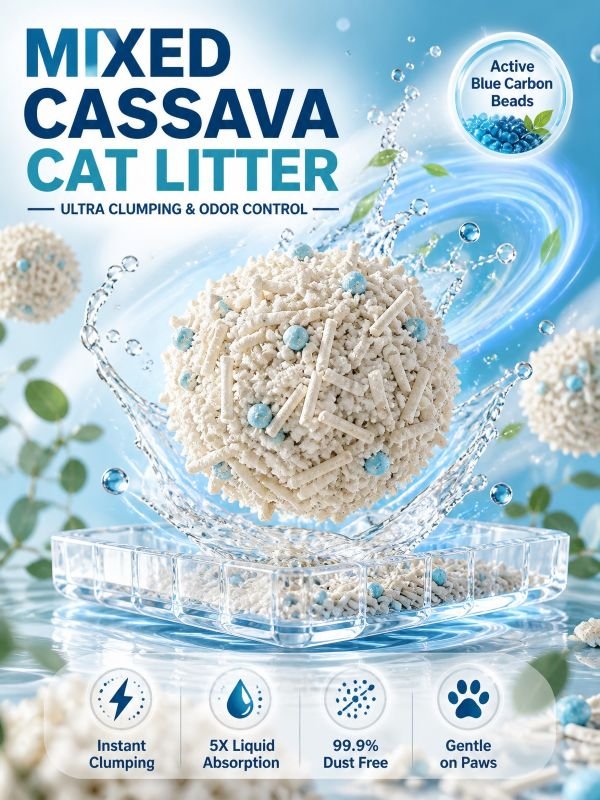
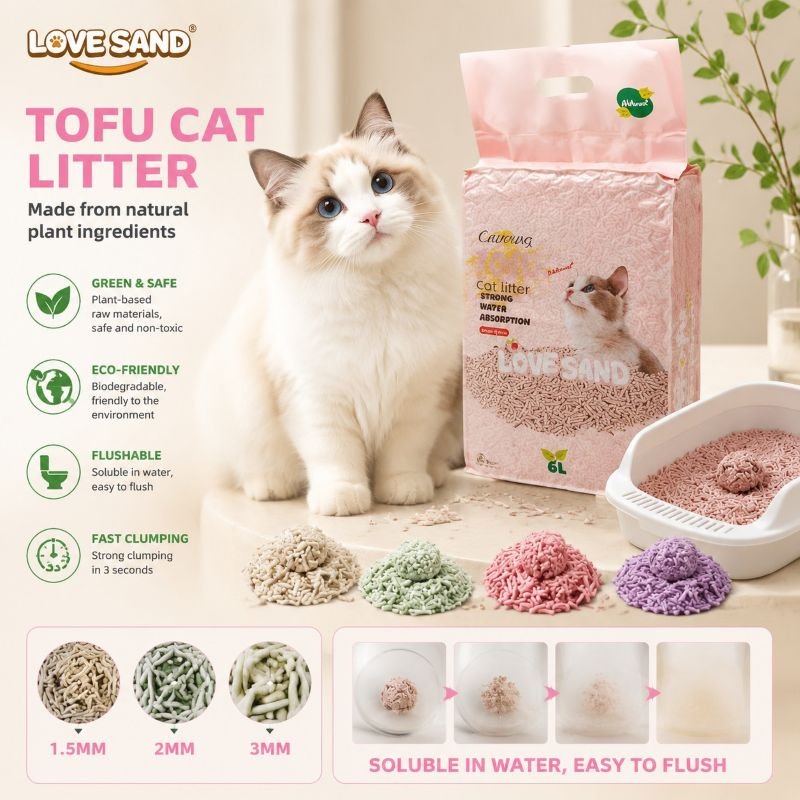
Exporting tofu cat litter involves more than confirming the product name and price. Importers also need to decide the formula, granule size, fragrance, packaging structure, loading plan and shipping terms before production begins.
A product that performs well at the factory can still arrive with damaged vacuum bags, excess moisture or a shortened retail shelf life if the packaging and export plan are not matched to the route. Market preferences vary as well. Buyers in Japan and Korea may request light fruit or floral fragrances, while European buyers may prefer original or activated-charcoal formulas. Hot and humid routes place more pressure on moisture control and packaging seals.
This guide follows the main decisions involved in a areia de tofu para gatos export order, from product specifications and market adaptation to packaging, container loading, documents, MOQ and lead time. It is written for commercial procurement rather than household product selection.
What Needs to Be Confirmed Before an Export Order?
The product should be defined before the quotation is compared. A tofu cat litter order is not complete when the buyer has selected a scent and a bag design. The purchase specification should also state the raw-material system, granule size, performance targets, moisture limit, packaging structure and shelf-life requirement.
The target market determines many of these choices. A retailer selling small bags online may need compact vacuum packaging and stronger protection against parcel handling. A wholesaler selling large formats may prefer non-vacuum packaging and a lower packaging cost. A hot, humid destination needs tighter moisture and seal controls than a short inland route.
Before production starts, agree the following in writing:
- Formula and main plant-fiber material.
- Granule shape, diameter and length range.
- Absorption, clumping, dust and moisture targets.
- Fragrance or odor-control formula.
- Bag structure, bag size, carton details and shipping marks.
- Quantity per SKU, mixed-loading plan and container type.
- Inspection method, production date, shelf life and required export documents.
- MOQ, payment terms, lead time and approved artwork.
Product Specifications for Export Procurement
The word “tofu” does not describe one fixed formula. Suppliers may use pea fiber, soybean fiber, okara or a combination of plant materials, together with starch and a binder. The finished product can therefore vary in absorption, clumping, dust, odor and moisture stability.
The reference LOVE SAND tofu formula uses plant fiber with starch and a small amount of guar gum. The stated reference targets include absorption of at least 600%, clumping within about three seconds, dust below 3%, moisture below 8% and a shelf life of approximately 18–24 months. These figures should be confirmed for the actual SKU and batch being ordered rather than copied into a purchase order without a test method.
Raw Material and Formula
Plant fiber forms the absorbent structure. Starch helps the extruded material hold its shape, while guar gum supports binding and clumping. The ratio affects granule hardness, water uptake, clump strength and the way the litter breaks down after use.
Raw-material consistency is important for export orders because a change in fiber condition can alter the product without changing the artwork or product name. Buyers should ask whether incoming materials are checked by batch and whether the supplier can trace the finished goods back to the relevant raw-material lot.
For a private-label program, the formula should be frozen after sample approval. Later changes to fiber source, binder ratio or additive level should require the buyer’s written approval.
Absorption and Clumping
Absorption and clumping should be tested together. A high absorption number is not enough if the formed clump breaks apart during scooping or sticks to the bottom of the box.
The reference absorption target is 600% or higher, with clumping around three seconds. The buyer should request the test method, add a measured amount of liquid to the sample and check whether the clump remains intact after a defined waiting period and scooping movement.
The test result should be recorded by SKU and batch. If the buyer is ordering several scents or pack sizes, the acceptance sample should represent the formula that will actually be packed, not only a laboratory sample from an earlier development stage.
Moisture and Shelf Life
Moisture is one of the most important export controls for tofu cat litter. Excess moisture softens the granules, weakens clumping and increases the risk of mold during storage or sea transport. A sealed container exposed to heat and humidity can turn a small moisture problem into a full-container loss.
LOVE SAND uses below 8% moisture as a reference outgoing standard and states a shelf life of around 18–24 months. The contract should specify whether shelf life is counted from the production date, and each bag or carton should carry a traceable production code.
The remaining retail window is shorter than the headline shelf life. Buyers should subtract production time, ocean transit, port storage, customs clearance and local distribution before deciding how much remaining shelf life is required at arrival.
Dust and Granule Size
Tofu litter is generally positioned as a low-dust product, but plant-based granules can still produce fines if forming, drying or screening is poorly controlled. The reference dust target is below 3%. The test method should be stated because different methods can produce different results.
A common strip specification is around 1–3 cm long and approximately 1.5 mm in diameter. Smaller or larger granules may be suitable for different markets, but the change can affect tracking, absorption, clumping speed and cat acceptance. Confirm the size range and broken-piece tolerance before mass production.
Odor Control and Fragrance
Tofu litter controls odor mainly through liquid absorption, clump formation and the odor-control ingredients used in the formula. A reference performance figure is around 90% odor removal, but the test method and conditions should be included with the specification.
Fragrance is a separate commercial decision. A strong scent is not proof of better odor control, and excessive fragrance can lead to product rejection by cats or complaints from consumers. The fragrance level should be approved with the production sample.
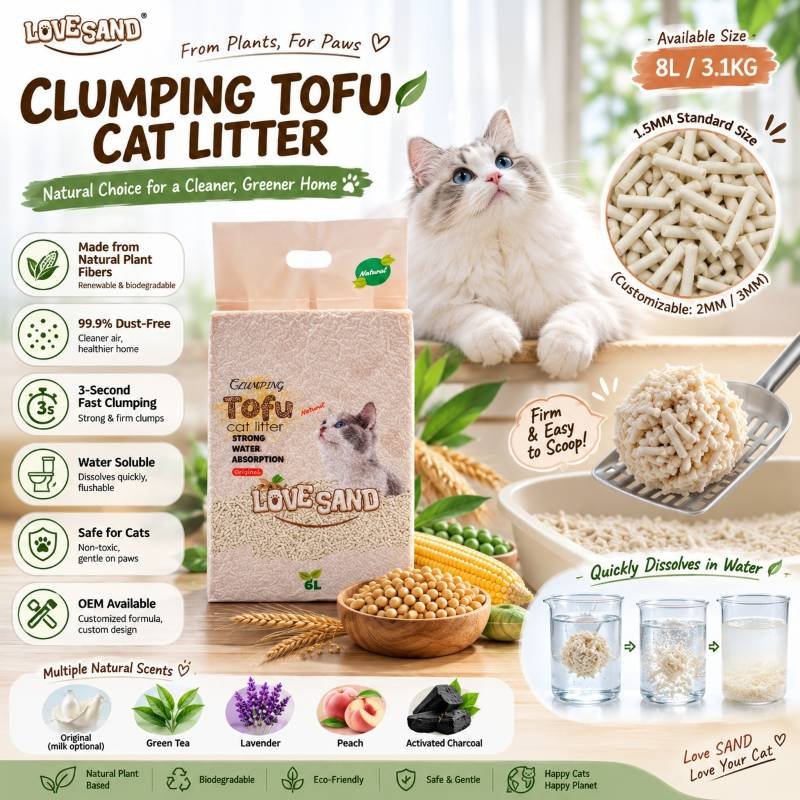
Choosing Fragrance and Formula by Target Market
The same fragrance range will not suit every export market. Light fruit and floral profiles such as peach, green tea and lavender may fit some Japanese, Korean and Southeast Asian channels. European buyers often request original or activated-charcoal profiles, especially when their brand prefers a less fragranced positioning. In hot climates, some Middle Eastern buyers may ask for stronger odor coverage.
These are starting points, not fixed rules. The final decision should follow the brand position, retail channel, local consumer feedback and the formula’s effect on the cat’s acceptance of the litter box.
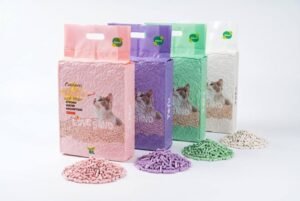
LOVE SAND’s reference range includes original, peach, green tea, lavender, activated charcoal and corn options. OEM buyers can discuss other fragrance or odor-control programs, but the final formula should be tested for clumping, dust, odor and consumer acceptance before production.
Vacuum or Non-Vacuum Packaging?
Packaging changes the freight calculation, shelf presentation and export risk. Vacuum and non-vacuum packaging should be treated as two different packaging programs rather than two versions of the same bag.
Vacuum bags compress the product and reduce package volume. They are commonly used for e-commerce and pet-store channels because they improve shelf density and can lower transport and warehousing cost per unit. The reference LOVE SAND format is an 8L vacuum bag, six bags per carton, with carton dimensions of approximately 435 × 310 × 210 mm.
Non-vacuum packaging can cost less and may suit wholesale or commercial formats where compact shelf presentation is less important. The buyer should compare the full landed cost, including carton quantity, pallet use, container loading and handling damage.
Packaging Risks During Ocean Shipping
Vacuum packaging faces a specific export risk: bags can expand in a hot container, lose their vacuum or burst if the seal, film structure or loading pressure is not controlled. A damaged bag may still contain usable litter, but it loses shelf appeal and can create claims from distributors or online customers.
Before approving the packaging, confirm the inner-bag material, seal width, carton strength, palletization, moisture-barrier film and loading arrangement. Ask for the supplier’s experience with the intended route and, where available, data on vacuum loss or burst rates after ocean transport.
Artwork should be approved together with the physical packaging sample. Check the printed product name, net weight, batch coding area, barcode, shipping marks, handling instructions and any local-language requirements before mass production.
Container Loading and Freight Planning
Tofu litter is lighter than mineral litter. A 20-foot container may carry roughly 18–19 tons of tofu litter, while a bentonite loading plan may approach 20 tons, depending on the packing format and loading restrictions. The final quantity depends on carton dimensions, pallet use, product density and the approved loading plan.
Mixed loading can help an importer test several SKUs without assigning the full container to one fragrance or pack size. Different tofu fragrances, granule sizes and bag formats may be combined where the production schedule allows. Tofu can also be combined with bentonite or other pet products, subject to the container plan and documentation.
The loading plan should show each SKU, cartons, bags, net weight, gross weight, carton dimensions and container quantity. This gives the buyer a realistic freight calculation and makes the packing list easier to check.
Seasonal timing also matters. Pet-product demand often increases toward the end of the year and after the holiday period. Buyers should reserve production early when they have a fixed launch date and should write the required delivery window into the contract.
MOQ, Lead Time and Payment Terms
The reference export program uses one 20-foot container as the usual MOQ, with mixed loading available according to the product combination. A mixed container can include different fragrances, pack sizes or related cat litter categories, but each SKU still needs its own approved specification and packaging quantity.
Reference lead times are approximately seven days for stock products, around 15 days for printed packaging and 25–35 days for full customization. These times should be counted from the point at which artwork, formula, payment and production details are approved. T/T payment is the reference payment method.
For a first order, confirm whether the production schedule includes sample approval, packaging printing, filling, inspection and loading. A short quotation that does not state these milestones can make the final delivery date difficult to manage.
Export Documents and Inspection Records
The document set depends on the destination market, customs requirements and the buyer’s channel. The commercial invoice and packing list should match the product name, pack size, quantity, net weight, gross weight and carton information shown on the order.
A certificate of origin and material safety documentation may also be required or requested. Buyers should confirm the exact requirements before production because document changes after loading can delay customs clearance.
The inspection file should include the approved sample, formula or specification sheet, batch test results, moisture result, packing approval, production code and loading photographs where required. Keeping these records with the purchase order makes it easier to handle a claim or trace a batch after arrival.
OEM and Private Label Order Details
Private-label procurement begins with the product specification, not the artwork. The buyer should first approve the formula, granule size, fragrance, performance targets and packaging structure. The artwork can then be prepared around the confirmed pack size and bag dimensions.
A private-label order should state:
- Brand name, product name and net weight.
- Formula, fragrance and additive requirements.
- Granule size and acceptable broken-piece rate.
- Absorption, clumping, dust and moisture targets.
- Bag material, vacuum or non-vacuum format and carton configuration.
- Barcode, batch-code area, country-of-origin marking and language requirements.
- Sample-approval procedure and rules for later formula or artwork changes.
Printed packaging generally takes around 15 days, while full customization may take 25–35 days. The final schedule depends on artwork approval, printing capacity and the production plan.
What Should Be Written Into the Purchase Order?
A clear purchase order prevents the most common disputes because both sides are working from the same product definition. At minimum, include:
- Exact product and SKU name.
- Formula and raw-material description.
- Fragrance and odor-control requirements.
- Granule dimensions and tolerance.
- Absorption, clumping, dust and moisture specifications.
- Shelf-life requirement and production-date rule.
- Bag, carton and pallet specifications.
- Quantity by SKU and mixed-container loading plan.
- Inspection method and documents to be supplied.
- Price basis, payment, lead time and delivery terms.
- Approved artwork and sample reference.
The more customized the order, the more important the approved reference sample becomes. Keep one signed or otherwise identified sample with the purchase records so the finished shipment can be compared against the agreed product.
Perguntas frequentes
Q1. What exactly is tofu cat litter made of?
Q2. What are the most important quality indicators for tofu cat litter?
Q3. Can tofu cat litter really be flushed?
Q4. What is the difference between vacuum and non-vacuum tofu litter packaging?
Q5. Why does moisture matter so much in tofu cat litter?
Q6. Which fragrance profiles sell best in different markets?
Q7. What is the typical MOQ for tofu cat litter export orders?
A Successful Export Order Is Planned Before Loading
A tofu cat litter export order is decided long before the container is closed. The formula, performance targets, fragrance, packaging, documents, loading plan and delivery terms all affect whether the product arrives in a condition that can be sold.
The safest approach for a new market is to begin with an approved sample and a clear purchase specification. Test the product, packaging and route on a manageable order. Once the arrival condition and market response are understood, the SKU mix can be expanded with less risk.
Reviewed by: love sand pet-litter product team (Puyuan Dalian Pet Products Co., Ltd.). Last updated: 2026-10-30. More about the manufacturer: Sobre areia de amor