The sample was perfect. The first container shipped on time. Then the second batch arrived: granules a little smaller, dust a little higher, clumps a little softer. Nobody at the factory noticed the drift. Your customers did.
Most supplier relationships are not tested at the first order. They are tested at the second. For overseas cat litter brands, finding a supplier is only the first step of building a supply chain — the real test comes after: will batch two match batch one? Will supply hold up when sales grow? Will the supplier still cooperate when the brand adds a second and third SKU? These questions decide whether you found a factory that can take an order, or a partner worth building a business on.
Who This Cat Litter Supplier Guide Is For
For you if: you are a cat litter brand, importer or distributor that plans to buy repeatedly — not once — and you want to judge suppliers on consistency, capacity and long-term cooperation rather than samples and prices alone. Not for you if: you need a single spot purchase and will not reorder — most sections still apply, but you can skip the growth-related parts.
Conclusiones clave
- One good order proves execution once; consistency proves a system. Judge the system.
- Batch consistency is a brand asset — consumers cannot see your factory, they see your brand.
- Raw-material sourcing and production process control are the two biggest drift risks between batches.
- Samples confirm the product; bulk orders confirm the supply chain. Plan for both.
- Capacity becomes the product when sales grow — the best supplier scales with your forecast.
- Low unit price is not low total cost. Rework, complaints, stockouts and brand damage all have a price.
- Long-term relationships run on transparent communication — especially when problems appear.
One-Order Factory vs. Long-Term Supply Partner
| Dimensión | One-Order Factory | Long-Term Partner |
| Quality | Great sample, drifting batches | Retained samples, batch records, stable specs |
| Capacity | Fits today’s order | Scales with your forecast |
| Product range | What you ordered | Grows into new SKUs with you |
| OEM / private label | Maybe | Part of the process |
| Communication | Reactive | Proactive about changes and problems |
| Total cost | Low price, hidden costs | Fair price, lower total cost |
Why a Smooth First Order Proves Less Than You Think
A successful first order is a good sign, but it only proves that the supplier executed one order. What matters for your brand is the future. A brand may start with one container; after a successful market test, the second order grows, and the third adds new specifications. If the supplier’s production system cannot keep up, a formerly successful product can face stockouts. Consistency, likewise, needs time to verify: a good sample and a good first batch do not guarantee that the product months later will perform identically. What B2B buying really tracks is consistency over time.
Batch Consistency Is a Brand Asset
Cat litter is a product consumers buy repeatedly. If the first bag clumps well, has low dust and the right granule size, consumers expect a similar experience on the next purchase — and that expectation is the foundation of repeat sales. But if batches visibly drift — granule size changes, dust levels shift, clumping weakens, even packaging or scent varies — consumers notice quickly. They will not research the supply-chain reasons behind it. What they see is your brand. For a cat litter brand, supplier batch consistency directly affects brand image.
What Actually Drives Batch-to-Batch Differences
Raw Materials Are the First Variable
Cat litter production is not simple mechanical processing — raw materials differ. For mineral products, the structure and properties of the ore shape the final product; for plant-based litter, the state of plant materials affects processing and output. That is why a supplier needs a stable raw-material management system. For a buyer, one of the most valuable questions is: can the supplier secure a stable supply of production materials over the long term? This often matters more than what today’s sample performs like.
Production Process Is the Second Variable
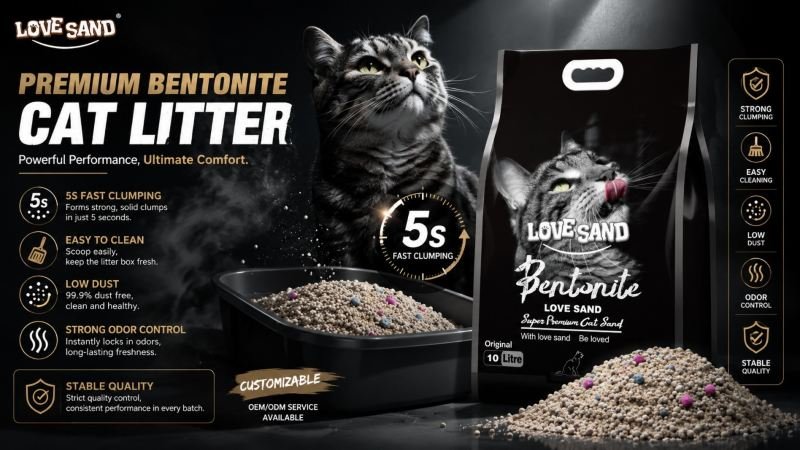
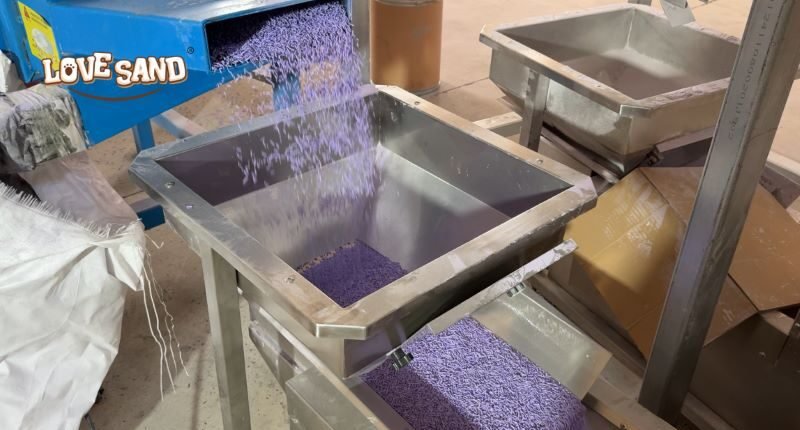
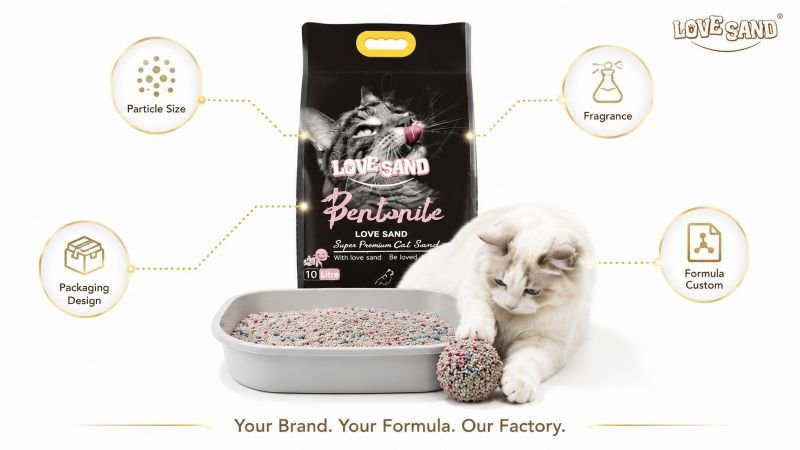
Even with stable materials, unstable process control produces variation. Different products need different management: bentonite cat litter, tofu cat litter, cassava cat litter and mineral sand are not produced by the same logic. That is why multi-category production experience has real value — a manufacturer must understand each product’s characteristics instead of handling everything the same way. love sand has produced multiple litter types for years; this experience lets us discuss specifications and quality requirements with clients based on each product’s actual production needs.
Samples Confirm the Product — Bulk Orders Confirm the Supply Chain
Samples are an essential step in product development, but sample and bulk production differ in nature: a sample is product verification; bulk is supply-chain execution. A sample may need only a small quantity, while a commercial order involves large volumes. After sample confirmation, keep following up: are specifications locked? Is packaging confirmed? Are production standards clear? Does the bulk order follow the confirmed sample? These questions decide whether the sample can truly become the reference standard for repeat orders. Brands sell bulk, not samples — so this matters especially to them.
Repeat Orders Are the Real Test
In B2B cat litter, repeat orders are everything. The first order may be market testing; the second usually means the product has gained some market recognition. When a client keeps restocking, the supplier must shift from “completing orders” to “continuously supporting the client” — which means understanding the client’s purchasing cycle: how often do they reorder? Are there seasonal swings in order volume? Which products are long-term stable SKUs? When will new products launch? A supplier who understands this information in advance can help arrange production much better. This is why a long-term relationship is worth more than any single order.
When Sales Grow, Capacity Becomes the Product
For a successful pet brand, order growth is good news — but from a supply-chain view, growth is also a new challenge. Year one: a few containers per quarter. Year two: sales grow, purchasing becomes monthly. Year three: entry into new country markets. At that point the brand no longer needs a supplier that can “produce product”; it needs a manufacturer that can support growth. If capacity is insufficient, orders queue up; if production scheduling cannot match the sales plan, the brand faces inventory gaps. For a high-frequency product like cat litter, a stockout often means consumers simply buy a competitor’s brand. This is why buyers should understand production scale, lines and long-term order capacity at the first cooperation.
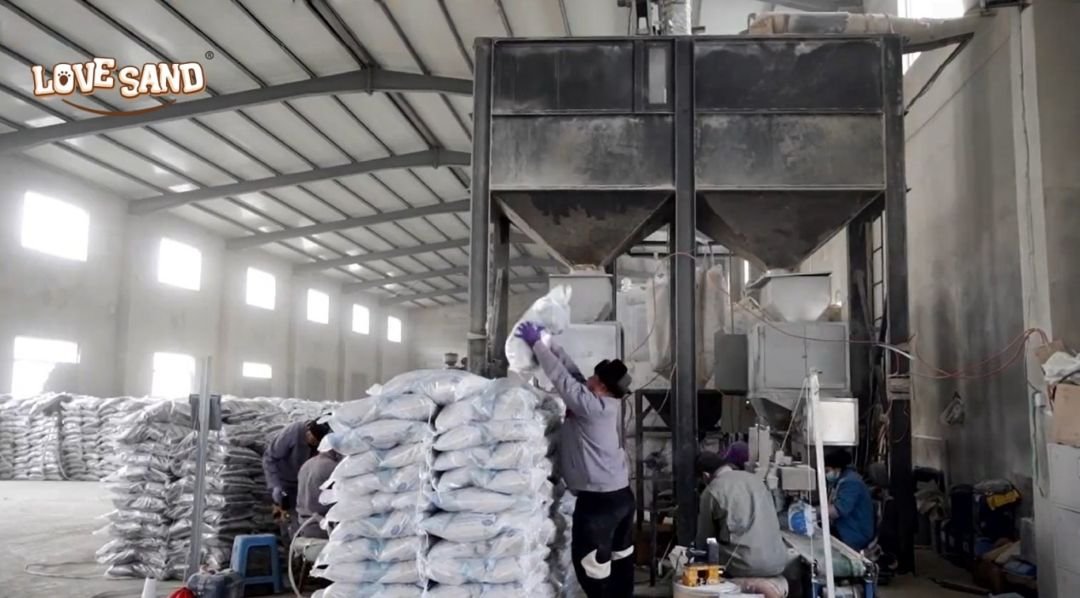
The manufacturing base behind love sand operates a large production system and has served overseas markets for years — our delivery record shows why lead-time capability is treated as seriously as product quality. For clients, the real value of that base is simple: when a brand grows from one SKU to several, the supplier still has the foundation to continue.
A Partner Should Adapt as Your Product Line Evolves
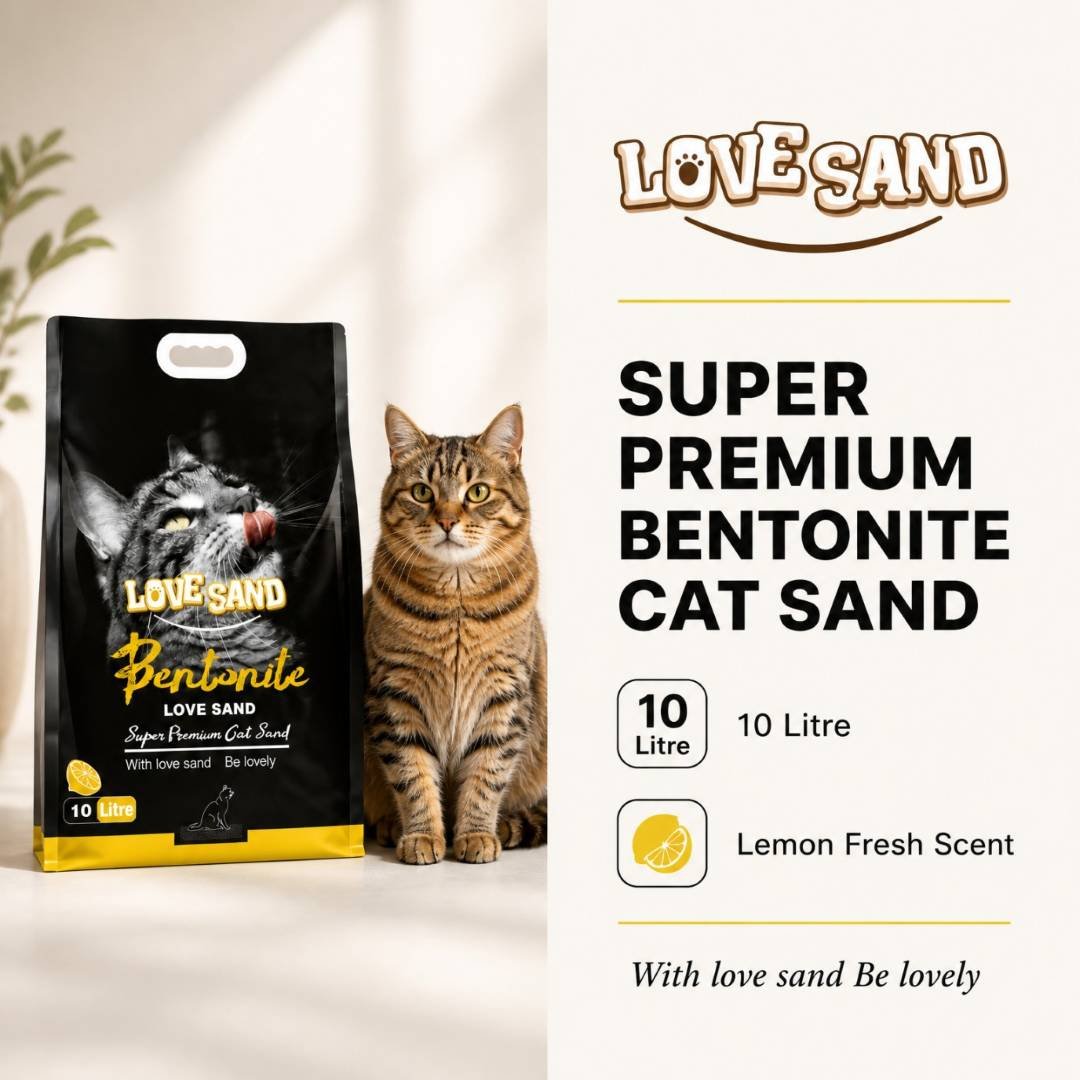
As a brand develops, purchasing needs change: a 4kg product becomes 8kg; standard packaging becomes private label; bentonite becomes bentonite plus tofu or cassava. If a supplier can only produce the original order, every change means finding a new partner — a lot of time and communication cost. A manufacturer with multi-category and OEM capability gives the brand much more room to develop. love sand’s system covers bentonita, tofu, cassava, arena mineral and mixed formula, and supports OEM and private-label projects for brand clients. For long-term clients, this means the supply chain can evolve together with the product line.
Transparent Communication Is Part of Reliability
Reliability is not only about machines and production lines — communication matters just as much. Overseas B2B orders involve long supply cycles. Clients may need to confirm packaging, shipping, order quantities and delivery dates before production begins. If the supplier does not respond in time, a small issue can grow into a delivery problem: a packaging file confirmed late can delay production; a spec change not confirmed in time can affect the final order. A reliable supplier keeps communication clear throughout the order. Not everything can be predicted — but what matters is that when things change, the client is told promptly.
Low Price Is Not Low Total Cost
This is one of the most valuable discussions in B2B purchasing. Suppose Supplier A quotes a little less per bag. Attractive — until A’s delivery slips, or batch variation triggers consumer complaints. Then the brand carries extra costs: order rework, inventory adjustment, customer complaints, market returns, lost sales, even reputation damage. Real purchasing cost should consider the whole supply chain, not just the unit price. This is why more mature buyers evaluate suppliers by total cost of ownership instead of unit price alone.
How to Judge Long-Term Suitability
Judge the Product, Not the Claims
A supplier saying “our quality is stable” is not evidence. Verify through samples, bulk orders and repeat orders over time.
Judge the Factory, Not the Catalog
Real capacity needs a real manufacturing system behind it. Factory scale, production lines, product range and production experience all help you judge the supplier’s foundation.
Judge Performance Under Growth
Completing a first order well is not hard. The real test is whether product and delivery stay stable when order volume increases.
Judge How Problems Are Handled
No long-term relationship is problem-free. What matters is whether the supplier is willing to communicate and can propose solutions.
Buyer Tips|What to Observe When Evaluating a Long-Term Supplier
When assessing a cat litter manufacturer, do not only ask about price and MOQ. Focus on:
- Product consistency — how does the supplier keep samples and bulk aligned? How are differences between batches controlled?
- Production capacity — today’s orders are fine, but can it support future order growth?
- Product range — if the brand develops new litter types later, does the supplier have the relevant capability?
- OEM capability — can it cooperate when the brand upgrades packaging, adds specifications or develops new products?
- Experiencia en exportación — has it served overseas clients long-term, and is it familiar with international order execution?
- Problem handling — if quality or delivery issues appear, can it communicate and resolve them in time?
If these questions get clear answers, you can judge with much more confidence whether this supplier fits a long-term cooperation.
FAQ|Long-Term Cat Litter Supplier Questions
Q1. Why keep observing a supplier after a great first order?
Q2. What most often causes differences between batches?
Q3. Why does capacity matter more after orders grow?
Q4. Can love sand support a brand expanding from one product to multiple cat litter SKUs?
Q5. Besides product quality, what else should I evaluate?
Q6. What if a supplier is cheaper but delivery is unreliable?
Conclusion|A Reliable Supplier Is Part of Your Supply Chain
For an overseas cat litter brand, choosing a reliable cat litter supplier is choosing the foundation of the next few years of supply. A supplier’s reliability cannot be judged by a quotation or a first sample — the real answer is verified over time: whether products stay consistent, orders complete on schedule, supply keeps up with growth, the product line keeps expanding, and both sides communicate well when problems appear. These factors together define a supplier’s long-term value.
love sand wants exactly this kind of long-term relationship. We offer bentonite cat litter, tofu cat litter, cassava cat litter, mineral sand and mixed formula, and we support future product expansion through stable production and OEM capability. For a growing cat litter brand, the most important thing a supplier can offer is not the lowest price on the first order — it is being on the other end of the supply chain, steadily supporting the brand one year, two years, and many SKUs later. That is the value a long-term B2B supply relationship should deliver.
Reviewed by: love sand pet-litter product team (Puyuan Dalian Pet Products Co., Ltd.). Last updated: 2026-09-14.
Más información sobre el fabricante: Sobre la arena del amor