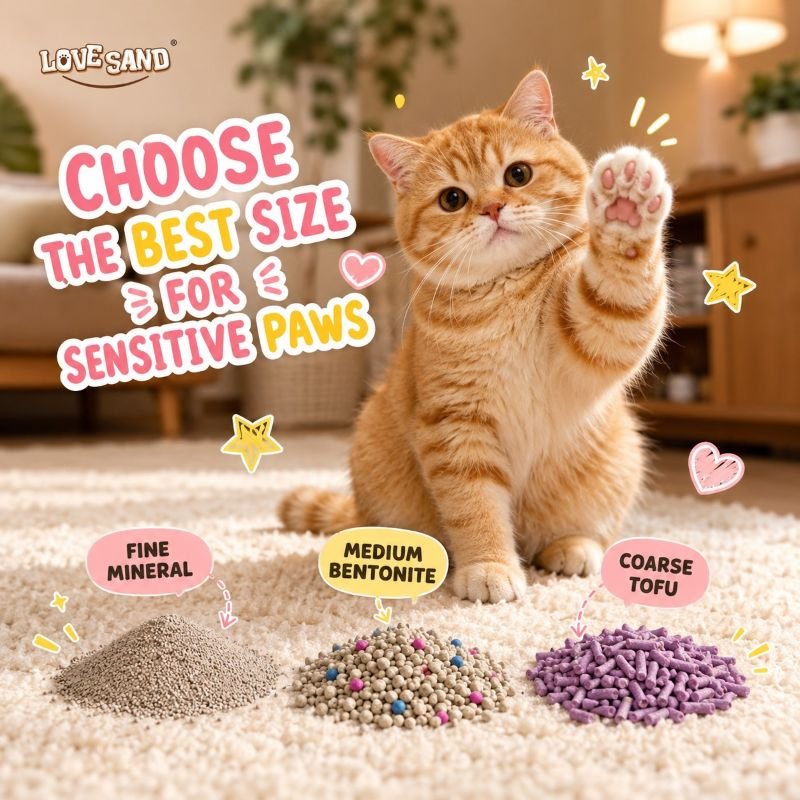
Most people buy cat litter, only looking at the material, fragrance and price, completely ignoring the particle size. As everyone knows, the particle size of cat litter is the core detail that determines the use experience. Particle thickness, length and roundness directly affect the five core experiences of cat’s foot feeling, agglomeration speed, dust amount, sand rate and loss rate.
If the particle size is wrong, even the best material will overturn. The particles are too fine, the dust is large, and the sand is serious; The particles are too thick, the cat’s feet feel poor, it doesn’t like to scrape sand, and the knot is incomplete. Cats of different ages, different use scenarios and different family needs have completely different particle sizes.
Based on the factory particle size standard, this paper dissembles the advantages and disadvantages of different particle sizes in detail, adapts to cats and scenes, helps users choose the right particle size accurately, and comprehensively enhances the cat-raising experience.
1. Classification of general standards for cat litter particle size industry
1) Fine particles: 1.0mm-2.0mm
More common in ultra-fine bentonite and micro-particle tofu sand. Fine particles, soft feet and fast agglomeration. However, there is a large amount of dust, high sand rate, and it is easy to get stuck on the floor mat and nail seam. Suitable for adult cats, not suitable for young cats and neat families.
2) Medium-fine particles: 2.0mm-3.0mm
The mainstream conventional size in the market has the strongest balance. Stable agglomeration, moderate dust, comfortable feet and controllable sand. Suitable for most families and cats of all ages, and it belongs to universal particle size.
3) Medium and coarse particles: 3.0mm-4.0mm
Coarse particles, high hardness, non-fragile, extremely low dust. Feet feel hard, and some cats need short-term adaptation. With little sand, low loss and strong durability, it is suitable for clean families and long-haired cats.
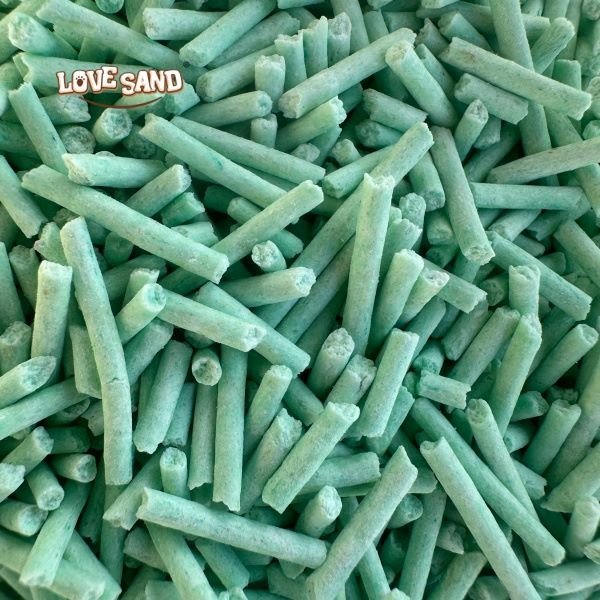
4) Large particles: more than 4.0 mm.
Super-large particles, almost zero dust and almost no sand. However, the speed of agglomeration is slow, the coverage is weak, and some cats reject the feeling of feet. Suitable for families with zero tolerance for dust, not for picky cats.
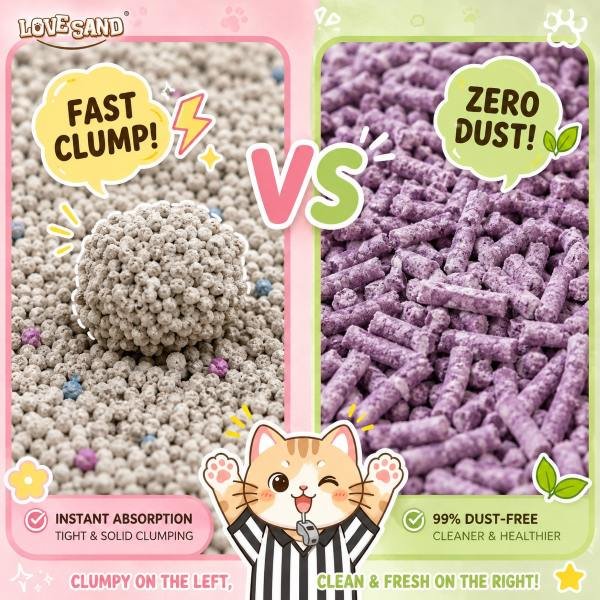
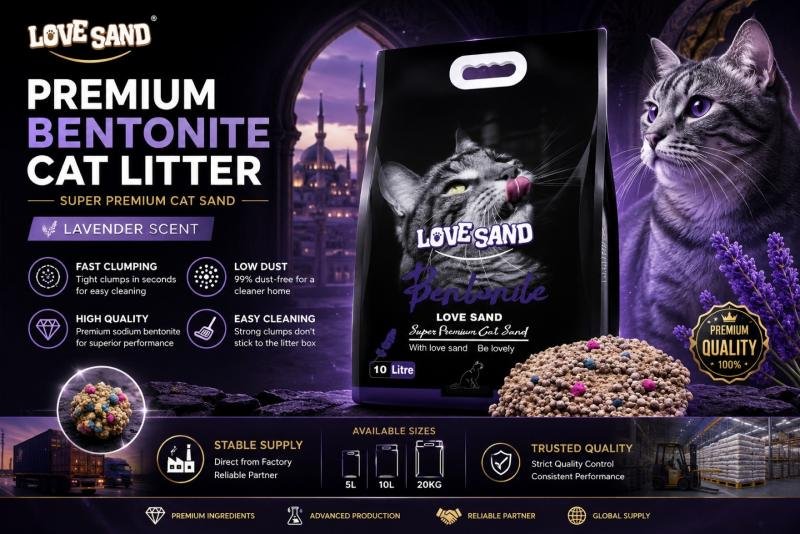
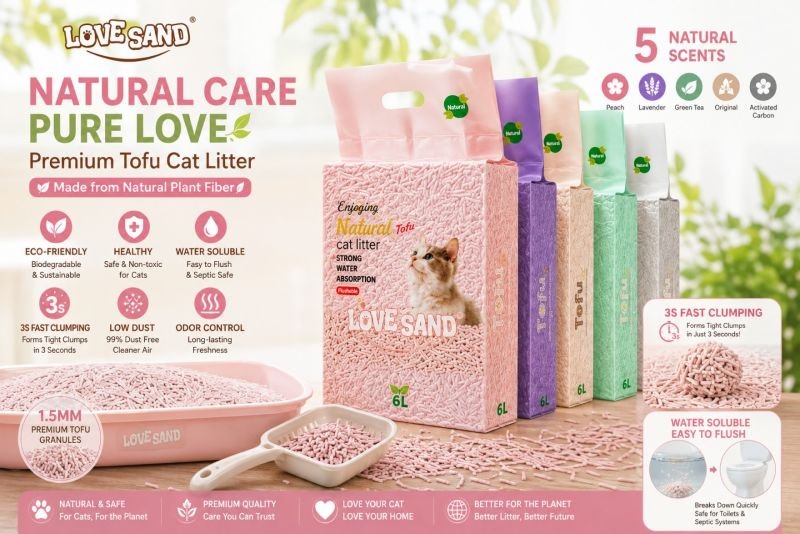
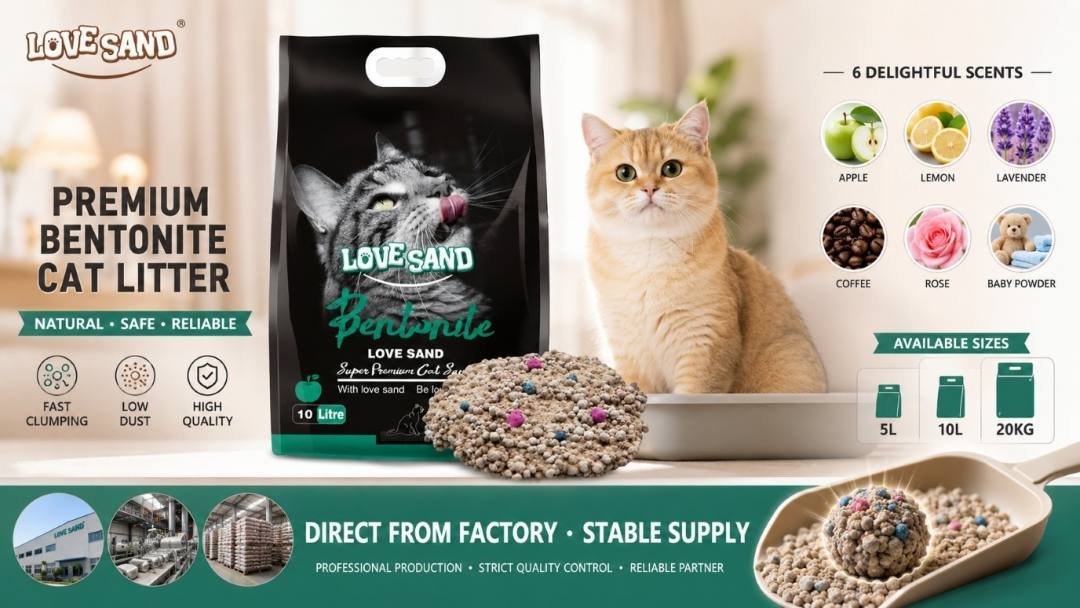
If you want the fast clumping of fine particles without the messy tracking, consider a scientifically blended mixed cat litter that combines fine bentonite with tracking-resistant tofu pellets.
2. The specific impact of particle size on the four core experiences
1) Effect on Feet Sense of Cats
Cats are sensitive to the soles of their feet and are very picky about the thickness of particles. Fine particles are soft and fit, and cats have the highest acceptance, and there is almost no adaptation period. Coarse particles have strong support and hard feet, and some cats will not like to scrape sand and perfunctorily go to the toilet. Super-large particles are easy to scratch feet, and sensitive cats and young cats are easy to repel.
2) Influence on agglomeration effect
The finer the particles, the larger the contact area with urine, and the faster and more compact the agglomeration. The coarser the particles, the slower the seepage velocity, the larger the surface agglomeration, the easier to loosen and the weaker the inclusion. Fine particles are suitable for cats with large urine output and multi-cat families. Coarse particles are suitable for cats with small urine output and low frequency of going to the toilet once.
3) Impact on dust and dust
The finer the particle size, the easier it is to produce floating dust during production and use. The problem of fine-grained cat litter dust is the most obvious, which is unfriendly to cat respiratory tract. The coarser the particle size, the more stable the structure is, the less the dust is, and the higher the overall cleanliness is.
4) Influence on sand and loss
Fine particles are easy to get stuck, the whole house has sand, and the loss is large. Coarse particles have enough self-weight, are not easy to get stuck, have little sand, have lower loss, and save sand after long-term use.
3. Choose the particle size of cat litter according to the cat type (precise adaptation)
1) Kittens (3 months -1 year old)
The soles of the feet are tender, the respiratory tract is sensitive, and they like to bite cat litter. Preference is given to 2.0-3.0mm particles with medium fineness, low dust and no slag. Ultrafine particles are not recommended to prevent accidental eating and inhalation of dust; Coarse particles are not recommended to avoid foot rejection.
2) Adult short-haired cat
The widest range of adaptation, 2.0-3.5mm can be used. The pursuit of agglomeration is fine, and the pursuit of cleanliness and low dust is coarse.
3) Long-haired cat
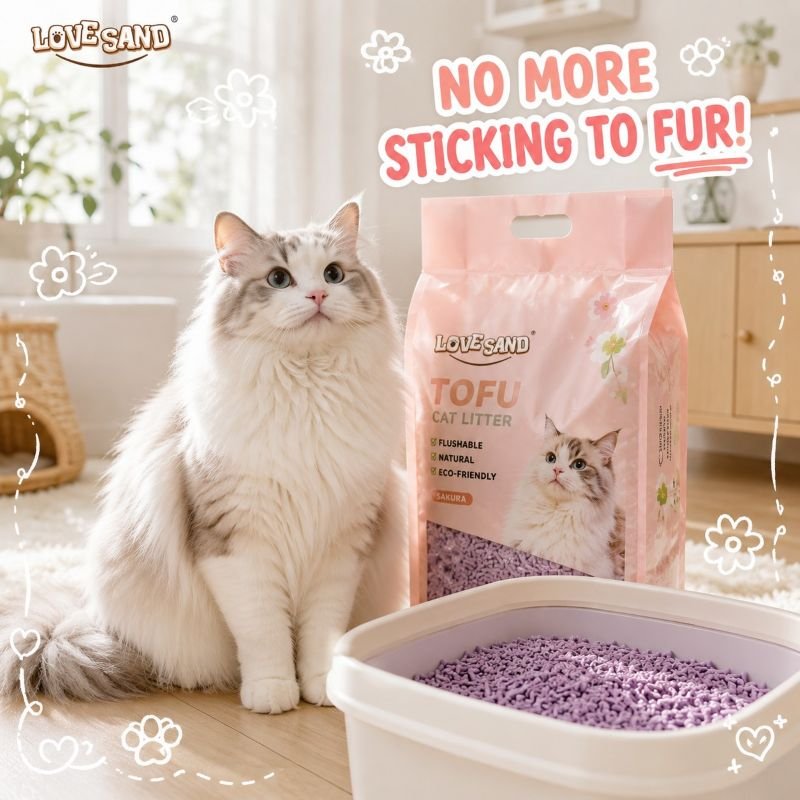
The mat has thick hair and fine particles are easy to get stuck with sand. Give priority to medium and coarse particles above 3.0mm, and greatly reduce the problems of sticking feet and sand.
4) Old cat sand sensitive cats
The respiratory tract is fragile and the soles of the feet are sensitive. Give priority to low dust and medium particle size, give consideration to comfort and cleanliness, and avoid the stimulation of ultrafine dust.
4. Electing the particle size according to family needs.
1) Families with cleanliness and low dust demand
Give priority to medium and coarse particles, with the lowest dust, the least sand and the cleanest house.
2) Families with many cats and high urine output
Medium-fine particles are preferred, resulting in faster agglomeration, more stable package, less leakage, and less odor and bottom sticking.
3) Families that pursue saving money and low consumption.
Coarse particles have high hardness, non-friability, low loss, more durability and higher long-term cost performance.
4) Cats are extremely picky and prone to stress when changing sand.
The medium standard particle size is used, which has the highest fitness and almost no rejection problem.
5. Common misunderstandings in particle size selection
Myth 1: The finer the particles, the better.
Fine particles agglomerate well, but the comprehensive experience is not excellent because of its large dust, serious sand belt and high loss.
Myth 2: The coarser the particles, the higher the grade.
Coarse particles are clean and durable, but the clumping is slow and the feet feel hard, and the cat’s acceptance varies from person to person.
Myth 3: Uniform particle size is suitable for all cats.
Different cats have completely different foot preference, hair length and sensitivity, so they must be selected accordingly.