
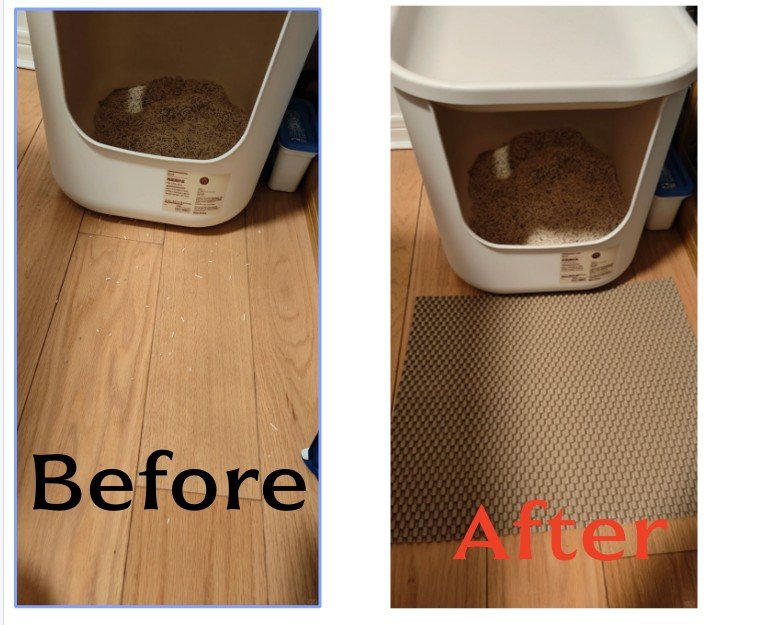
It is one of the most common complaints of cat owners all over the world that cat litter is taken out of the basin (that is, “sand”).
Even if a cat litter performs well in agglomeration or deodorization, the problem of sand entrainment may still significantly affect the satisfaction of users.
It not only increases the workload of daily cleaning, but also makes the home environment look untidy.
For end users and importers, it is very important to deeply understand the phenomenon of sand belt for selecting or developing better products.
What is cat litter taken out of the basin?
The so-called “cat litter tracking” refers to the phenomenon that cat litter particles are taken out of the cat litter basin by the cat’s claws.
After cats use the litter box, tiny litter particles will attach to their fur or get stuck in the gaps between the soles of their feet. Subsequently, these particles will be scattered on the floor, carpet or furniture.
Over time, the area around the litter box will become messy.
Why is the problem of cat litter tracking more important than people think?
In the product development stage, the problem of sand is often easily underestimated.
However, it directly affects customer satisfaction and repurchase intention.
Even if a cat litter performs well in deodorization, the serious problem of sand entrainment will still make users feel frustrated.
Consumers may even decide to change the brand of cat litter just because of hygiene problems.
For retailers and importers, the problem of sand is one of the key factors that affect consumers’ evaluation and word of mouth.
Why is there a phenomenon of cat litter tracking?
The phenomenon of sand is mainly affected by physical adhesion and particle movement characteristics.
When a cat digs or buries excrement, the cat litter particles will turn with it.
Some particles will get stuck in the fur or claw seam of the cat’s sole. Other particles may adhere to the claws due to moisture or electrostatic adsorption.
Subsequently, these attached particles will be taken away from the area where the litter box is located by the cat.
Material factors affecting sand belt phenomenon.
Particle size distribution
Particle size is one of the most critical factors affecting the phenomenon of sand belt.
Fine particles are easier to attach to cats’ paws and fur. They are also easy to get stuck in the gap between cats’ paws.
Large particles of cat litter will improve this situation; However, if the particles are too large, it may reduce the comfort of cats when using them.
Therefore, maintaining the balance of particle size distribution is very important to ensure the comprehensive performance of cat litter.
Particle weight and density
Heavier cat litter particles tend to fall off cats’ paws more easily. Lightweight cat litter particles are more likely to be taken out of the cat litter basin by cats.
That’s why mineral-based cat litter (such as bentonite cat litter) is usually better than cassava cat litter in controlling sand entrainment.
The density of cat litter particles directly determines the difficulty of being taken away from its original position.
Surface texture and adhesion
The surface texture determines the firmness of particle adhesion.
Rough surfaces are more likely to catch cats’ fur.
Smooth surface energy weakens adhesion and makes it easier to fall off.
However, too smooth particles may affect the caking effect of some materials of cat litter.
Manufacturers must carefully weigh various performance factors in order to achieve the best balance.
Dust content and fine particles
Dust plays a hidden but vital role in the problem of cat litter Tracking.
Fine particles have powder-like characteristics and are easy to spread.
They are easier to attach to cats’ paws and fur than larger particles.
Adopting low dust production technology can significantly reduce complaints about cat litter.
Design factors affecting cat litter tracking
Particle size and proportion
As we all know, small particles are easy to bring out, but agglomeration is better; Large particles of cat litter have low carrying rate, but poor water resistance.
This requires manufacturers to produce cat litter, especially bentonite cat litter, according to a more perfect size ratio.
Balancing particles of different sizes and mixing sizes can avoid the problem of sand entrainment and give consideration to excellent agglomeration ability.
Surface coating or treatment
Some high-end cat litter products will adopt special surface treatment technology.
These treatments can reduce the viscosity of the particles and make them fall off the cat’s paws more easily.
This technology is more common in high-end mineral cat litter or mixed cat litter.
Although it will increase the production cost, it can significantly improve the user experience.
Humidity control during use
The increase of humidity will greatly aggravate the problem of cat litter. Wet particles stick to cats’ paws more easily.
Poor agglomeration effect or slow water absorption rate will lead to cat litter particles being more easily taken out of the basin.
This is why the characteristics of rapid agglomeration are indirectly related to the problem of controlling the cat litter.
Cat litter basin design and environmental factors
The problem brought by cat litter is not only the defect of the product itself, but also closely related to the use environment.
An open litter box is more likely to cause particles to scatter outside the box. Deep or closed cat litter pots help to reduce the spread of particles.
Placing an anti-belt sand pad outside the cat litter basin can effectively intercept the falling cat litter particles.
The performance of different types of cat litter.
Bentonite/mineral sand cat litter
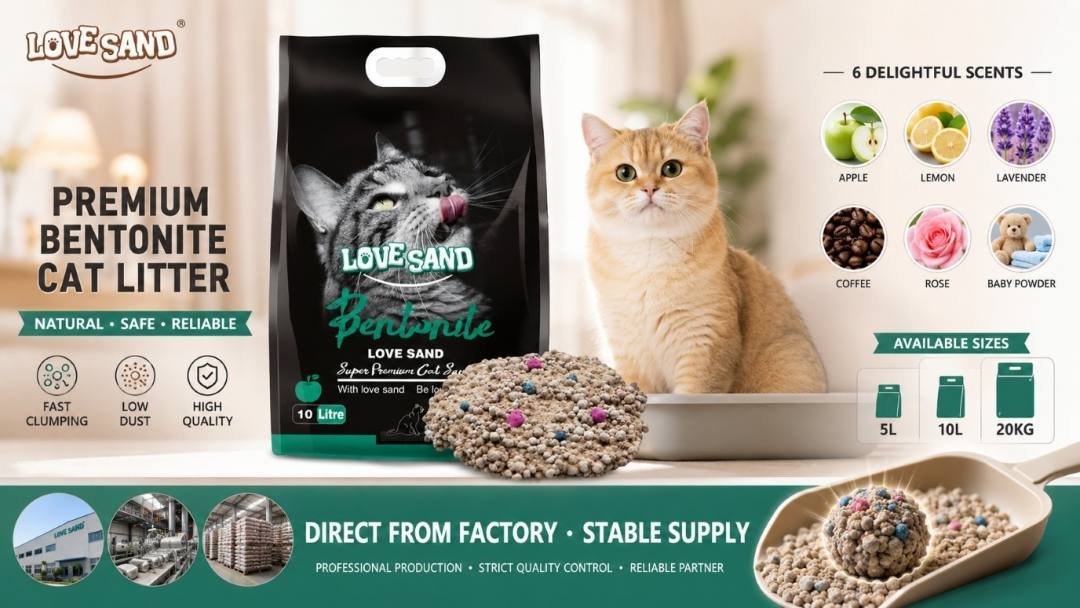
Cat litter based on bentonite has moderate performance in preventing from taking out.
Its heavy weight helps to prevent the cat litter from being taken to a far place.
However, the fine dust particles produced in the process of use may still lead to the problem of cat litter.
Adopting high-quality processing technology or dust-free technology can significantly alleviate this problem.
فضلات القطط التوفو
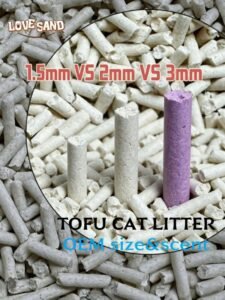
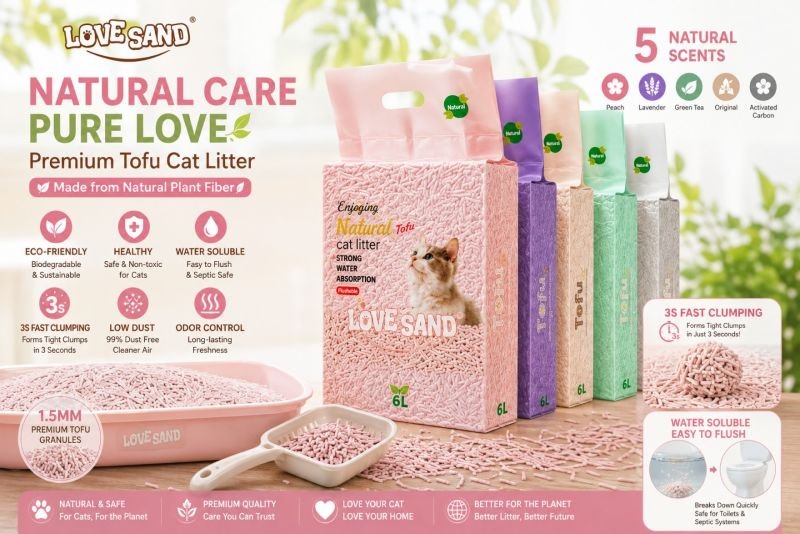
فضلات القطط التوفو is light in texture and belongs to plant-based materials.
This feature makes it relatively easy for cats to take it out of the basin.
Its particles easily adhere to cats’ paws and fur. However, its low dust characteristics make up for this problem to some extent.
Now 3MM tofu cat litter can alleviate the situation of sand, which is a worthy choice.
فضلات القطط هلام السيليكا
The performance of taking out (tracking) silica gel cat litter is uneven.
Because of the larger particles, the diffusion of fine dust is alleviated.
However, once kicked out of the litter box by a cat, these particles may splash around.
Its overall performance depends largely on the design of particle size.
How to effectively reduce the problem of cat litter tracking?
The problem brought by cat litter cannot be completely eradicated, but it can be significantly alleviated.
The solution involves product selection and environmental layout.
Choose cat litter with high density and excellent processing.
Materials with high density are not easy to be taken out of the litter box.
Fine screened cat litter products contain less fine dust particles.
This can directly improve the cleanliness of the environment.
Optimizing particle shape design
Uniform particle size helps to reduce the irregular scattering of cat litter.
The rounded particle shape helps the cat litter to fall off the cat’s paws.
Advanced manufacturing technology plays a key role in this link.
Clever use of cat litter pad
Using cat litter pad is one of the most effective solutions.
They can intercept cat litter particles before they are scattered on the indoor floor.
The textured surface design can improve the efficiency of trapping cat litter.
Optimize the settings of the litter box.
The closed cat litter basin helps to prevent cat litter particles from splashing out.
The raised basin wall can prevent cats from planing cat litter out of the basin.
Placing the litter box away from crowded areas also helps to keep the environment clean and tidy.
Maintain an appropriate depth of cat litter.
Too little cat litter will cause the cat’s paws to contact the pelvic floor directly, thus increasing the risk of cat litter splashing.
Maintaining a suitable depth of cat litter is helpful to improve the water absorption effect and reduce the adhesion of cat litter to cat paws.
This can also comprehensively improve the sanitary condition of the litter box.
Why is it important for brands and importers to bring out cat litter?
The problem of cat litter tracking is one of the most complained problems by consumers on the Internet.
This issue is frequently mentioned in product reviews and user feedback. Even a small improvement can significantly enhance consumers’ overall impression of the brand.
In the highly competitive market environment, the anti-take-out performance of cat litter may even affect consumers’ repurchase rate.
Therefore, more and more manufacturers began to increase their investment in “particle morphology engineering” technology in order to completely solve this problem.
الأسئلة الشائعة
Q1: Which type of cat litter is the least sticky?
A1: Heavier and finely processed bentonite or mineral sand, strip-shaped tofu cat litter and large-sized cat litter usually perform best in this respect.
Q2: Why is tofu cat litter easier to be taken out of the cat litter basin?
A2: Because of its light texture, it is easy to attach to cats’ paws and hair. However, large-size strip tofu cat litter can effectively avoid this problem.
Q3: Does the cat litter pad really help solve the problem of cat litter taking out?
A3: Yes, they can significantly reduce the situation that cat litter is taken outside the litter box.
Q4: Will the dust content aggravate the problem of cat litter?
A4: Yes, fine dust is easier to diffuse, thus increasing the degree of environmental pollution.
Q5: Can the problem of cat litter be completely eliminated?
A5: No, but by optimizing the material and product design of cat litter, this problem can be greatly alleviated.
رد واحد