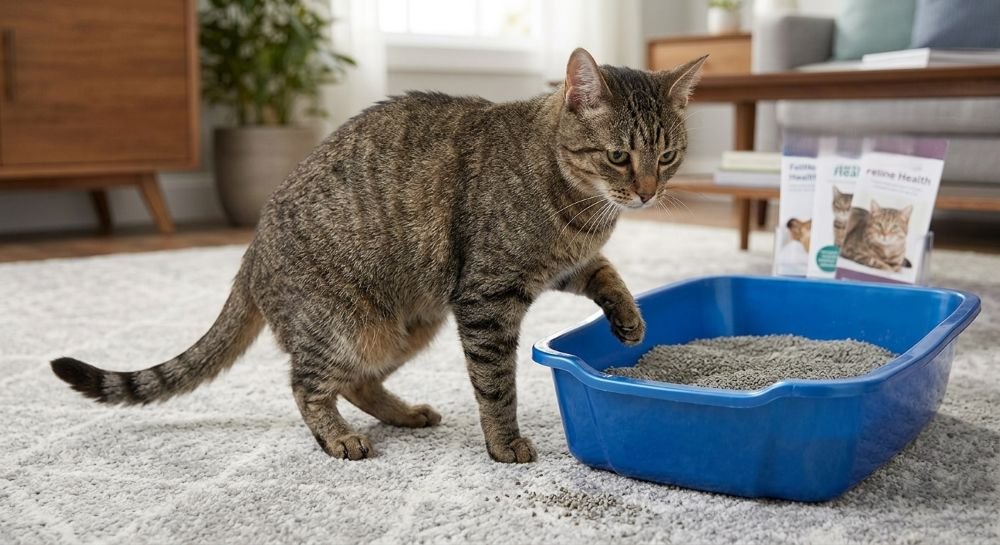
A cat that has been using a litter box suddenly stops defecating, which will make any owner feel anxious.
Urine stains on the floor, excrement on the bed, or excrement in a hidden corner usually indicate that things have changed.
Many people think that this is a behavioral problem, but in fact, refusing to use the litter box is often related to health, environment, stress or the quality of litter.
Knowing the real reason is the quickest way to solve the problem and prevent it from becoming a long-term habit.
This blog will explain why the cat suddenly refuse to use litter box and what the owner should do next.
Why should we take seriously the problem that cats suddenly refuse to use the litter box?
Cats are naturally clean. Most cats like to defecate in a safe, quiet and clean place.
When cat suddenly refuse to use litter box, it usually means that the litter box no longer makes them feel comfortable, safe or suitable.
Sometimes the reason is simple and easy to solve.
Sometimes, this may be an early sign of illness or pain.
Therefore, the cat’s sudden refusal to use the litter box must not be ignored.
Reason 1-health problems and pain.
Health problems are one of the most common reasons why cats stop using litter boxes.
If it feel pain when using a litter box, the cat may associate the litter box with discomfort and avoid using it.
Urinary system problems
Urinary system infection, crystallization, inflammation or obstruction may all cause micturition pain.
Cats may frequently squat to urinate, forcibly urinate, make noises, or only excrete a small amount of urine at a time.
This situation requires immediate medical attention.
Male cats are particularly prone to dangerous urinary tract obstruction.
Arthritis or mobility problems.
Older cats may find it difficult to climb into the high-edged litter box.
Joint pain can make it difficult for them to enter, turn around or squat.
Cats may choose softer or more accessible ground.
Low-entrance cat litter pots are usually very helpful.
Digestive problems
Constipation, diarrhea or stomach upset can also change the defecation habits of cats.
If defecation becomes stressful, the cat may avoid the usual defecation place.
Reason 2-The litter box is messy.
Cats pay great attention to cleanliness.
A dirty litter box is one of the fastest reasons why cats avoid defecation.
If the feces in the litter box accumulate for a long time, it will produce odor and the litter box will become uncomfortable.
Some cats can tolerate it for a while, but many cats will look for cleaner alternatives
Cleaning frequency is very important.
Most litter boxes should be cleaned every day.
Families with many cats may need to clean up many times a day.
Even high-quality cat litter can’t make up for the problems caused by improper cleaning.
Regular replacement is also important.
As time goes by, even the cat litter that looks clean will leave odor and moisture.
Changing cat litter regularly and thoroughly is very important for maintaining hygiene and improving the acceptance of cats.
Reason 3: Cats don’t like cat litter itself
Cats can be very picky about the texture, smell and touch of cat litter.
Sudden brand change usually leads cats to refuse to use new cat litter.
Even if humans think the new cat litter is better, cats may not think so.
Sensitive texture.
Some cats don’t like sharp crystals, coarse particles or coarse sand.
Some cats like the soft sandy texture under their paws.
If the cat refuses to eat after changing the litter, then the texture is probably one of the reasons.
Strong fragrance.
The fragrant cat litter may be fragrant to people, but it is hard for cats to accept.
Cats have a much more sensitive sense of smell than humans.
Non-scented or lightly scented cat litter is usually safer.
Dust problem
Cat litter with more dust will irritate the cat’s nose and eyes.
Sensitive cats may avoid litter pots that produce obvious dust.
Low dust cat litter is usually a better choice.

Reason 4-Location problem of the litter box.
The location of the litter box is more important than many owners realize.
Cats need privacy, safety and convenience.
Noisy or nervous positions can lead cats to avoid behavior.
Crowded areas
Cat litter pots placed near washing machines, entrances or busy corridors may make cats feel unsafe.
Sudden noise may scare the cat who is using the litter box.
Cats may avoid using it again because of this.
Hard to reach location
Convenience becomes a problem if the litter box is located upstairs, behind obstacles or away from the cat’s daily activities.
Older cats or anxious cats especially need easy access.
Near food or water.
Many cats don’t like to excrete near food or water.
Please separate the cat litter basin from the food basin and drinking place.
Reason 5-Stress and emotional changes
Cats are very sensitive to environmental changes.
Stress is one of the main reasons why cats suddenly refuse to use the litter box.
Move or rearrange furniture.
Moving or changing the layout of the room may upset the cat. Cat.
Their familiar smell map will change, which may affect their defecation habits.
New pet or new member
A new baby, a guest, a dog or a second cat may upset the cat.
Some cats will respond by marking their territory or avoiding the shared litter box area.
Outdoor stressors
Cats may react to neighbors’ cats seen through the window.
Territorial anxiety can lead to indoor defecation problems.
Reason 6-Insufficient number of litter pots.
In a multi-cat family, a litter box is usually not enough.
Competition or food protection behavior may prevent cats from using the litter box.
Some cats will refuse to use the litter box after other cats have used it.
A common suggestion is to equip each cat with a litter box, plus a spare one.

How to choose the best cat litter for multiple cats families? >>
How to solve the problem that cats refuse to use the litter box step by step?
Don’t punish cats.
Punishment only increases the cat’s fear and usually makes the problem worse.
Instead, possible causes should be systematically investigated.
Step 1-Eliminate the disease.
If the cat suddenly refuse to use litter box, especially after defecation or frequent attempts, please contact the veterinarian first.
You should check for diseases as soon as possible.
Step 2-Clean the litter box thoroughly.
Wash the litter box with mild soapy water.
Replace all cat litter.
Use enzyme cleaner to remove the residual odor in the cat’s excretion area.
Step 3-Improve the quality of cat litter.
Try to use fragrance-free, low dust and comfortable cat litter.
Cats usually like delicate, soft and clean cat litter.
Avoid changing multiple factors at once.
Step 4–Improve the placement of the litter box.
Move the litter box to a quiet and low-pressure area.
Ensure that cats can easily get in and out and have privacy.
If necessary, you can use more than one litter box.
Step 5-Reduce Stress
Keep regular feeding and playing time.
Provide hiding places, vertical spaces and quiet areas.
It is very important to introduce new pets step by step.
The best cat litter characteristics for picky cats.
Some cats are more picky than others.
Products with the following characteristics are usually helpful:
* Low dust cat litter
* fragrance-free formula
* Soft and skin-friendly texture
* Strong deodorization
* Quick-forming cat litter
* It is not easy to bring out cat litter.
Comfort and cleanliness are usually more important than fancy smells.
When the problem becomes a habit.
If cats repeatedly excrete outside the litter box, odor memory will strengthen this behavior.
Therefore, timely intervention is essential.
Thoroughly clean all drainage areas.
Temporarily prevent cats from entering the litter box if necessary.
Reward cats with gentle praise or snacks for their proper use of the litter box.
What can buyers and brands learn from it?
Cats’ refusal to use litter boxes is not just a matter of pet behavior.
It also reflects consumers’ demand for cat litter products.
Consumers usually choose products that can solve practical problems: low dust, effective deodorization, comfortable texture and easy cleaning.
Brands that understand these needs can get a higher repurchase rate.
Summary
When a cat suddenly refuse to use litter box, there are usually clear reasons behind it.
Health problems, dirty environment, excessive pressure, poor quality of cat litter and improper placement of cat litter pots are the most common reasons.
In most cases, if the root cause can be found early, the situation will be improved.
The goal is not to punish, but to restore the cat’s comfort, trust and daily habits.
Frequently Asked Questions
Q1: Why did my cat suddenly refuse to use litter box overnight?
Answer 1: Sudden refusal to use the litter box is usually caused by illness, pain, stress, dirty litter box or recent environmental changes.
Q2: My cat urinates outside the litter box. Should I punish it?
Answer 2: No. Punishment will increase the cat’s anxiety and usually make this behavior worse.
Q3: Will changing the litter box cause the cat to refuse to use the litter box?
Answer 3: Yes. Cats may reject new texture, smell or dusty cat litter.
Q4: How many litter boxes do two cats need?
Answer 4: There are usually three litter basins in total-one for each cat and one for spare.
Q5: When should I take my cat to the vet?
Answer 5: If a cat has difficulty urinating, frequent urination, crying or is unable to urinate normally, it should seek medical attention immediately.