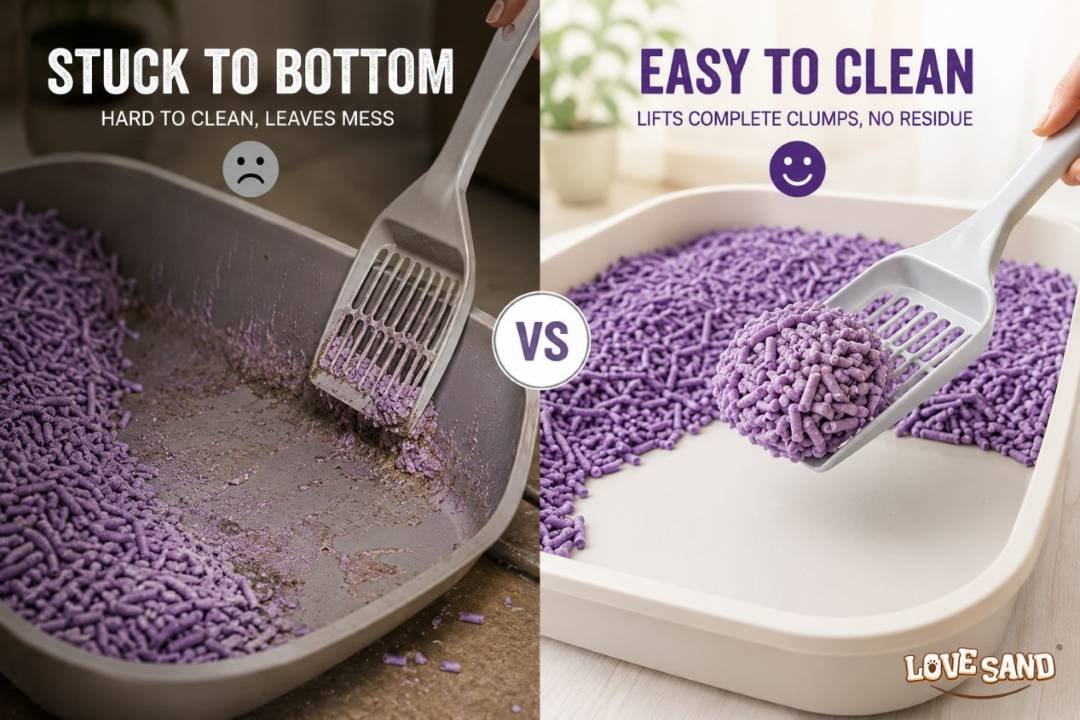
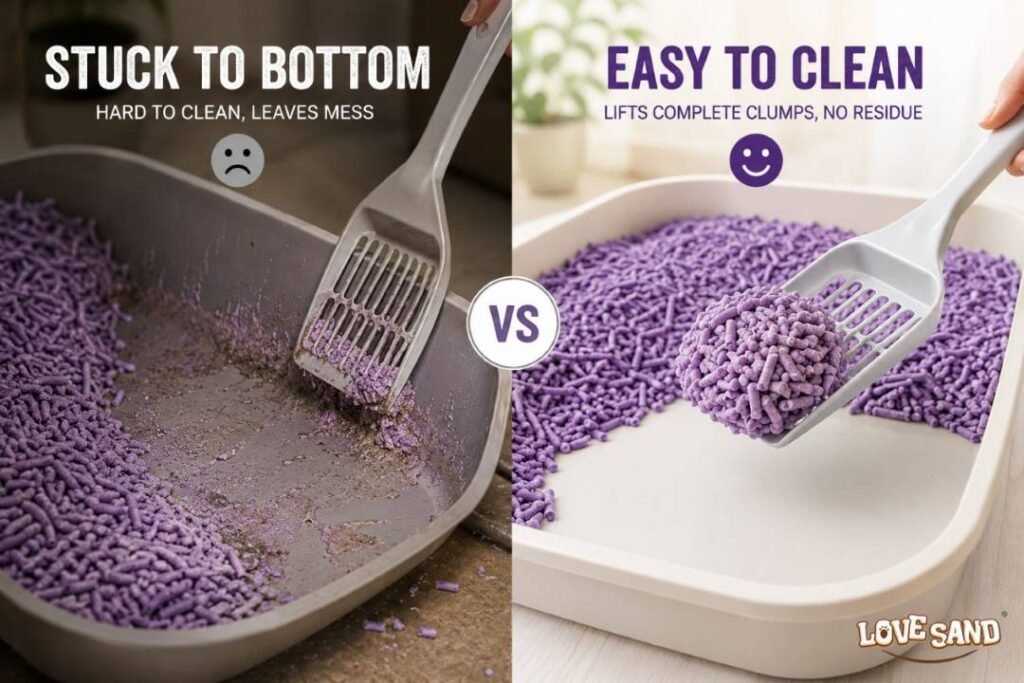
Almost all shovel officers have encountered the same problem: after the cat goes to the toilet, the urine sticks firmly to the bottom of the cat litter box. When shoveling sand, it needs to be scraped hard and dug repeatedly, which not only consumes a lot of time and energy, but also leaves a thin layer of dirty sand, which is not completely cleaned. The residual urine sand will continue to ferment, emit odor and breed bacteria. In just one or two days, the cat litter basin will be filled with odor, which will seriously affect the home environment and the cat toilet experience.
Sticking to the bottom of cat litter is never an operational problem, but it is caused by the substandard water absorption, agglomeration and water locking performance of cat litter. Inferior cat litter is slow in water absorption, fast in infiltration and loose in agglomeration, so urine can’t quickly coagulate and form, and directly penetrates into the bottom layer to adhere to the basin wall.
This paper will deeply analyze the core reasons of the sticky bottom of cat litter, share the professional purchasing skills of non stick cat litter, completely solve the cleaning problem of shovel officers, and bid farewell to the tedious operation of scraping and sand.
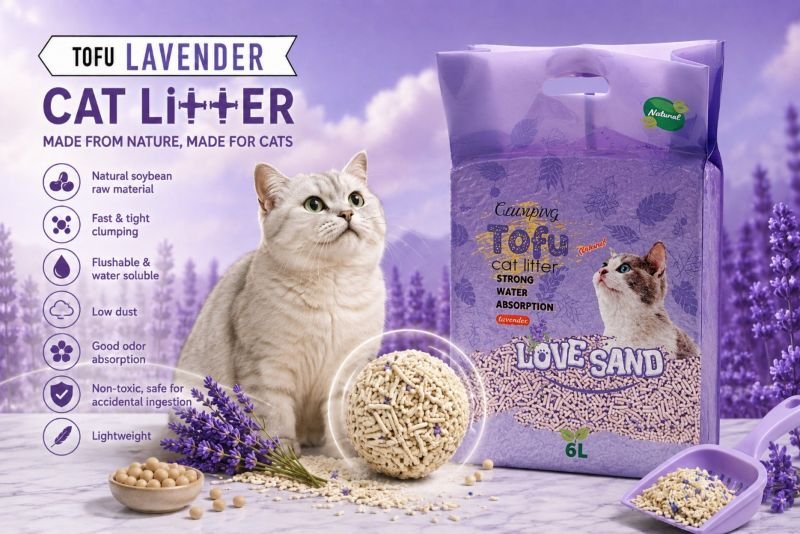
1. The core reason why cat litter sticks to the bottom is that 90% of people choose the wrong one.
1.1 The water absorption rate is too slow, and the urine quickly penetrates the bottom layer.
Inferior cat litter has poor pore structure and low water absorption efficiency. After the cat urinates, the cat litter cannot absorb urine instantly, and a large amount of urine will quickly penetrate the surface sand particles and directly penetrate into the bottom of the cat litter basin. When the bottom cat litter is soaked and wet for a long time, it will firmly adhere to the bottom of the basin, forming a stubborn bottom-sticking stain, which is extremely difficult to clean.
1.2 The lump is loose and fragile, and urine cannot be completely wrapped.
High-quality cat litter will quickly condense into a compact and hard whole sand mass, which will completely wrap all urine, without water seepage and scattering. However, the low-end cat litter is slow in agglomeration, loose in texture, soft and fragile, and the sand mass is broken when shoveling sand, and the residual urine and fine sand directly stick to the basin bottom, forming the problem of sticking to the bottom.
1.3 Cat litter is too thin to fully lock water.
In order to save sand, many shovel officers spread sand with a thickness of less than 3cm. The sand layer is too thin to accept and wrap cat urine, which directly impacts the basin bottom, causing a large area to stick to the bottom. This is also the misunderstanding that novice shovel officials are most likely to step on. Thin sand is not only easy to stick to the bottom, but also easy to cause cats to urinate and step on urine.
1.4 Cat litter has a single material and poor adaptability.
Single tofu sand is light in texture and weak in water retention, and it is easy to seep and stick to the bottom in the scene of large urine volume; Ordinary bentonite has large dust and slow agglomeration, and it is easy to soften and stick to the basin in wet environment. The limitation of single material is the key to not completely solve the problem of sticking to the bottom, and high-quality mixed cat litter can perfectly avoid this problem.
2. Multiple troubles caused by sticky cat litter.
2.1 Cleaning is twice as difficult and takes a lot of time and energy.
Cat litter with sticky bottom cannot be cleaned at one time, and the bottom of the basin needs to be scraped repeatedly every time the sand is shoveled, which is not only extremely inefficient, but also easy to scratch the inner wall of the cat litter basin. In the long run, the cat litter basin is seriously worn, hiding dirt and accommodating dirt, and the cleaning cost is greatly increased.
2.2 Residual urine is fermented, and peculiar smell bacteria grow.
The urine and wet sand left at the bottom of the basin cannot be completely removed, which will continue to ferment and deteriorate, releasing a strong smell of urine, and at the same time breeding a large number of bacteria such as Escherichia coli and mold, which not only pollutes the indoor air, but also makes the cat litter basin a hotbed of bacteria, endangering the health of cats.
2.3 Cats resist going to the toilet, causing bad habit of urinating indiscriminately.
Cats have a sensitive sense of smell and love to be clean. The odor left on the sticky bottom and the wet and messy toilet environment will make cats have strong resistance. For a long time, cats will refuse to use the litter box, causing problems such as urinating indiscriminately and holding their urine, which will induce urinary system diseases.
3. Professional Selection Standard for Non-stick Bottom Quality Cat litter
3.1 Give priority to materials with high water absorption rate, and lock water instantly.
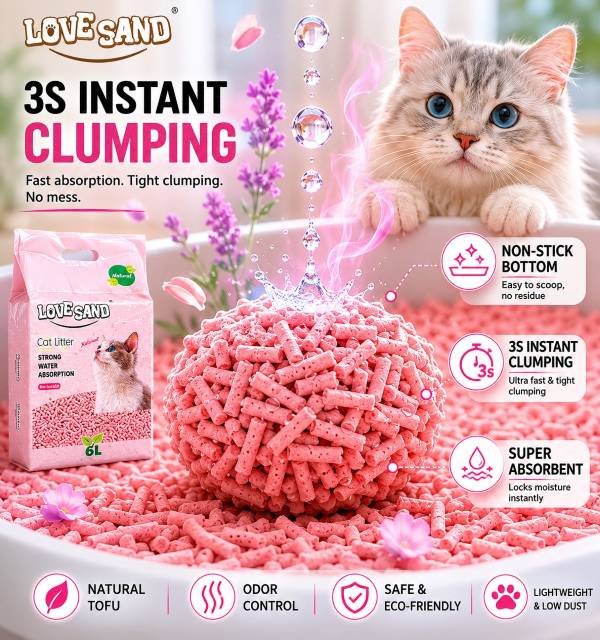
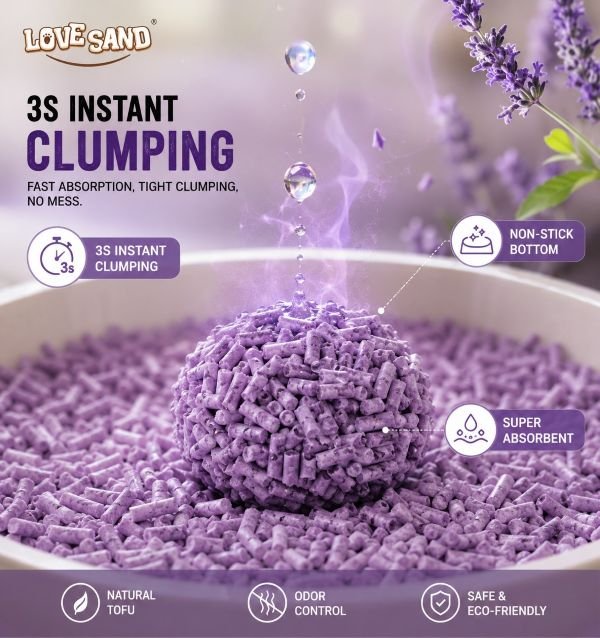
The core of non-stick cat litter is fast water absorption and instant water locking. High-quality cat litter needs to have a fast water absorption capacity of 3 seconds, and the cat can completely absorb water when urinating, so as to prevent urine infiltration. The mixed material of refined bentonite and natural bean curd sand was optimized. Combining the advantages of water absorption and agglomeration of the two materials, the water locking ability far exceeded that of single cat sand.
3.2 The agglomeration is firm and hard, and it will not collapse, spread or seep.
Reliable non-stick cat litter has a hard texture, high density and good integrity after being agglomerated, and can completely wrap urine regardless of the urine volume. When shoveling sand, the whole litter is lifted, not broken, not left, and the basin bottom is clean and free from stains, so as to prevent sticking from the root.
3.3 High-density granular structure, moisture-proof and impermeable.
High-quality cat litter adopts high-pressure and high-density molding technology. The sand particles have compact structure, stable water absorption, and are not easy to soften and foam. Even in the scene of long-term humidity and excessive urine, they can maintain stable performance, and there will be no problems of large-area bottom adhesion and pot paste.
3.4 Low dust and bacteriostasis, giving consideration to cleanliness and health.
High-quality non-stick cat litter has the properties of low dust, bacteriostasis and deodorization. While solving the problem of cleaning sticky bottom, it can prevent dust hazards and odor breeding, and protect the health of cats and the home environment in an all-round way.
4. Correct use of skills to completely eliminate the problem of bottom sticking.
4.1 Ensure the sand laying thickness, with the standard thickness of 4-5cm.
The thickness of sand for domestic cats is 4-5cm, and the sufficient sand layer can completely accept and wrap urine, so as to prevent urine from directly impacting the basin bottom, greatly reducing the probability of sticking to the bottom, and being suitable for cats with excessive urine.
4.2 Shovel sand in time to avoid soaking and softening of sand mass.
Clean up the sand ball in time after the cat goes to the toilet, so as to prevent the sand head from soaking in the cat litter box for a long time to soften and collapse, prevent residual water from sticking to the bottom, and keep the cat litter box clean and dry.
4.3 Regularly turn over sand and replace the whole basin.
Turn the bottom cat litter regularly every day to keep the sand dry and loose; Replace the cat litter once a week in the whole basin, thoroughly clean up the residual stains at the bottom of the basin, and completely put an end to stubborn sticking to the bottom and odor.
Common FAQs
Q1: Why does the new cat litter still stick to the bottom?
Q2: Which is less sticky, tofu sand or mixed sand?
Q3: Too many cats and too much urine, how to completely stop sticking to the bottom?
Q4: Does the litter box need to be replaced regularly?
Q5: Will the non-stick cat litter get worse in water absorption and deodorization?
Sticking to the bottom of cat litter is a problem that can be completely cured. The core lies not in frequent cleaning, but in selecting high-quality cat litter with high performance, strong water locking and quick agglomeration. An easy-to-use and non stick cat litter can greatly reduce the cleaning workload of the shovel officer, bid farewell to the triviality of scraping and digging sand, and at the same time keep the cat litter basin clean and odorless, creating a clean and comfortable toilet environment for cats, which is an essential choice for efficient and worry-free cat raising.