The best-selling litter in one country can sit on shelves in another. The product did not change — the market did: what consumers pay for, which channel they buy through, what competitors already offer. A distributor’s job is not to find the “best” litter, but the litter that fits a specific market, price tier and channel.
New distributors often pick the most impressive product first and figure out how to sell it later. The more reliable order is the reverse: understand the market, define the consumer, map the price structure, study competitors, then choose cat litter type, packaging and price position. This guide walks through that sequence with the love sand product system as a reference.
Who This Selection Guide Is For
For you if: you are an importer, wholesaler or private-label brand selecting your first or next cat litter SKU and want a market-first method instead of a catalog-first shortcut. Not for you if: you already know your market precisely and only need product specifications — skip to the product overview sections.
Key Takeaways
- Choose the market first, then the product — not the other way around.
- Know why your consumers buy: price, dust, material or convenience.
- Map the local price structure before picking a tier to enter.
- Channel decides the product: wholesale needs clarity, e-commerce needs weight and story, big retail needs supply stability.
- Study what already sells before inventing what is different.
- Start with one core SKU, then add a clearly different second one.
- Let market habits decide specifications, not the factory catalog.
Match Product to Market Tier
| Market Tier | What Drives Consumers | Typical Fit | Role in Your Line |
| Mass / price-driven | Price, basic clumping, easy cleanup | Бентонитовый наполнитель для кошачьего туалета | Volume base |
| Mid-range / differentiated | Low dust, scent, experience | Dust-free mineral litter | Upgrade SKU |
| Premium / plant-based | Plant material, low dust, convenience | Наполнитель для кошачьего туалета из тофу | Differentiation entry |
Don’t Ask “Which Litter Is Best” — Ask “Who Is My Customer”
Consumers buy litter for very different reasons. Some lead with price and ask how long a bag lasts; some live in apartments and lead with dust; some care about material and want plant-based or easier disposal. Before asking any supplier for a quote, form a basic picture: are your consumers ordinary households or premium buyers? What does the market currently sell? Do they buy in pet stores or repeatedly online? Is the mainstream package large or small?
These questions feel far from the factory, but they decide what you buy. If your main customers are traditional pet stores and wholesale, retail price and weight matter most — bentonite, with high recognition, is the natural entry. If your main channel is e-commerce, consumers search “low dust cat litter,” “tofu cat litter” or “plant-based cat litter” — differentiation and packaging presentation matter more. Step one of product selection is not opening a supplier catalog; it is understanding why your consumer buys.
The Local Price Structure Decides Where Your Product Can Sit
Purchasing cannot be separated from final retail price. FOB is only the beginning: ocean freight, import costs, local warehousing, distributor margin, retailer margin and marketing all land on the retail shelf. A cheap-to-buy product can still lose competitiveness if it is heavy to ship. So map the local price bands first, roughly in three tiers:
Mass Products
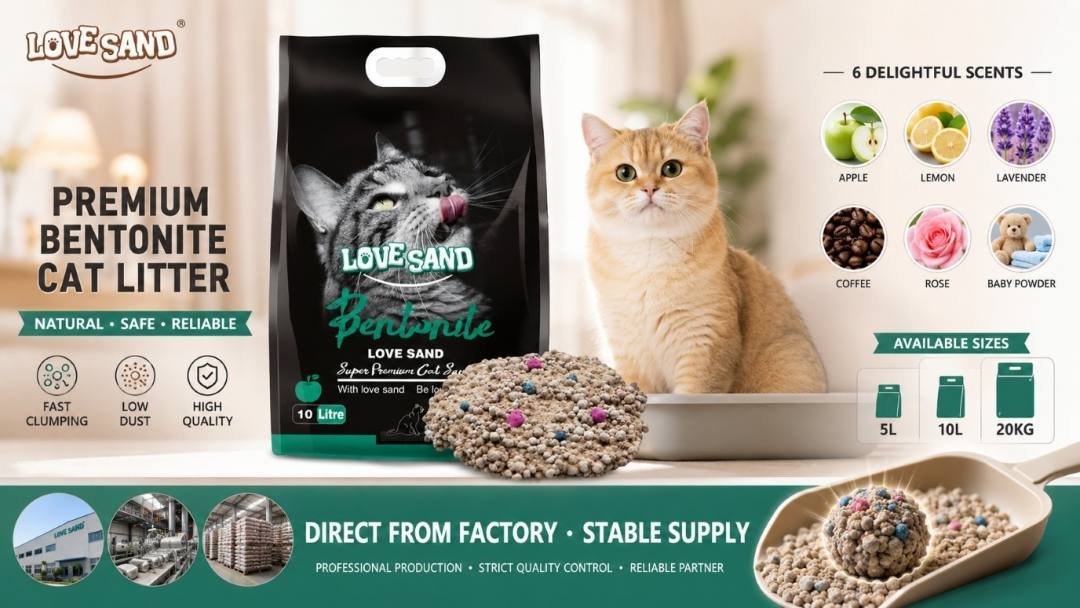
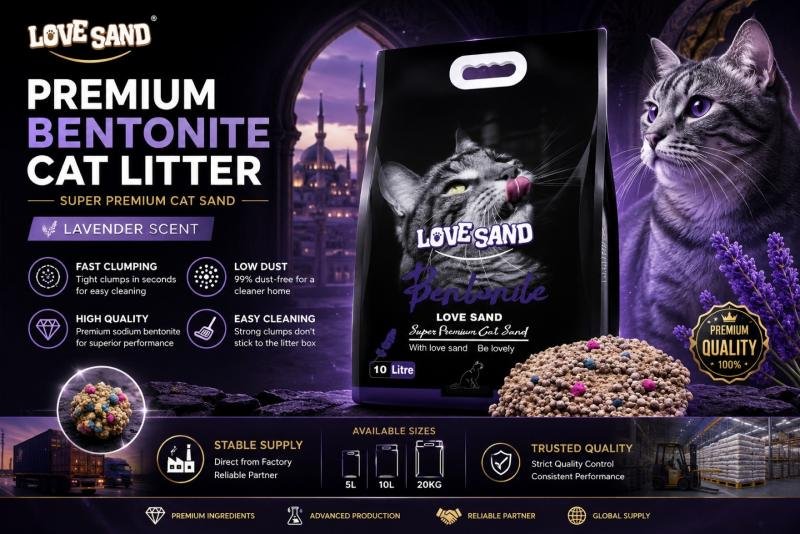
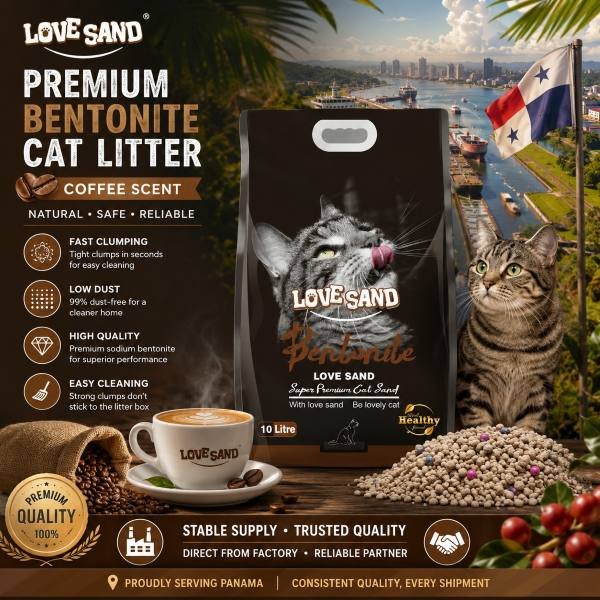
Price- and performance-led. Consumers want normal clumping, easy cleanup and a price that supports repeat purchase. Бентонитовый наполнитель для кошачьего туалета is usually the anchor here. love sand offers bentonite across different granules, scents and packaging so the specification can match local pricing and channels.
Mid-Range, Differentiated Products
Consumers here do not only compare the lowest price — they weigh low dust, scent, clumping or packaging experience. Dust-free mineral cat litter is one direction: differentiation on low dust, granule feel and positioning rather than price alone.
Plant-Based and High-Value Products
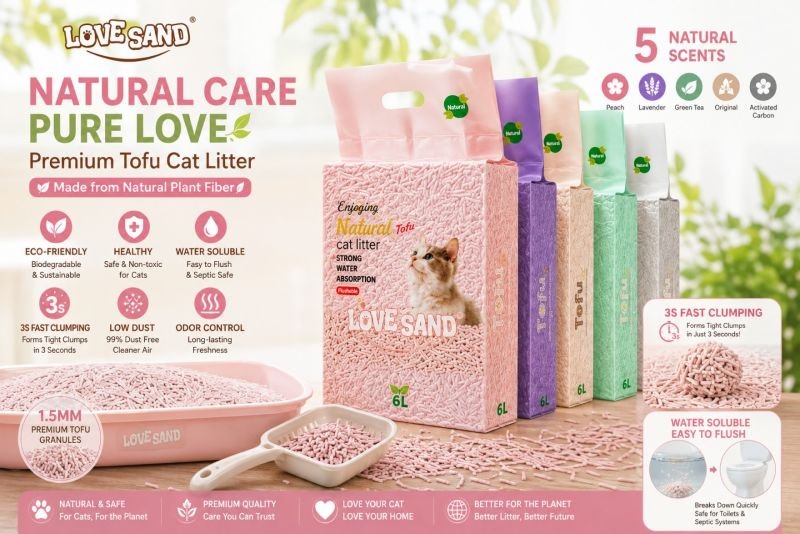
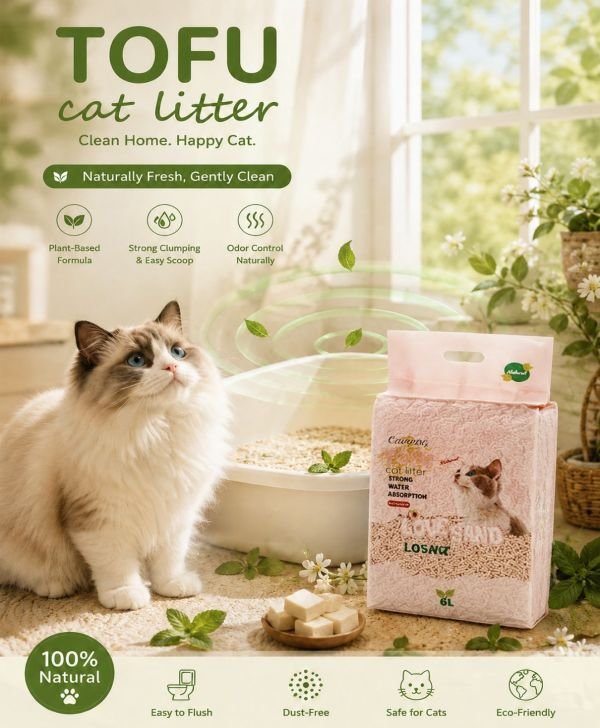
As consumer attention on plant-based grows, наполнитель для кошачьего туалета из тофу has become an important category in many markets. It does not need to fight bentonite on the same price line; its logic is plant-based, low dust, convenience and difference. love sand offers tofu in different specifications and scents (Original, Peach, Green Tea, Lavender and more) with packaging options to discuss.
So do not compare “bentonite vs tofu — which is better?” Ask instead: “which price tier and product direction is missing in my market?”
Different Channels Need Different Litters
Wholesale and Pet Stores
Retailers need to grasp the selling point quickly, and consumers need to understand the difference between products in seconds. Keep the range simple: a base bentonite, a low-dust product, a plant-based tofu — each covering a different need.
E-Commerce
Consumers cannot touch the product, so images, selling points and reviews carry the decision. Weight matters: litter is a repeat purchase, and heavy bags raise logistics cost and delivery experience. Plant-based products often differentiate well online through “plant-based” and “low dust” — but only if local consumers accept the price.
Large Retail and Chains
Big retailers care about supply stability, packaging standards, product consistency and long-term restocking. Entering this channel means planning restock capability, not just the right product — a supplier’s batch consistency can matter more than any single quote.
Study Competitors Before Inventing Something New
Many distributors want a completely different product. Innovation has value — but if it is too far from purchase habits, education cost rises. Before buying, look at what is actually selling: what litter types do local pet stores carry? What are the mainstream package sizes? Do consumers lead with price or function? Has plant-based been accepted? Is there a clear low-dust offer? What packaging and positioning do leading brands use?
These simple observations reveal market gaps. If the market is flooded with very cheap bentonite, entering the same price war may be the wrong move — low-dust mineral or tofu can build a new position. If consumers still use traditional bentonite almost exclusively, going all-in on premium plant-based at once carries risk. The best strategy is usually not copying competitors or opposing the market, but balancing existing demand with a new product opportunity.
Move From One SKU to a Deliberate Portfolio
Too many SKUs at the start means extra inventory, packaging, warehousing and sales pressure; one product leaves no room to adjust when demand shifts. The practical path is a small, clear portfolio: enter with one core product (bentonite if price competition is strong), stabilize sales, then add one clearly different SKU — tofu or low-dust mineral.
The second SKU must differ in position, not just package color. Consumers understand the difference, and your sales team can explain it to retailers. love sand’s multiple directions let you expand step by step instead of building a complex catalog at once — an approach that keeps inventory risk manageable over the long run.
Let Market Habits Decide Specifications
Litter type is only the first decision; the same product in different specifications serves different markets. Some markets are used to 5L or 6L bags; others prefer 10L or larger formats. Capacity affects buying habits, retail price and shelf display. love sand’s system covers different directions — bentonite in 5L/10L/20KG options, tofu in different capacities and packaging forms — so the practical questions are: how much does a consumer buy at once? Is the product sold offline or delivered online? Do consumers think in liters or weight? Does a big bag really reduce purchase frequency? Will the size fit local shelves? There is no universal answer; the right specification comes from the local market, not the factory catalog.
Building Your Combination With love sand’s Product System
love sand’s system does not require buying everything. Traditional mass markets can start with bentonite; plant-based demand points to tofu; low-dust differentiation points to dust-free mineral; and new combinations can be discussed as the market develops. Define your market strategy first; we supply the product options, and the market decides the direction.
A workable start is “base product + differentiated product”: the base delivers stable volume, the differentiated SKU lifts brand competitiveness, and sales data guides the next addition — steadier than buying many products at once.
FAQ|The 7 Questions Distributors Ask Most When Choosing Cat Litter
Q1. If I am importing cat litter for the first time, should I start with bentonite or tofu?
Q2. Can love sand recommend products based on our target market?
Q3. Should we buy several cat litter products at once?
Q4. Should e-commerce and offline pet stores use the same litter specifications?
Q5. If the local market is already full of bentonite, should we still enter that category?
Q6. Can dust-free mineral and regular bentonite be sold at the same time?
Q7. After choosing a product, can we adjust based on market feedback?
Conclusion|Choose the Litter That Fits Your Market, Not the One That Looks Best
For a distributor, choosing cat litter is a business decision, not a product pick. The product that wins is the one that fits the consumer, the price tier, the channel and the competitive gap — in that order. Start by understanding why your market buys, map the price bands, research what sells, then build a small portfolio with one clear core SKU and one differentiator, and let specifications follow local habits.
love sand’s product system — bentonite, tofu, dust-free mineral and other directions — exists to give distributors building blocks rather than a fixed menu. The right question is not which litter is best, but which combination fits your market best. Answer that, and the supplier side becomes a much simpler choice.
Reviewed by: love sand pet-litter product team (Puyuan Dalian Pet Products Co., Ltd.). Last updated: 2026-10-12.
More about the manufacturer: About love sand