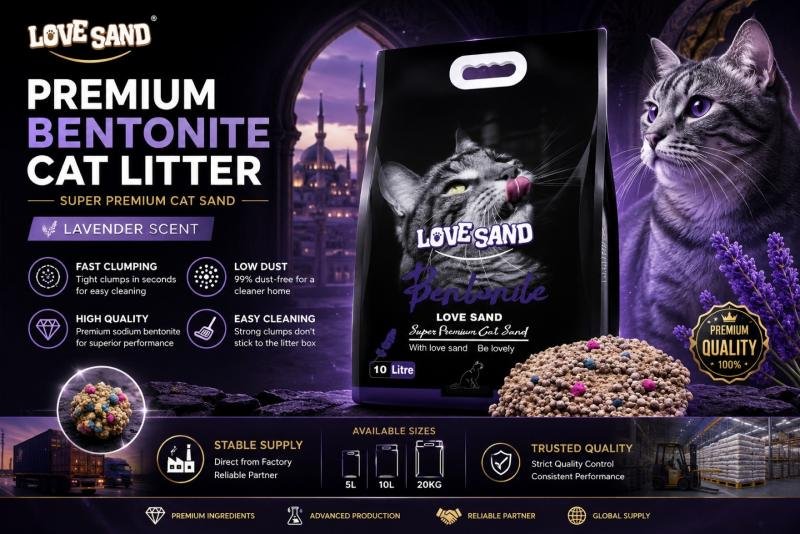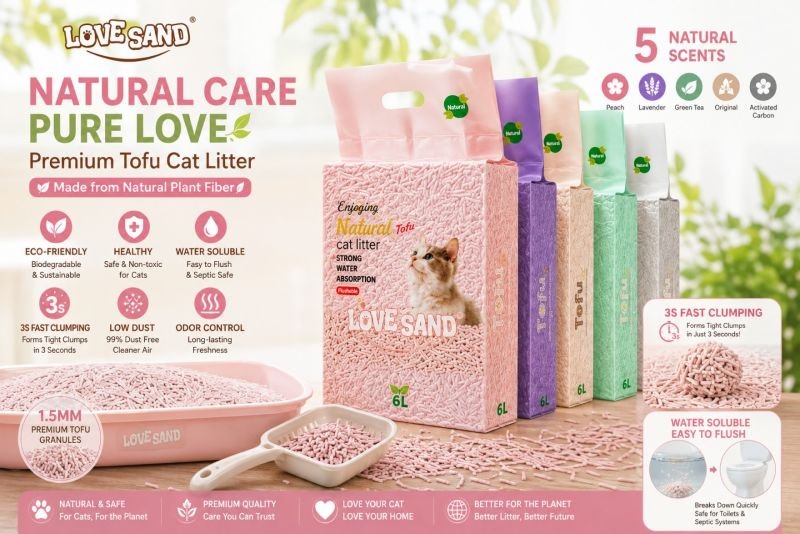
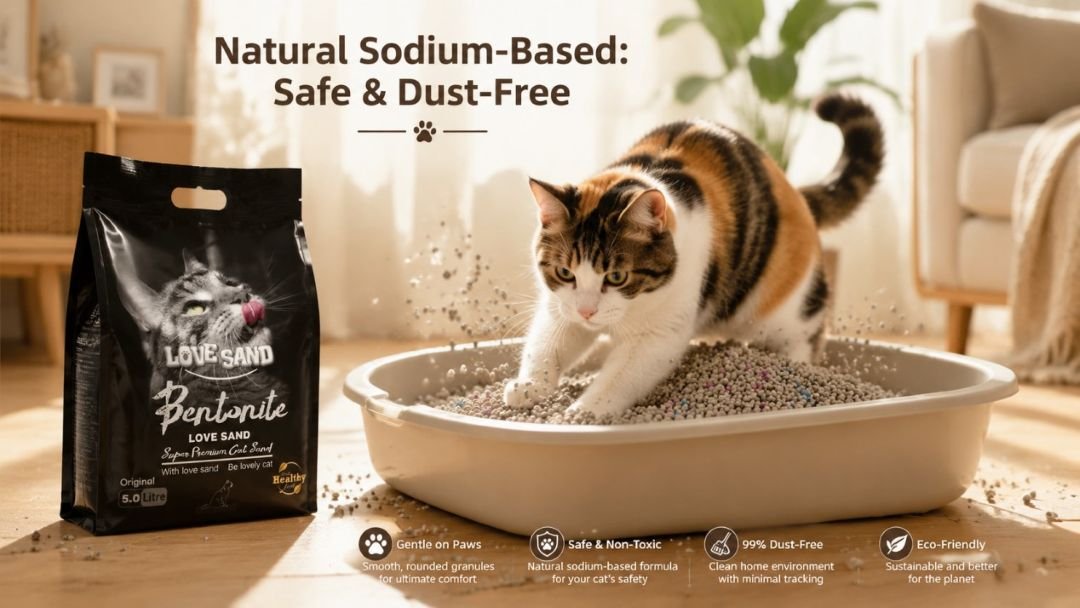
When buying cat litter, you may have seen the words “sodium bentonite litter” or “natural sodium-based mineral sand” on the packaging. But you may not know that there is only one word difference between sodium base and calcium base, but the performance difference is very obvious when it is actually used in cat litter.
Today, we are going to popularize the difference between these two kinds of bentonite to help you understand the “hidden information” on the cat litter packaging.
What is bentonite?
Before talking about the difference, let’s quickly understand what bentonite is.
Bentonite is a clay mineral with montmorillonite as the main component, and the content of montmorillonite is usually between 85% and 90%. It is unique in its layered structure-consisting of two layers of silicon-oxygen tetrahedron and one layer of aluminum-oxygen octahedron. This structure makes bentonite have the ability of water swelling and cation exchange, and become an ideal raw material for cat litter.
Bentonite is mainly divided into sodium bentonite and calcium bentonite according to the difference of interlayer cations.
Na-based vs Ca-based, what is the core difference?
1. Interlayer cations are different.
This is the fundamental difference. There are sodium ions (Na) between the layers of sodium bentonite and calcium ions (Ca) between the layers of calcium bentonite.
2. There are obvious differences in water absorption and swelling capacity.
The colloid value of sodium bentonite is about 100%, while that of calcium bentonite is only about 60%. This means that the water absorption and expansion capacity of sodium bentonite is much stronger than that of calcium bentonite. When used on cat litter, sodium base can quickly expand and agglomerate when it meets water, forming a compact lump; Calcium-based lumps are much looser and easy to disperse with a shovel.
3. Different pH values
The pH value of calcium-based bentonite is generally between 6.4 and 8.5, which is neutral or weakly alkaline; The pH value of sodium bentonite is as high as 8.5 to 10.6, which is more alkaline. This is related to the “sodium” process that we will talk about later.
4. Different water solubility
Sodium bentonite litter has better water solubility and dispersibility, while calcium bentonite is insoluble in water. This is one of the reasons why sodium base is more suitable for cat litter.
Why do most cat litter use sodium base?
The reason is simple: the agglomeration performance of sodium bentonite litter far exceeds that of calcium-based bentonite.
The core appeal of cat litter is “it is convenient to shovel when it meets water”. Na-bentonite quickly absorbs water, swells and clumps when it meets water, and can wrap urine and feces into a compact sphere. However, calcium-based bentonite has poor agglomeration and is very troublesome to clean up. The whole basin of cat litter will soon become a basin of mud.
Therefore, high-quality bentonite cat litter is basically made of sodium bentonite.
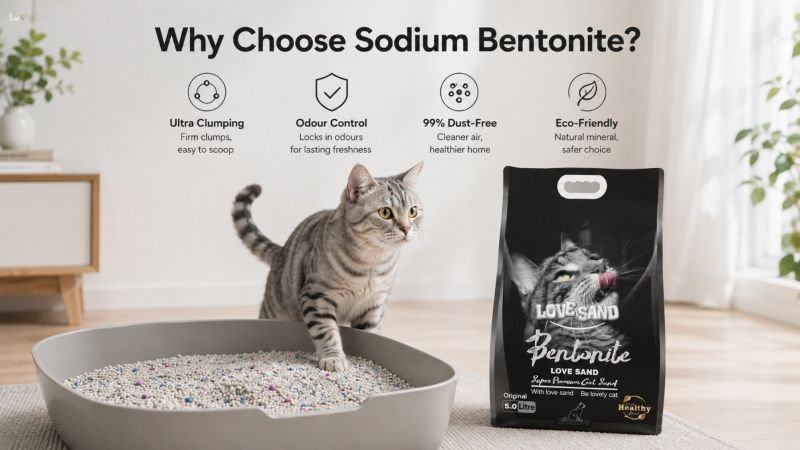
What is “calcium-based sodium”? Is it safe to use this cat litter?
Here is a topic that is often misunderstood.
Bentonite produced in nature is mostly calcium-based bentonite, and sodium-based reserves are relatively small. In order to use the properties of sodium base, manufacturers will transform calcium-based bentonite into sodium base through a process called “sodium”.
The common practice is to mix calcium-based bentonite with sodium-modifying agent (such as baking soda and sodium bicarbonate), and after high-temperature reaction, replace calcium ions between layers with sodium ions. This technology is not uncommon in the cat litter industry.
However, there is a concern that needs to be clarified: there is a saying on the Internet that “sodium cat litter will burn cats’ paws and genitals” because improper processing may lead to strong alkalinity of cat litter.
The actual situation is that there will be no problem with the cat litter produced by the regular sodium process. The test data show that the pH value of normal sodium bentonite cat litter is about 9 to 10, which belongs to the normal range of sodium bentonite and is not strongly alkaline. The real problem is that the factory that uses inferior sodium agent or the process is not up to standard will have too high alkalinity.
Therefore, when shopping, it is recommended to choose a brand that has a good reputation and avoid the over-cheap brand-name cat litter.
Technical Breakdown: Sodium Bentonite vs. Calcium Bentonite
| Technical Parameter | Natural Sodium Bentonite (Na-Based) | Standard Calcium Bentonite (Ca-Based) |
| Interlayer Cations | Dominated by Sodium Ions (Na+). Provides stronger ion exchange and superior hydration capabilities. | Dominated by Calcium Ions (Ca2+). Results in a weaker water-binding structure. |
| Water Swelling Capacity | 🌟 Massive. Swells up to 10-15 times its dry volume when exposed to liquids, completely sealing waste. | ⚠️ Poor. Low swelling rates; struggles to fully expand, allowing liquid to seep straight through. |
| Clumping Speed & Hardness | 🌟 Instant & Rock-Hard. Forms thin, ultra-compact clumps right at the surface. Won’t break apart during scooping. | ⚠️ Loose & Fragile. Forms soft, muddy clumps that break easily, causing sticky pan bottoms and foul odors. |
| Replacement & Longevity | Only scoop the solid clumps daily. The remaining litter stays clean, dry, and fresh for up to 3-4 weeks. | Requires frequent whole-basin replacements because broken, urine-soaked fragments constantly contaminate the entire box. |
| pH Range Safety | Typical stable pH of 8.5 to 10.6. Perfectly safe for a cat’s daily, short-term paw contact. | Near neutral or slightly basic, but the constant bacterial buildup from broken clumps poses higher skin risks. |
| Global Sourcing Value | High-end material with premium margins. Highly valued by importers looking to reduce customer complaints. | Low-cost, entry-level commodity. Highly saturated market with low repurchase rates. |
Резюме
Although there is only one word difference between sodium-based and calcium-based, their performance in cat litter is very different. Sodium bentonite litter has good agglomeration and strong water absorption, and is the first choice for high-quality cat litter. Even the cat litter processed by the “sodium” process is safe and reliable as long as the process is standardized. If you understand this, you won’t be confused by fancy advertising words when choosing cat litter.
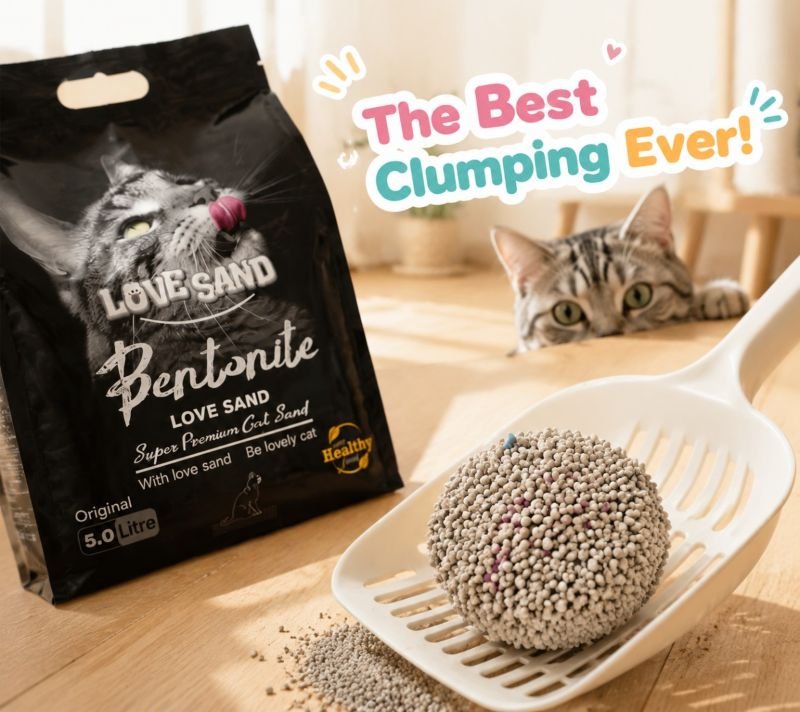
If you love the rock-hard clumping of natural sodium bentonite but want to completely eliminate dust tracking in your apartment, read our breakthrough analysis on The Science Behind the 7:3 Tofu & Bentonite Mixed Cat Litter Ratio for the ultimate dust-free solution.