1. Blind cat litter replacement is the main cause of stress and rejection behavior of cats.
In the process of daily cat management and family feeding, cat litter replacement is a routine basic operation. Whether it is the adjustment of farmers’ batch purchase, the new selection of pet shopkeepers, or the replacement of cat litter with higher cost performance and better use experience by ordinary shovel officers, it is necessary to complete the replacement of cat litter.
The vast majority of people replace the cat litter by directly dumping the old cat litter and covering it with new cat litter. This simplest and direct operation is a strong environmental stimulus for cats with weak adaptability and sensitive mind.
Cats rely on the familiar smell, touch and environment to establish a sense of security at home. Suddenly changing a completely unfamiliar cat litter will make cats lose their familiar life breath instantly, and they will have strong negative emotions such as fear, anxiety and rejection. From mild behaviors such as refusing to use the cat litter basin, pulling around, deliberately scraping sand to vent their emotions, to serious health problems such as not eating, hiding, listlessness, a lot of hair loss, vomiting and diarrhea.
Mastering the scientific and standard cat litter replacement process and completing the alternation of old and new cat litter step by step can minimize the discomfort of cats, smoothly complete the cat litter style replacement, perfectly avoid all kinds of rejection behaviors and stress reactions, and adapt to various use scenarios such as family breeding, breeding bases and overseas foreign trade breeding.
2. Judging in advance: What circumstances need to change the cat litter style in time?
2.1 The existing cat litter has obvious disadvantages in use.
The original cat litter dust exceeded the standard, the deodorizing effect was extremely poor, the clumping was loose and easy to stick to the bottom, cats refused to use it for a long time, the daily feeding experience was poor, and the feeding cost was high, so it was necessary to replace the high-quality new cat litter in time.
2.2 The age of cats has changed.
Young cats grow into adult cats, and adult cats enter the old age stage. The endurance of cat’s feet, excretion habits and physical state have changed at different ages, and it is necessary to match and adapt cat litter.
2.3 Feeding Mode and Feeding Quantity Adjustment
Single cat breeding has changed to multi-cat group breeding, and indoor home breeding has changed to outdoor free-range breeding. After the feeding environment has changed, the original cat litter can’t meet the use needs, and the category needs to be adjusted.
2.4 Seasonal Climate Change Adjustment Demand
In summer, the hot and humid environment needs strong water absorption and quick deodorization cat litter, and in winter, the moist and low-dust moisturizing cat litter can be selected in dry environment, and the style can be adjusted according to the seasonal climate.
2.5 Procurement and Supply Channels and Cost Adjustment
Foreign trade order adjustment, factory supply style update and bulk purchase price optimization, merchants and farmers need to replace the cooperative cat litter style in a unified way to complete the overall category replacement.
3. Standard seven-step scientific sand changing process with zero stress and smooth transition.
3.1 Preliminary observation preparation stage (3 days before replacement)
Record the daily use habits of cats
Observe the cat’s habit of shaving sand, the length of going to the toilet, the soft and hard degree of favorite particles, and the acceptance range of odor in advance, and select and adapt the new cat litter according to the cat’s habit to reduce the rejection probability from the source.
Prepare new and old cat litter for stocking.
Ensure that the original old cat litter is fully stocked, and the new target cat litter is stocked in batches, and sufficient transitional usage is reserved to avoid interrupting the replacement rhythm.
Placing new cat litter in advance is easy to adapt.
Put a small amount of new cat litter in the cat’s daily activity area, let the cat smell and touch freely, get familiar with the smell and touch of the new cat litter in advance, and establish a preliminary familiarity.
3.2 First stage mixing ratio: 70% old sand+30% new sand (used for 3 days)
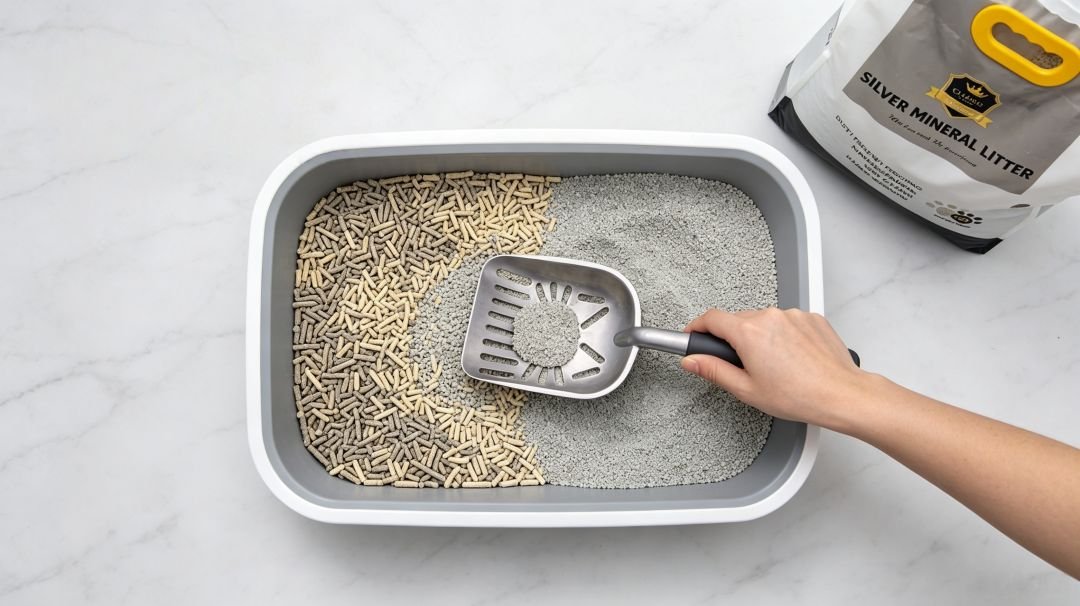
Keep the old cat litter used in the cat litter basin, mix the new cat litter in the ratio of 7:3, and mix evenly, without changing the placement position, height and surrounding layout of the cat litter basin.
At this time, the overall cat litter is still dominated by the old models that cats are familiar with, and the proportion of new models is extremely low. Cats will hardly notice obvious changes, and they can use it in the toilet normally and gradually adapt to the smell and feet of new sand.
3.3 Mixing proportion in the second stage: 50% old sand+50% new sand (used for 2 days)
After observing that the cat has no abnormal behaviors such as rejection, disorderly pulling and refusing to use, adjust the mixing ratio, so that the old and new cat litter are evenly mixed and used.
The old and new smells and tactile sensations are integrated with each other, and the cat further adapts to the characteristics of the new cat litter, and its inner alertness continues to decrease, completely adapting to the use environment of mixed sand.
3.4 Mixing proportion in the third stage: 30% old sand+70% new sand (used for 2 days)
Further increase the proportion of new cat litter. Only 30% of the old cat litter is retained as the odor transition support, and the new cat litter becomes the main material.
At this time, the cat has fully accepted the characteristics of the new cat litter, and the daily toilet behavior has returned to normal without any resistance.
3.5 Completely replace the new cat litter (replacement officially completed)
After confirming that the cat has no abnormal reaction in the whole process, completely empty the remaining old cat litter in the cat litter basin, comprehensively clean and wipe the inner wall of the cat litter basin, and tile and fill the new target cat litter to formally complete the overall replacement work.
3.6 Close observation of daily behavior after replacement (next 7 days)
After the complete cat litter replacement, closely observe the cat’s toilet status, mental mood, eating status and hair status for a week, check whether there is hidden stress reaction, and adjust the mixing ratio in time once there is slight rejection.
3.7 Fixed use style and long-term stable supply.
After the replacement is smoothly completed, the same cat litter should be used for a long time, and the style should not be adjusted repeatedly in a short period of time, so as to stabilize the cat’s use habits and completely eliminate the subsequent stress hazards.
4. Precautions for sand changing in different cat groups.
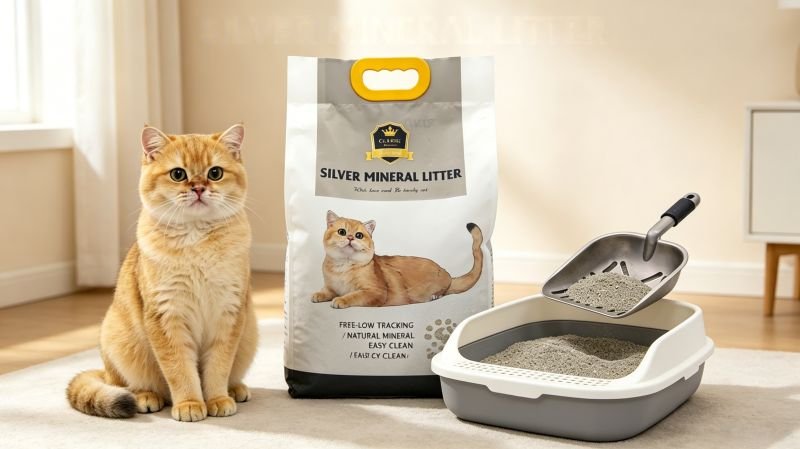
Love Sand Dust-free Cat Litter >>
4.1 Key points of changing sand for timid and sensitive pet cats
Extend the overall transition period, extend the original transition period from 7 days to 10-12 days, reduce the daily addition ratio of new sand, keep the home environment quiet throughout, eliminate external noise interference, and slow down the replacement pace.
4.2 Core Points of cat litter replacement for Young Cats
The adaptability of young cats is weak, so similar cat litter with the same quality and smell should be replaced first, and it should not be changed greatly across materials as far as possible, so as to avoid the direct replacement of tofu sand with hard bentonite sand and reduce the rejection caused by touch drop.
4.3 Sand changing rules for elderly and frail cats
Old cats have poor health, low immunity and easily fluctuating emotions, so it is unnecessary to change cat litter at will; When it is necessary to replace it, only the soft, low-dust and mild style should be replaced to prevent large particles and heavy-smelling cat litter.
4.4 Batch Sand Changing Skills in Multi-cat Breeding Base
When the base is replaced in batches, the whole house should unify the mixing ratio of the old and the new, and the cat litter replacement rhythm should be unified, so as to avoid the group emotional agitation caused by the chaotic smell among cats, unify the environment and reduce the overall stress.
5. Do not touch the taboo behavior during sand changing.
(1) It is forbidden to be impatient, shorten the transition period and forcibly change the sand completely, which is the main wrong behavior that causes stress;
(2) Don’t change the position, style and food category of the litter box at the same time, and multiple changes will aggravate the cat’s anxiety;
(3) When the cat slightly refuses to pull, don’t scold and beat, just call back the mixed proportion in time and guide patiently;
(4) Don’t change the three attributes of fragrance+material+particle size at the same time. The greater the change, the higher the rejection probability;
(5) In rainy and humid weather, cat’s illness recovery period and estrus restlessness period, try to postpone the cat litter replacement plan.