For cat owners, one of the most troublesome experiences-and one of the most common complaints in the pet care industry-is that cat litter stubbornly sticks to the bottom of the cat litter box.
This problem is not just an inconvenience. For distributors, retailers and brands, it directly affects:
- customer satisfaction
- Product evaluation and scoring
- Re purchase rate
- Brand trust
In the highly competitive market, even such a minor experience problem may lead to customer churn.
However, the reality is that the adhesion of cat litter to the bottom is not caused by a single factor. It is the result of a combination of the following factors:
- Product formula
- Raw material quality
- Usage habit
- environmental conditions
In this blog, we will deeply analyze the root of the problem of sticking to the bottom and provide practical solutions. Brands can turn this common problem into their own competitive advantage.
Why does cat litter stick to the bottom?
Before proposing a solution, we must first find out the root of the problem. Many consumers mistakenly think that the sticky bottom of cat litter means the poor quality of products, but the fact is far more complicated and subtle than this.
1. The agglomeration performance is weak or the agglomeration speed is too slow.
Among them, the most critical factors are the agglomeration speed and agglomeration strength of cat litter.
When the cat urinates, the high-quality cat litter can instantly absorb the liquid, and the urine quickly clumps on the surface, and the water is locked before it seeps to the bottom.
However, if the caking speed of cat litter is too slow, the liquid will penetrate to a deeper level and finally to the bottom, forming a sticky substance and firmly adhering to the surface of the basin bottom.
This situation is particularly common in the following products:
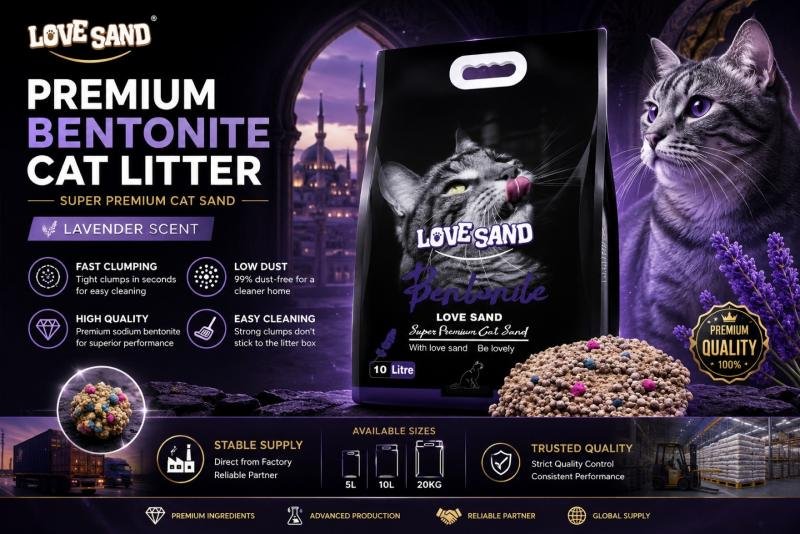
- Low grade bentonite
- Mixed cat litter with improper formulation
2. Insufficient depth of cat litter laying.
Even high-quality cat litter, if used improperly, may not play its due role.
When the cat litter layer is too thin, there is not enough cat litter material to absorb the liquid, and the urine has penetrated to the bottom before the clump is formed.
Many consumers often underestimate the importance of this factor. In fact, the laying depth of cat litter is one of the most neglected causes of the problem of cat litter sticking to the bottom.
3. Influence of high humidity and environmental conditions
Environmental conditions have a decisive influence on the performance of cat litter. In high humidity areas, cat litter will absorb water from the air, and its agglomeration ability will be weakened and its structure will become unstable.
This will lead to the softening of lumps and the aggravation of bottom sticking.
4. Formulation design defects
Not all cat litter is of the same quality.
A well-designed formula can balance the following elements:
- Absorption speed
- 粒度分布
- Structural integrity
Poor formula may lead to caking and greasy, unable to completely wrap water, and accumulation of residues at the bottom.
5. Surface material of cat litter basin
The material of the litter box itself is also an influencing factor.
例えば、こうだ:
* * Smooth plastic surface → lighter bottom adhesion.
* * Scratched or worn surface → Enhanced adhesion.
With the passage of time, tiny scratches will retain water, which will aggravate the phenomenon of sticking to the bottom.
A practical solution to prevent cat litter from sticking to the bottom
Now that we know the causes, let’s discuss some effective and easy-to-popularize solutions.
Solution 1-Maintain a suitable thickness of cat litter
This is the simplest and most effective solution:
Recommended thickness: 5–7 cm (2–3 inches)
This can ensure the formation of an adequate absorption layer and prevent liquid from penetrating to the bottom of the basin.
The brand should actively popularize this knowledge to consumers.
Solution 2-Adopt layered paving system (highly recommended)
This is an excellent opportunity for your product strategy to stand out and show differentiation.
Double-layer paving system can significantly reduce the problem of bottom sticking;
* * Bottom layer: dust-free mineral sand (0.5-2MM)/ cassava cat litter/bentonite cat litter.
* * Upper layer: bentonite cat litter or tofu cat litter.
Why this method is effective:
- The bottom layer acts as a buffer layer.
- Prevent cat litter from directly contacting the basin bottom.
Step 3 absorb excess water
This way of laying is increasingly favored by the high-end market.
Solution 3-Improve product quality
This is very important for manufacturers and distributors. High quality cat litter should have the following characteristics:
* form a compact, hard knot.
* Maintain structural integrity.
* Effectively prevent leakage
Key improvement measures include:
* * Better raw material screening
* * Advanced processing technology (multistage screening and dust removal)
* * Optimized particle size and mixing ratio
Scheme 4-Select the appropriate cat litter type.
Different types of cat litter have different properties:
- ベントナイト猫砂: It has a strong agglomeration ability, and if the quality is poor, it is easy to cause the risk of sticking to the bottom.
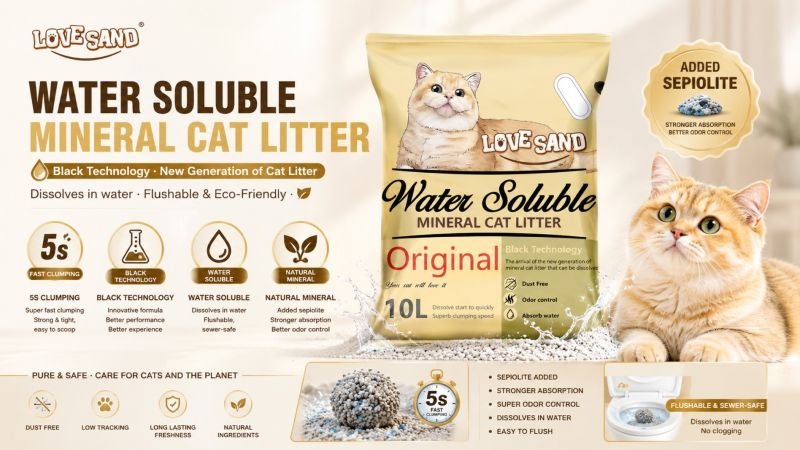
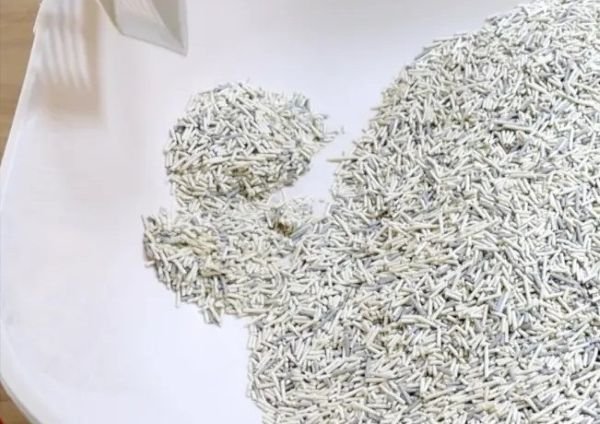
- 豆腐の猫砂: The water absorption rate is extremely high, it expands rapidly when it meets water, and it has strong water blocking ability and low tendency to stick to the bottom.
- 鉱物系猫砂: the structure is balanced and stable, and the anti-sticking performance is better.
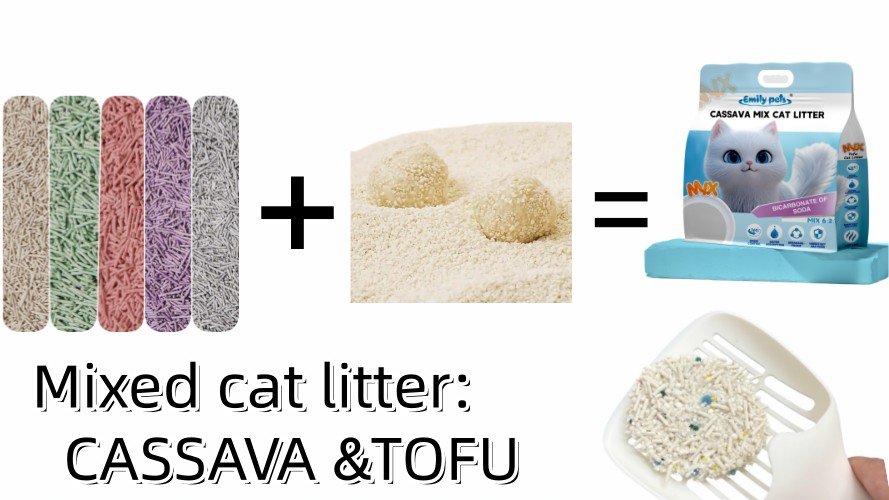
- Cassava cat litter: small particles, strong agglomeration
This makes it an ideal functional underlying bedding product.
Scheme 5-Regular Cleaning and Maintenance
Even the best quality cat litter can’t make up for the lack of daily maintenance.
Best maintenance practices:
- Clean up the reunion every day
- Clean the litter box regularly.
- Replace the cat litter thoroughly every 2-4 weeks.
Turning difficult problems into selling points
This is the key for smart brands to stand out.
Instead of avoiding this problem, it is better to turn it into a unique marketing breakthrough point:
- Positioning ideas:
“anti-sticking bottom technology”
“Say goodbye to the trouble of cleaning the sticky bottom”
“Double-layer cat litter system”
- Product strategy:
* * Provide combined solutions: cassava cat litter+tofu cat litter, bentonite cat litter+tofu cat litter, tofu cat litter+mineral sand, mineral sand+tofu cat litter.
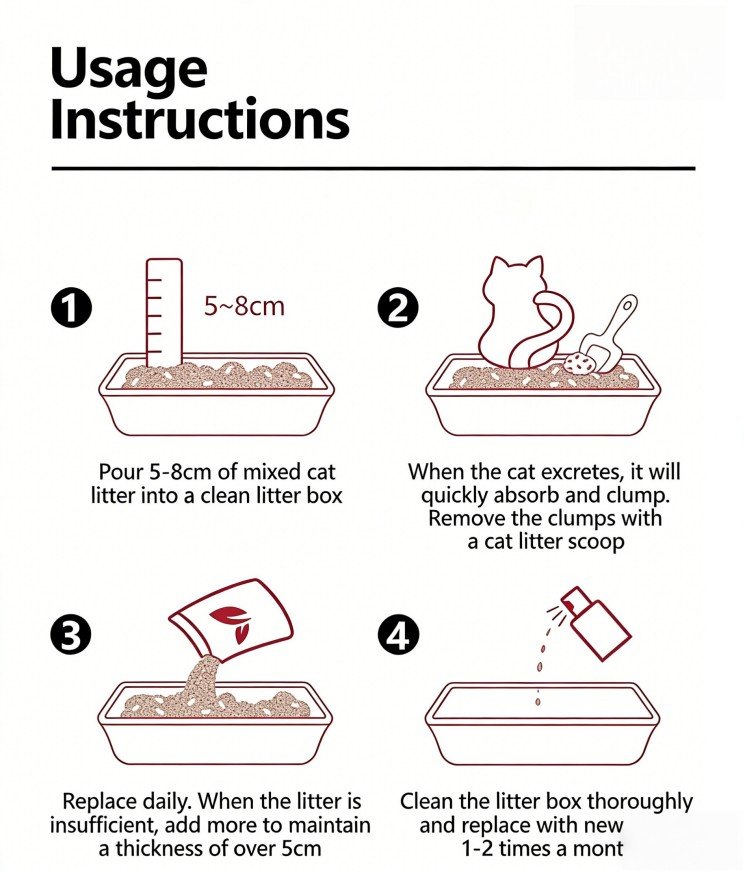
* * Use instructions through product packaging: there are instructions on the back of the packaging.
* * Provide detailed user’s guide: user’s guide can be added to customized packaging, and correct user’s guide can be published during publicity.
Commercial value to distributors
Distributors should not underestimate the impact of this problem.
Solve the problem that cat litter sticks to the bottom, and can:
* * Reduce product returns
* * Improve online evaluation
* * Increase repurchase rate
* * Enhance brand loyalty
In many cases, the customer retention effect brought by solving this problem is even better than the simple price reduction promotion.
Catlitter sticking to the bottom is not just a trivial trouble-it is a crucial user experience problem, which directly affects the success or failure of the product.
Sticking to the bottom is not caused by a single factor, but by the comprehensive effect of product quality, usage habits and environmental conditions.
Those brands that can not only provide high-quality products, but also provide correct use guidance will surely stand out in the increasingly fierce market competition.
よくある質問(FAQ)
Q1: Is it always a product quality problem that the cat litter sticks to the bottom?
A: Not all of them. It is often the result of the joint action of product quality and improper use habits.
Q2: Can tofu cat litter completely eliminate the phenomenon of sticking to the bottom?
A: It cannot be completely eliminated, but it can usually significantly reduce the risk of sticking to the bottom.
Q3: Does dust-free mineral cat litter help to prevent sticking to the bottom?
A: Yes, especially when it is used as the bottom cat litter.
Q4: What is the ideal thickness of cat litter?
A: It is recommended to lay 5-7 cm to achieve the best use effect.
Q5: Is it necessary for the brand to guide consumers?
A: It is absolutely necessary. Providing user guidance helps to improve customer satisfaction and promote repurchase.