The global cat litter industry is undergoing a major change. Cat litter, once only a basic functional product, is now evolving into a category driven by innovation, sustainability and user experience.
In 2026, the trend of the market has become more and more clear: consumers are no longer satisfied with “only available” products. They are actively seeking cleaner, safer, more convenient and environmentally responsible solutions.
For distributors, retailers and brands, understanding these trends is no longer an optional option-it is the only way to remain competitive.
Trend 1-Sustainability is becoming a standard, not a high-end trait.
The change of consumers’ concept
In recent years, sustainability has changed from a minority concern to a mainstream social expectation. Pet owners, especially in developed markets, are increasingly concerned about the following issues:
- Environmental impact
- Waste management
- Product life cycle
Because of this, they are actively purchasing products that are in line with their own values.
Influence on cat litter selection
Although the traditional clay-based cat litter is effective in function, it has been criticized for the following disadvantages:
* Non-renewable mining methods
* Ecological footprint to the environment
* Difficulties in waste disposal
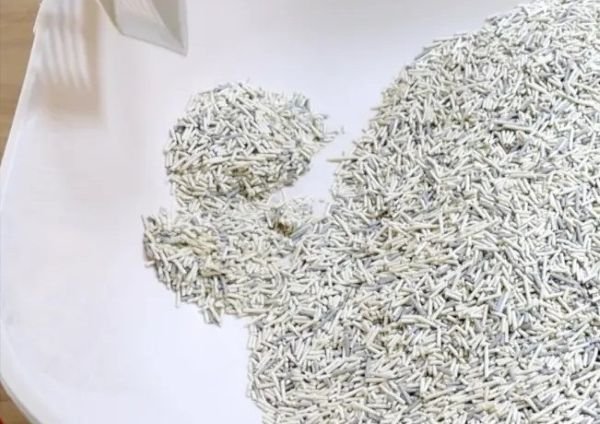
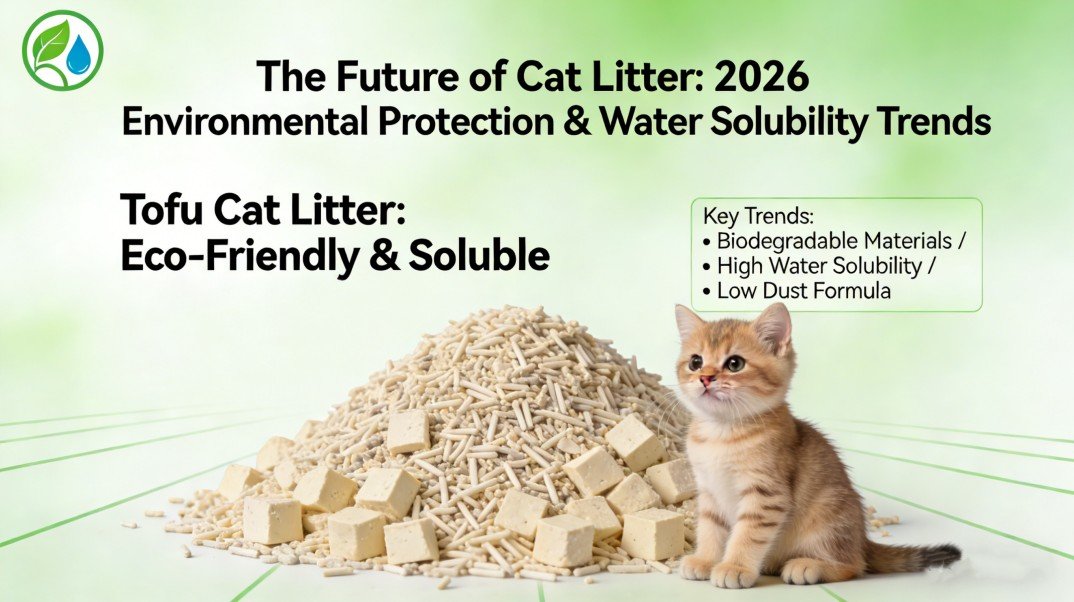
This has accelerated the rise and growth of plant-based cat litter (such as 豆腐猫砂), plastic-reduced packaging products and biodegradable solution products.
However, the characteristic of “sustainability” alone is not enough-products must still be excellent in functional performance.
Trend 2-The Rise of Functional Innovation
Pursuit beyond basic performance
Nowadays, consumers expect cat litter to solve multiple problems at the same time:
* Strong deodorization
* Low dust formula
* clean and convenient
* reduce out (sand prevention)
This demand urges the industry to invest more resources and funds in product engineering and formula research and development.
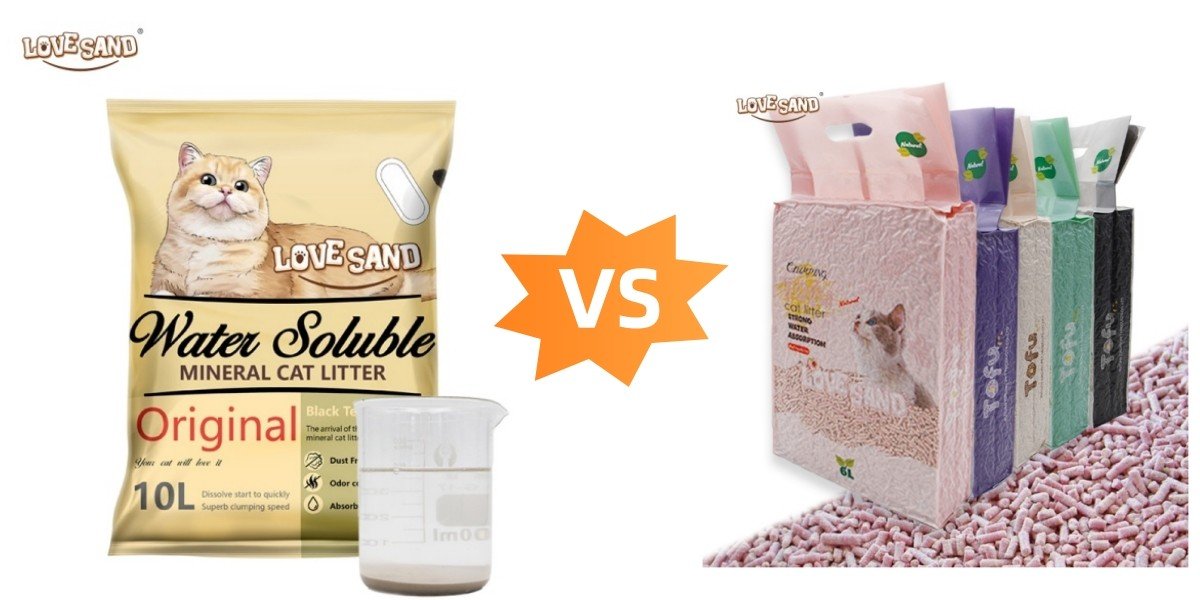
Water-soluble mineral cat litter – a new direction
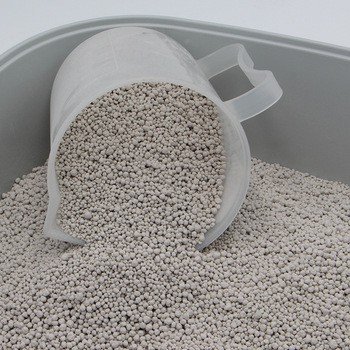
One of the most striking innovations is the 水溶性ミネラル猫砂, whose formula usually includes:
1. Bentonite (used for agglomeration)
2. Sepiolite (used to provide structural support and control dispersion)
This type of cat litter provides a unique combination of advantages:
- Strong agglomeration performance
- More convenient disposal method of waste.
- The familiar touch and texture of cats
Although it is not completely biodegradable like plant-based cat litter, it achieves a pragmatic balance between performance and convenience, which makes it very attractive in the transitional market.
Trend 3-Hybrid and Multilayer Solutions
The End of Single Function Products
Modern consumers are no longer satisfied with a single-dimensional solution. On the contrary, they prefer products that can provide multiple benefits in the same system.
This demand has spawned the rise of the following products:
*Mixed formula cat litter
*Multi-layer use system
Layered cat litter system
In the high-end market, an increasingly popular trend is the use mode of “layered cat litter”:
*Bottom layer: functional materials (such as tapioca cat litter & dust-free mineral sand)
*Surface layer: comfort-oriented materials (such as tofu cat litter or high-end bentonite)
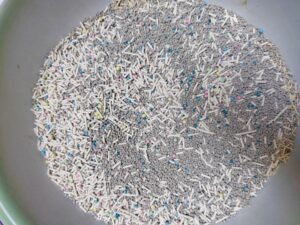
This system can improve cleanliness, agglomeration efficiency and convenience of daily maintenance.
For brands, this opens up business opportunities for selling bundled products or complementary products, which helps to increase overall revenue.
Trend 4-The “high-end” wave of pet care products
Pets are family members.
The concept of treating pets as “family members” is continuously promoting the growth of consumer spending. Nowadays, pet owners are more and more inclined to:
* Pay higher prices for high quality.
* Give priority to safety and hygiene.
* Prefer to choose a trustworthy brand than a cheap substitute.
What does “high-end” in cat litter mean?
High-end products are no longer defined only by price. They must be able to provide:
- Consistently superior performance
- Low dust and high cleanliness experience
- Thoughtful and humanized packaging design
- Clear and persuasive value proposition
Tofu cat litter, high-end bentonite and innovative mineral mixing formula have all benefited a lot from this trend.
Trend 6-Differentiated Evolution of Regional Markets
Developed and Emerging Markets
Not all markets are evolving at the same pace.
Developed markets: focusing on sustainability and high-end consumer experience
Emerging markets: still highly sensitive to prices.
Strategic Enlightenment
Successful brands will adopt flexible strategies to provide:
- Entry-level products (e.g. standard bentonite cat litter)
- Mid-range innovative products (such as water-soluble mineral cat litter)
- High-end solutions (such as tofu cat litter)
This hierarchical product strategy helps to achieve wider market coverage.
What does this mean for distributors and brands?
The future of cat litter market is not limited to choosing a single direction-it is about building a balanced product mix.
Cat litter industry is entering a new stage characterized by innovation, sustainability and differentiation.
Although environmental protection materials and water-soluble technologies will not replace traditional products overnight, they are reshaping the whole market.
Those brands that can understand and adapt to these trends can not only survive, but also lead the industry forward.
Frequently Asked Questions (FAQ)
Q1: Is environmentally friendly cat litter replacing traditional cat litter?
A: Not completely replaced, but in many markets, its growth momentum is very rapid.
Q2: What is water-soluble mineral cat litter?
A: A product made of bentonite and sepiolite aims to improve the convenience of waste treatment and the performance of the product.
Q3: Does the hybrid cat litter system represent the future development direction?
A: Yes, in the middle and high-end market, mixed cat litter is becoming more and more popular.
Q4: Which markets are the fastest to accept new trends?
A: Europe, North America, Japan and Korea.
Q5: Should brands invest in multiple types of products?
A: Yes, product diversification is the key to long-term success.