What is tofu cat litter? Why does it spread rapidly around the world?
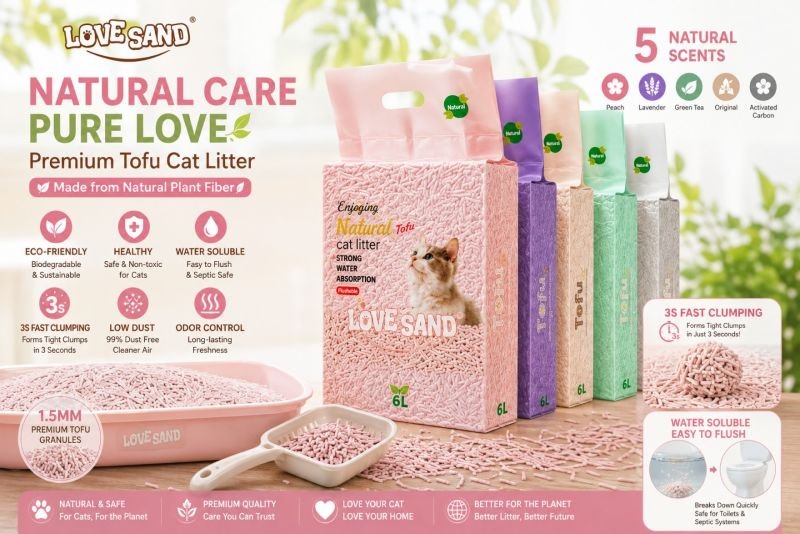
Tofu cat litter is a plant-based cat litter made primarily from soybean fiber, tofu by-products, starch, and other natural materials. It has become increasingly popular among cat owners and pet brands because it combines fast absorption, firm clumping, low dust, and a more environmentally friendly material profile.
Unlike traditional clay cat litter, tofu cat litter is lightweight and made from renewable plant-based ingredients. Depending on the formula and local plumbing conditions, some products can also be disposed of in small quantities through the toilet. However, flushability should always be confirmed on the product packaging and checked against local sewer or septic-system requirements.
In this guide, we explain what tofu cat litter is, how it is manufactured, what performance benefits it offers, and how buyers can evaluate product quality before choosing a supplier or formula.
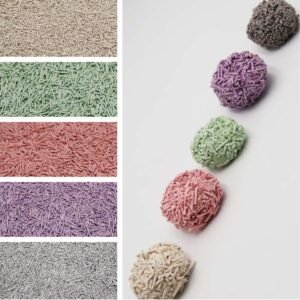
Manufacturing process: the transformation from soybean to high-performance cat litter
The quality of tofu cat litter depends heavily on the raw materials, binder system, extrusion process, drying conditions, and final dust-removal procedures. A consistent manufacturing process helps improve absorption, clumping strength, odor control, and storage stability.
Step 1-Selecting Plant-Based Raw Materials
High-quality tofu cat litter usually begins with clean soybean fiber, okara, pea fiber, corn starch, or other plant-based materials. Manufacturers should control impurity levels, moisture content, and raw material consistency to ensure stable product performance.
Step 2-Grinding and mixing
The selected materials are ground into a suitable particle size and blended with natural binders such as starch or guar gum. The ingredient ratio affects the litter’s absorption speed, clumping strength, hardness, and ability to break down in water.
Step 3-Extrusion and Granule Formation
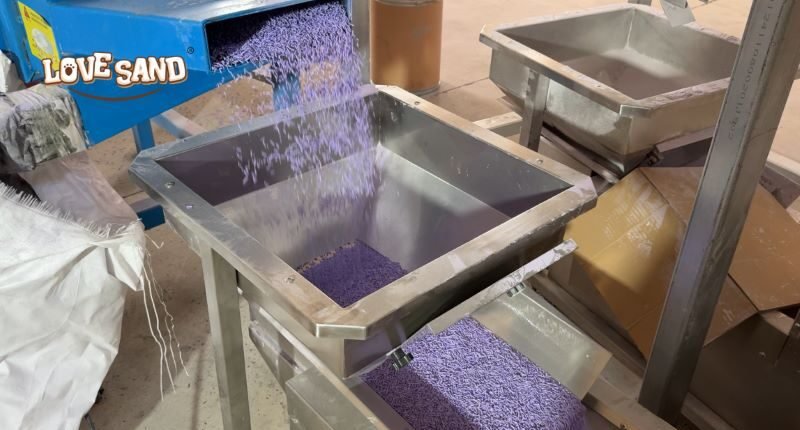
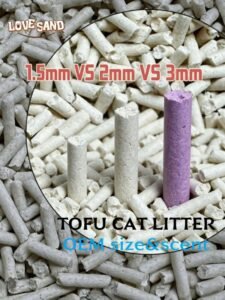
The mixed ingredients are processed through an extrusion system to form uniform granules. Common particle sizes include approximately 1.5 mm, 2 mm, and 2.5 mm. The appropriate size depends on the desired balance between tracking, absorption, clumping, and cat acceptance.
Step 4-Drying and sterilization.
After extrusion, the granules are dried to reduce excess moisture and improve storage stability. Manufacturers should also monitor product hygiene, granule strength, odor, and packaging conditions before shipment.
Step 5-Screening and dust removal
Finished granules are screened to remove oversized or broken particles. Additional dust-removal procedures help reduce airborne particles and improve the user experience, especially in indoor homes and multi-cat households.
Key Performance Advantages of Tofu Cat litter
Low-Dust Performance
Fast Absorption and Strong Clumping
Natural Odor Control
Lightweight and Easy to Handle
Is Tofu Cat Litter Flushable?
Advanced version of the product type on the market.
Nowadays, tofu cat litter is no longer a single product. Advanced recipes include:
Mixed cat litter (tofu litter+bentonite)
Has strong agglomeration ability and low dust characteristics.
Strike a balance between cost and performance
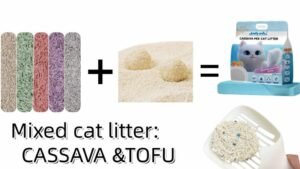
Tofu Sand+Cassava Sand
Improves the washability.
Enhance that natural deodorizing effect.
Functional additive
- activated carbon
- Green tea extract
- Deodorase
Why choose tofu cat litter?
Trend 1: Sustainability becomes the core selling point.
In developed markets, environmental protection products are gradually becoming the industry standard.
Trend 2: The demand for “dust-free” solutions has surged.
Health awareness is increasingly leading consumers’ purchasing decisions.
Trend 3: The mixed cat litter market is growing rapidly.
The mixed formula of tofu sand (compound cat sand) is becoming more and more popular.
How to Choose a High-Quality Tofu Cat Litter
When comparing tofu cat litter products, buyers should look beyond the ingredient name and evaluate the complete product specification. Important factors include raw material consistency, absorption speed, clumping strength, dust performance, odor control, granule size, moisture content, packaging quality, and storage stability.
For distributors and private-label brands, it is also important to review the supplier’s production capacity, quality-control procedures, customization options, minimum order quantity, packaging service, and test documentation. A reliable tofu cat litter manufacturer should be able to explain the formula clearly and provide samples for practical testing before bulk production.