We all love our cats. They are our best friends, alarm clocks in the morning, and sometimes, they are our furry little dictators. But as pet owners, we also love the earth deeply. This emotion often leads to a difficult problem: how can we take care of cats without leaving a huge carbon footprint?
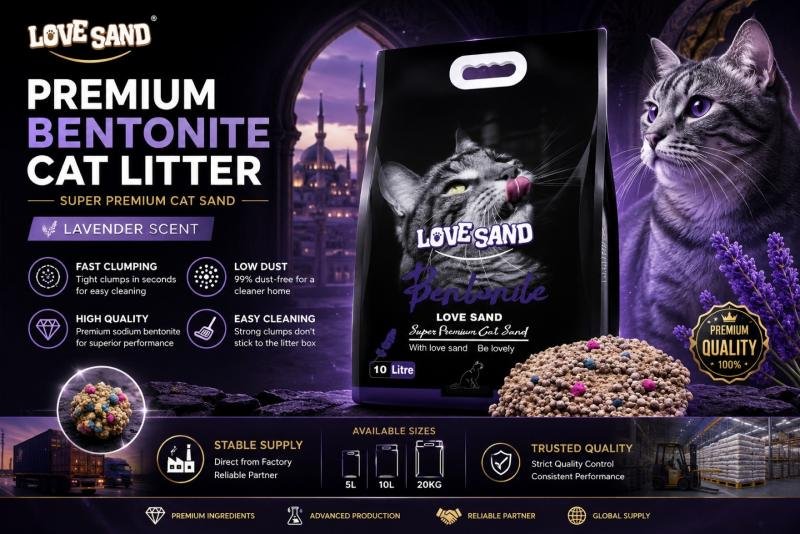
The pet industry is booming, but it is not always environmentally friendly. For example, traditional bentonite cat litter is usually mined in the open air. They are not biodegradable and will stay in landfills for thousands of years.
What is the good news? The market has changed. We are in the golden age of sustainable pet care. Environmentally friendly cat litter is no longer a niche, expensive or ineffective choice, but a mainstream and efficient choice.
Let’s have a deep understanding of the characteristics of truly environmentally friendly cat litter and how to easily transition to environmentally friendly cat litter without affecting your quality of life.
What makes cat litter “environmentally friendly”?
Before you buy cat litter printed with green leaves, you need to know some key information. “Green marketing” phenomenon does exist. Some brands may call themselves “natural”, but if their raw materials come from underground and are packaged in plastic, it will completely deviate from the original intention of environmental protection.
The real environmentally friendly cat litter has three core characteristics: renewable resources, biodegradable and low environmental impact production process.
Renewable plant components
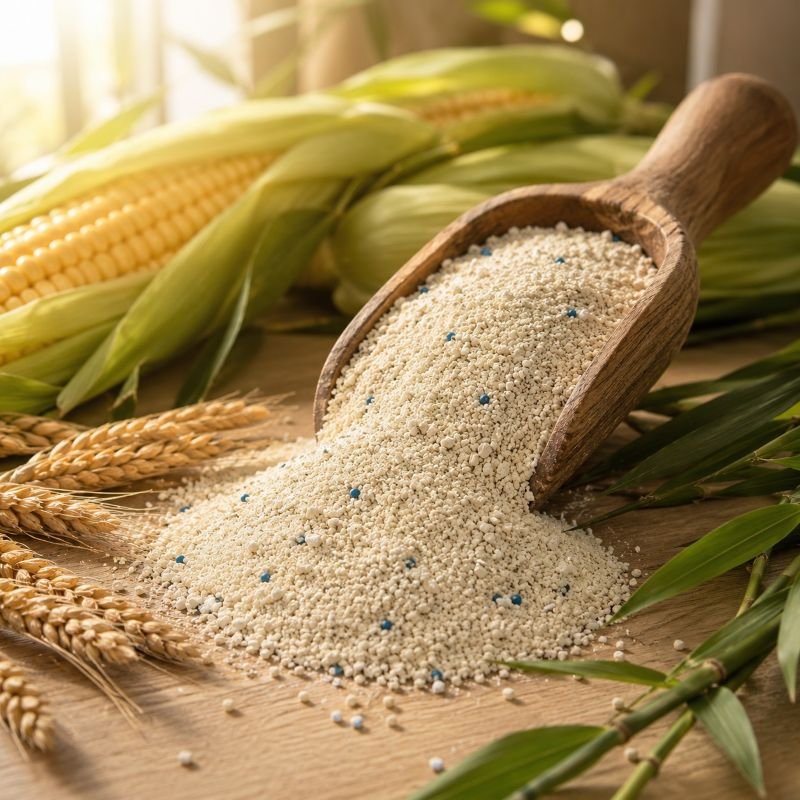
The best sustainable cat litter ingredients come from fast-growing plants. Such as corn, wheat, soybean, pine and bamboo. These crops can be harvested every year without destroying the land. Choosing plant cat litter is to support sustainable regeneration rather than over-exploitation of agriculture.
Real biodegradability and compostability
This is the biggest selling point. Clay and silica gel never decompose naturally. Plant cat litter is organic matter, and many of them can be composted. This means that they can return to the earth and become nutrient-rich soil instead of occupying the space of landfill. Be sure to check the compostable certification on the package.
Low energy consumption production
How is cat litter produced? Some environmental brands use high-temperature extrusion process and need to burn fossil fuels. Others use cold pressing or natural air drying. The less energy it takes to granulate plants, the lower the carbon footprint.
A leader in the field of green cat litter.
Not all plant cat litter is the same. Each material has its own unique characteristics. The following is a detailed introduction of several most popular sustainable cat litter.
Pine: A Classic Choice
Pine cat litter is usually made from recycled sawdust or sawdust. This is a great boon to the environment, because it makes use of the waste from the wood industry and does not need to cut down new trees.
Pine naturally controls odor through the action of enzymes. When wood absorbs water, it will decompose ammonia. It also smells fresh forest, which many cats prefer to artificial perfume.
Corn and Wheat: A Powerful Choice for Cake Cat litter.
If you like the convenience of caking clay cat litter, but hate mining, then corn and wheat cat litter are your best choice. These starches can form compact and easy-to-shovel lumps, and they are extremely absorbent.
Corn cat litter is naturally sweet and helps to cover up the odor. Wheat cat litter is softer than cat-sensitive claws. Both are completely biodegradable and can be flushed into toilets in many cities (please check the local regulations in advance).
Bamboo is a wonderful choice for rapid growth.
Bamboo is a kind of grass, not wood. Bamboo grows at an amazing speed and is one of the most renewable resources on earth. Bamboo cat litter is naturally antibacterial and can inhibit the growth of bacteria, which is the real source of odor. In addition, bamboo cat litter is very light, which helps to reduce transportation emissions.
Tofu cat litter: multifunctional mixed cat litter
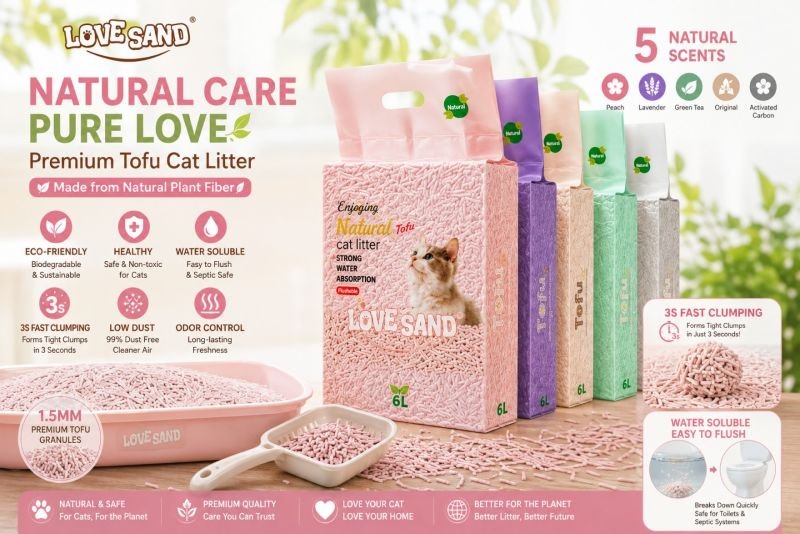
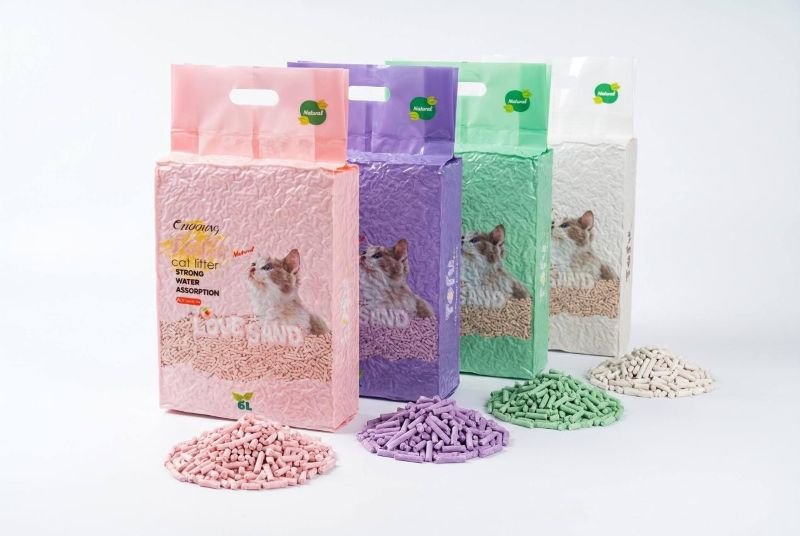
Tofu cat litter is made of soybean fiber (a by-product of tofu and soybean milk production), which is a rising star in Ran Ran. It is dust-free, well agglomerated and easily soluble in water. Due to the use of by-products from the food industry, the impact on the environment is extremely low. Even if the cat accidentally swallows a few, it is completely safe.
How to make a smooth transition: Will your cat accept it?
Even if you have the most environmentally friendly cat litter in the world, if your cat refuses to use it, it will only be thrown into the trash can. Cats are habitual animals, and they are also very picky about the texture and smell of cat litter.
Slow mixing method
Don’t dump all the old catlitter, and then pour in the new cat litter directly. Doing so will have disastrous consequences. First, mix 25% new environmentally friendly cat litter with 75% old cat litter. Wait a few days. If your cat adapts, you can adjust the ratio of new and old cat litter to 50/50. Repeat this process for two weeks. This will allow your cat to gradually adapt to the new texture and smell.
Smell sensitive
Many environmentally friendly cat litter has a natural earthy flavor. The smell of pine. To humans, pine smells like a cabin; To a cat, it may smell like forest floor. Most cats like this smell.
However, some cats are sensitive to rich natural oils. If your cat seems hesitant, try low-dust, odorless wheat grains or tofu cat litter first. It’s not too late to transition to pine cat litter.
Texture is very important.
Clay cat litter is fine and sandy. Pine wood has large particles and is in a block shape. Corn cat litter particles are coarse. If your cat is used to delicate clay cat litter, it may feel like walking on a gravel road to switch directly to larger pine cat litter. For cats who like clay cat litter, finer pine cat litter or corn cat litter is a safer transition choice.
Beyond Tradition: Comprehensive and Sustainable Pet Care
Choosing environmentally friendly cat litter is important, but it is only part of it. Conscious pet rearing should pay attention to the whole life cycle of pets.
Rethink the cat litter shovel.
The plastic cat litter shovel will eventually break and be thrown into the landfill. Consider using a metal shovel. It is durable. If you use disposable shovel bags, please use biodegradable or compostable bags instead. Even better, if you want to compost the garbage, you can use a special metal bucket with an activated carbon filter to store the garbage and then add it to the compost heap.
Buy in bulk
Transportation is one of the main emission sources. Buying a bag of 40 pounds of garbage has much less impact on packaging and transportation than buying ten bags of 4 pounds of garbage. Look for brands that offer bulk subscription services. Many environmental brands now use plastic-free recyclable paper packaging. Please support them.
A broader perspective: Why is it so important?
It’s easy to think that a bag of cat litter doesn’t matter. But the operation of the pet industry depends on the needs of consumers. Every time you choose sustainable cat litter, you are sending a signal to the manufacturer that we care about the world that pets will inherit in the future.
Cats are predators, and they are closely related to nature. Using a cat litter that respects this connection itself contains profound poetry. When we choose plant-based, biodegradable and renewable cat litter, we are building a closed loop to return the cat litter basin to nature.
Your cat may not understand the concept of carbon footprint or landfill overflow, but they will feel your concern. They will feel the clean and fresh litter box, enjoy the dust-free air and thank you in their own way.
Switching to environmentally friendly cat litter is not the pursuit of perfection, but step by step. It means shoveling one shovel at a time and making better choices. So, take a deep breath, take a bag of pine or corn cat litter and try it. Your cat and the earth will thank you.
📦 Reduce Carbon Emissions with Smart Sourcing:
“Transportation is a huge part of your pet brand’s carbon footprint. Sourcing in massive eco-friendly bulk volumes dramatically reduces single-use plastic waste and transit logistics. Whether you want to stock pure pine, bamboo, or custom plant-based blends, Love Sand provides global B2B clients with sustainable shipping solutions. Contact Love Sand’s Wholesale Team Today for OEM/ODM Eco-Litter Solutions.”