In southern plum rains, coastal cities and wet areas in rainy season, the biggest problem in raising cats is not shoveling excrement, but the deterioration of cat litter due to moisture. The same cat litter, the use experience is perfect in dry season, and it directly rolls over in wet weather. Soft, powdery, moldy, poor agglomeration, heavy odor, and various problems appear one after another.
Many users mistakenly think that they are buying inferior cat litter. In fact, the wet environment will directly change the physical characteristics of cat litter. There is a great difference in the moisture resistance of different materials, improper storage methods and wrong materials, and even the best cat litter can’t be used.
In view of the high humidity environment, this paper explains in detail the moisture-proof ability, purchasing standards, home storage methods and daily use and maintenance of different cat litter, so as to help cat families in humid areas choose best cat litter for humid weather and use cat litter stably and prevent the problems of mildew, soft sand and odor.
First, the true moisture resistance of all kinds of cat litter in humid environment.
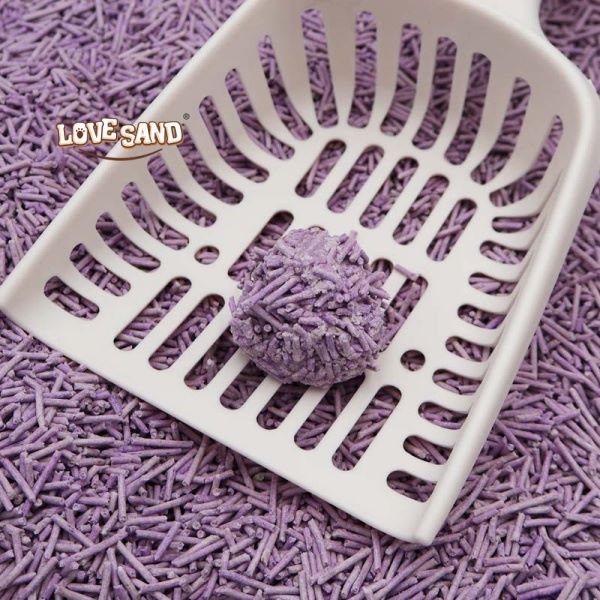
1 Tofu cat litter: The moisture resistance is the weakest, and it is the easiest to roll over in high humidity.
Tofu cat litter belongs to plant organic matter, and has a porous internal structure, which has a strong ability to absorb water vapor. When the air humidity is high, the surface layer absorbs moisture quickly. The particles become soft, loose and lose powder, and the agglomeration speed is slow, which is easy to stick to the bottom. If it is not closed in time, it will be slightly sour and musty in 3-5 days. The rainy season and coastal areas are the least suitable for large-scale stockpiling.
2 Bentonite cat litter: moderate moisture resistance and better stability than plant litter.
Mineral materials have dense structure and are not easy to absorb free water vapor in the air. The performance is basically stable in short-term humid environment. Agglomeration and water absorption capacity will not decline rapidly.
The only shortcoming is that the surface layer is easy to absorb floating dust and moisture, and a small amount of pulverization occurs, so the overall fault tolerance rate is high.
3 Mixed cat litter: the comprehensive moisture resistance is the best, and it is the first choice for wet areas.
A solid mixed cat litter with compact structure and balanced density. Compared with pure tofu sand, the moisture absorption resistance is greatly improved. Compared with pure bentonite, it is not easy to accumulate dust and agglomerate. In wet weather, it is stable in agglomeration, not easy to collapse, and has less odor. It is the most cost-effective and stable main model in wet areas.
4 Pine cat litter: It is extremely resistant to moisture, but it has a high threshold for use.
Wood fiber is carbonized at high temperature and pressed at high pressure, and its structure is compact. Ordinary air humidity is difficult to penetrate into the interior. Excellent moisture-proof, mildew-proof and bacteriostatic effects.
However, in high humidity environment, the surface layer is easy to regain moisture slightly, so it needs to be stored in ventilated and dry environment, which is not suitable for closed wet bathroom.
Second, the core standard for purchasing cat litter in humid environment
1 Give priority to particles with dense structure and high density.
The bigger the pores and the lighter the texture, the easier it is to absorb moisture. Try to avoid ultra-light puffed tofu sand in wet areas and choose a style with compact particles, high hardness and not easy to collapse.
2 Refuse low-priced loose and unsealed cat litter.
Bulk cat litter has been exposed to air for a long time, and it has already absorbed moisture and deteriorated. In humid environment, independent sealed packaging and vacuum packaging must be selected, and the quality will be more stable after arrival.
3 The formula with bacteriostatic and odor-removing effects is preferred.
The reproduction speed of bacteria in humid environment doubles. Cat litter with plant bacteriostasis, activated carbon adsorption, high temperature curing and odor removal technology can effectively inhibit mildew, sourness and odor breeding.
Third, the correct storage method of cat litter in high humidity environment
1 It is strictly prohibited to put it in the damp corner of the bathroom and balcony.
Toilets are the hardest hit areas with moldy cat litter because of heavy water vapor and poor ventilation. Many domestic cat litter overturned, which is caused by the wrong storage location.
2 It must be sealed and preserved after opening.
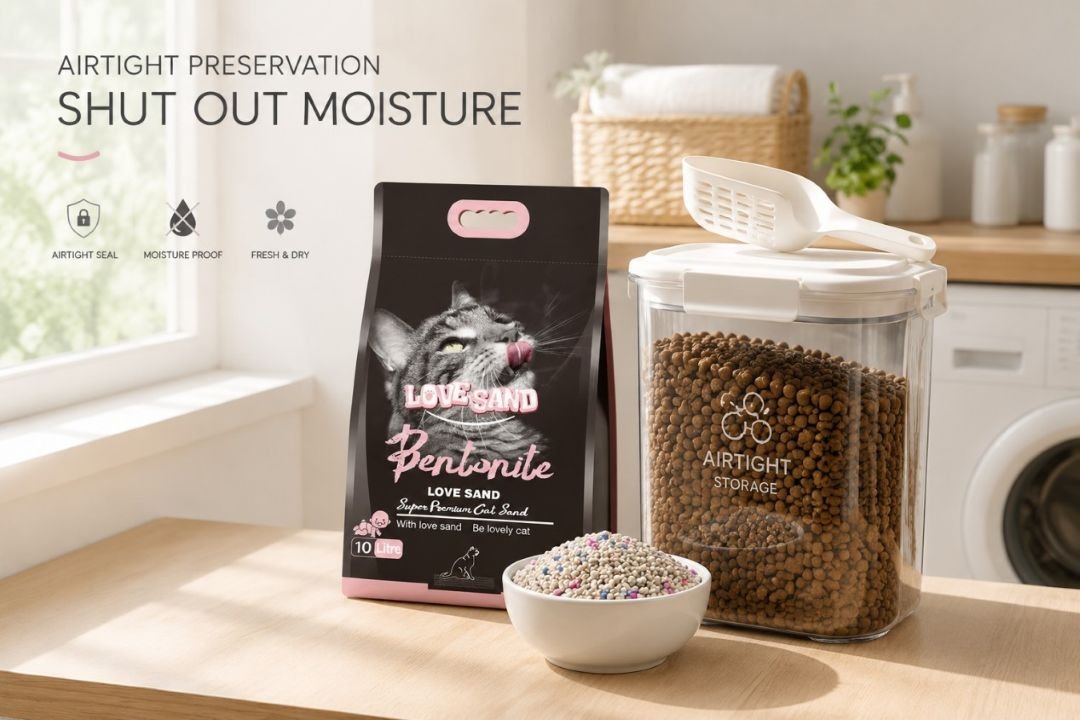
After the ordinary bagged cat litter is opened, it must be clamped, sealed and stored. Conditional can be matched with sealed barrels and storage boxes to isolate air vapor and prevent moisture regain.
3 Store goods in small quantities for many times, and do not stock goods in large quantities at one time.
Goods can be stockpiled in dry season, and it is not recommended to stock in large quantities in rainy season and high humidity area. The longer it is stored, the higher the probability of moisture absorption and deterioration. Buy in small quantities for many times and keep fresh quality at all times.
 、
、
4 vacuum packaging is preferred.
The vacuum seal is completely isolated from air and water vapor, and it will not absorb moisture, deteriorate or mold after long-term storage. Vacuum packaging style is the first choice for hoarding goods in humid areas.
Fourth, the daily use and maintenance skills of cat litter in wet weather
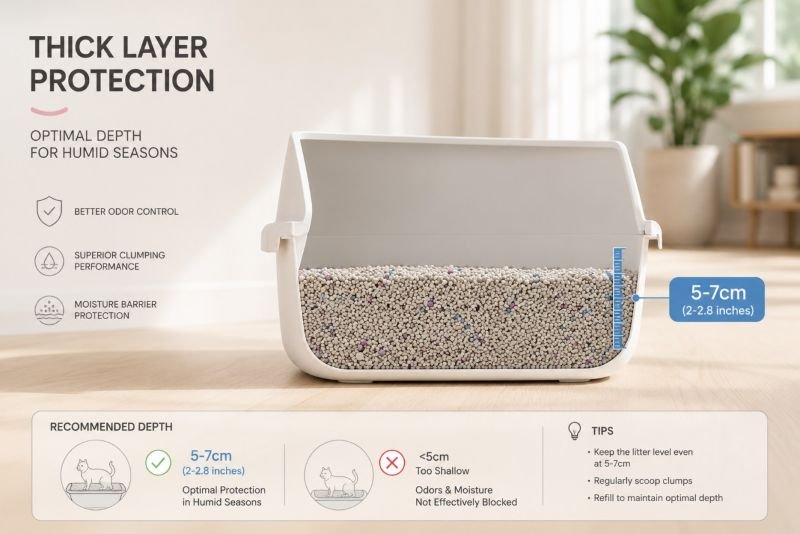
1 appropriately thicken the sand layer.
The surface sand is easy to absorb moisture, and thickening the sand layer can ensure that the inner sand is always dry and stable, and the agglomeration is not affected.
2 shorten the overall replacement cycle.
Sand should be changed in 7-10 days in dry environment and 5-7 days in wet environment. Avoid moisture accumulation at the bottom, bacterial growth and hidden odor.
3 Level the sand surface and clean up the broken powder every day.
Surface crushed powder and soft sand are the easiest to retain moisture. Smoothing the sand surface and sifting out the broken particles every day can greatly delay the overall wetting speed.
4 Keep the periphery of the litter box ventilated and dry.
Place it away from the air-conditioning air return opening, shower room and window seepage, keep air circulation and reduce local humidity accumulation.
V. Judgement method and treatment scheme of damp cat litter
1 Slightly damp
The surface layer is slightly soft, no odor, and the agglomeration is normal. The surface soft sand can be screened out, and new sand can be added to continue short-term use.
2 Moderately damp
Large area of soft sand, slightly sour taste, and soft agglomeration. It is recommended to replace the whole basin directly to avoid continuous growth of bacteria.
3 Severe damp
Moldy, white, strong odor and serious pulverization. Discard it immediately, and thoroughly clean and disinfect the litter box to prevent cats from being infected.
FAQ
Q1: Cat litter is always moldy during the rainy season in southern China. How to solve it?
Q2: Is the cat litter in the bathroom bound to get wet?
Q3: Can the cat litter softened by moisture continue to be used?
Q4: Will vacuum-packed cat litter regain moisture in wet weather?
Q5: What kind of cat litter is the most worry-free for raising cats in humid environment?